


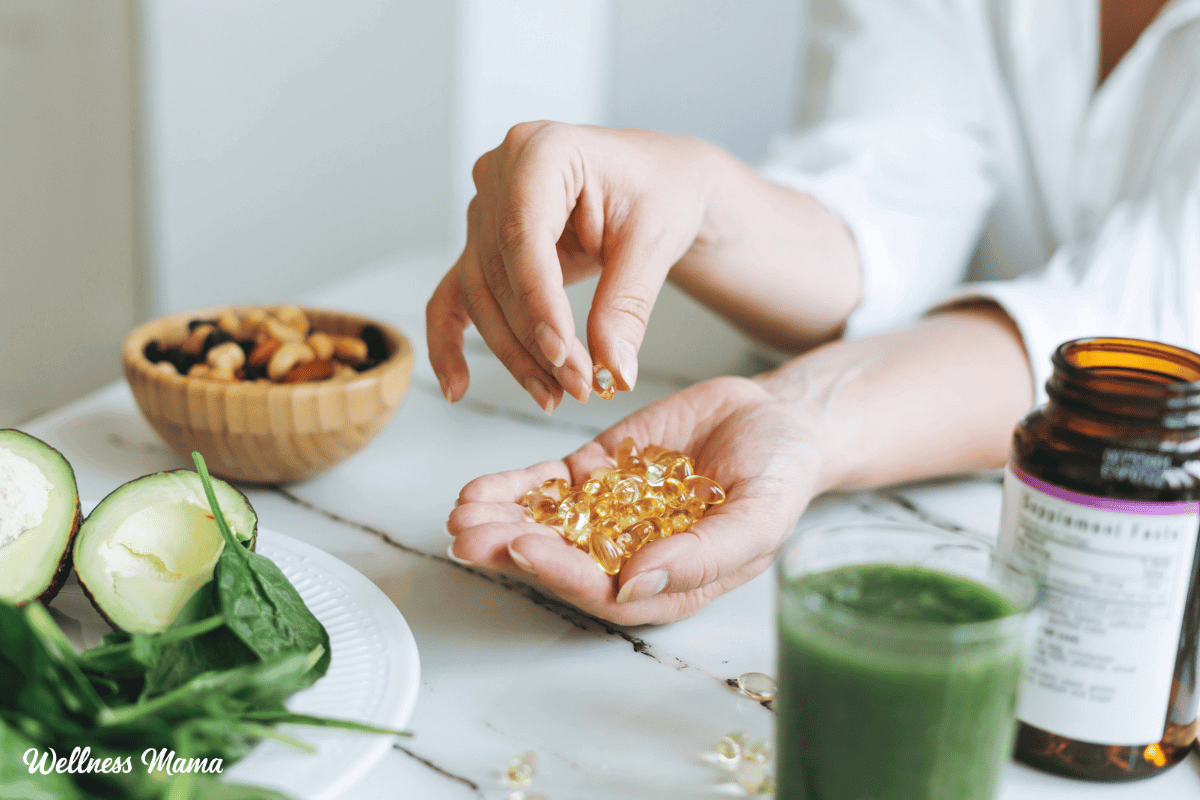
Since I’ve been in the health and wellness world for over a decade, I’ve learned a lot about supplements. As I’ve evolved and my health has improved, so has my supplement usage. I’ve learned a lot about what our bodies need and also which ones work well for me.
I often get asked which supplements my family and I take. I like to focus on a few core supplements every day. Others I experiment with for different things and seasons to see how they support me. This means I don’t take many supplements on a regular basis.
And, while I was pregnant or nursing for much of the last ten years, I would focus on my core supplements for pregnancy and nursing.
Why Take Supplements?
Unfortunately, in today’s world, some supplements are needed to maintain health. While I love getting most of my nutrients from food, that’s no longer possible. Declining soil and food quality and the ever-increasing presence of chemicals that can block nutrient absorption have made it almost impossible to get everything we need from food.
However, in the wellness world, there’s a ton of information floating around about supplements. Recommendations are constantly changing, and new products are being offered as new research is released.
Social media adds another level of information to filter through. It seems like there’s always a hot new supplement that everyone’s taking. And many companies realize the income potential of supplements because they’re consumed daily so they focus on marketing them.
I know a lot of people who jump on the bandwagon and take the newest supplement without doing research to see how it works for them or if they even need it. Before you know it, you could be taking a whole slew of supplements if you aren’t paying attention! That not only wastes time but money.
Which Supplements Should You Take?
With all the options available, which supplements are needed to maintain health? I look at supplements in two categories: core supplements and supplements for specific needs. There’s no blanket answer to this question because each person has different nutrient needs and deficiencies.
But there are some supplements that everyone can benefit from taking most of the time. These are the ones I consider to be my core supplements. I’ll take these most days because of their benefit for overall health.
Other supplements are more specific to our deficiencies and offer things our bodies might be lacking. It’s our job to find out what our body needs, what works for us, and what doesn’t. Specific health problems can be a good clue of an underlying nutrient deficiency (or rarely, a toxicity) in the body.
Before Starting Supplements
Before starting any supplements, the first step is to clean up our diet. If we begin with a poor diet and try to add supplements to override it, we’re throwing our money away. Unfortunately, you can’t supplement your way out of eating poorly.
Along with cleaning up your diet, there are other things you want to focus on to make sure your body is functioning at its best. Work to cut out processed foods, get enough sleep, minimize stress, get enough minerals, exercise, hydrate, and take a probiotic. These are all ways to help overcome deficiencies in the body. I like to follow a minimum effective dose plan to get started.
When you’ve dialed in those things and still need an additional boost, supplements may be worth considering. There are several that have been extremely helpful to me (when taken under the care of my health practitioner).
Core Supplements I Regularly Take
As I mentioned, the need for specific supplements varies widely from person to person. However, there are some core supplements that most people benefit from taking. My family takes very few core supplements to support our nutrient-dense diet. I vary these supplements as well so my body doesn’t get used to any one supplement.
Magnesium
Magnesium is a vital mineral in our bodies, responsible for over 3600 chemical reactions alone. And sadly, magnesium deficiency is something most people struggle with.
Magnesium is used in the body for everything from proper hormone function to cell regeneration and healthy bone formation. Having adequate magnesium levels has even been correlated with a lower risk of heart disease. Correlation doesn’t prove cause, but since magnesium is an important nutrient in many ways, I find it worth supplementing.
My family supplements magnesium in several ways:
- Magnesium oil spray – This is my favorite way to supplement magnesium. Because it bypasses the digestive system, it’s a more effective way to absorb this mineral.
- Oral magnesium – I alternate between a pill form or a powder form of magnesium sometimes. I like these options when I’m traveling too.
- Magnesium bath – I love enjoying a bath or foot soak with magnesium crystals or even Epsom salts. This alone isn’t usually enough to bring magnesium levels up, but it’s a good addition.
Minerals
Aside from magnesium, many other minerals are important for our health. I’ve been experimenting with different ones and have found some that work well for me. Two minerals I’ve been taking are humic and fulvic acid. Both are organic minerals, meaning they’re plant-based and derived in their natural, ionic state.
This is a great short podcast to help understand these plant-based minerals. And this episode shares even more information.
Both minerals help with hydration, brain fog, muscle cramps, anxiety, and sleep issues. I like to take these minerals and my athlete kids also take them.
Another mineral that’s important is salt to replace electrolytes. Instead of drinking electrolyte drinks loaded with sugar and other bad chemicals, I like to add LMNT packets to my water. These contain salt, potassium, and magnesium so they’re helpful to replenish after a hard workout.
I’ve also been experimenting with Eidon’s silica recently. It helps manage calcium in our systems and promotes healthy hair, nails, and skin as well as helps with anti-aging. Check out this podcast to learn more about this supplement!
Probiotics
Another element that’s often missing or insufficient in our diets is probiotics. We’ve learned over the years how important our gut bacteria is to our bodies, everything from our brain health to our mental health.
There are several ways to make sure you get probiotics:
- Eat more probiotic-rich foods – Fermented drinks like kombucha and water kefir and fermented foods like sauerkraut increase your probiotic intake.
- Oral probiotic supplement – When taking a probiotic supplement, make sure to choose a spore-based one so it can survive the digestive process so you’ll get the benefits.
- Oral prebiotic supplement – If you think of your gut as a garden, prebiotics are the fertilizer (or food) for your gut and probiotics. My kids love the way this supplement tastes!
Vitamin K27
This is one I’ve recently begun taking regularly because of all the amazing benefits. As we consume calcium, we want that to go to our teeth and our bones. We don’t want it going into our arteries and blood vessels. Vitamin K2 directs the calcium in our bodies where it needs to go.
Collagen and Gelatin
Collagen (and its cooked counterpart gelatin) is a protein that comes from bones and cartilage (usually from cows). There’s also a relatively newer version of marine collagen made from fish skin, scales, bones, or cartilage.
This protein makes up about one-third of the protein in our bodies. Collagen also supports our hair, skin, and nails, and helps with skin elasticity and aging signs. It’s also great for joint health and improving digestion. As we age, the natural collagen in our bodies reduces significantly. This is why it’s important to add it into our diet.
Ways to Get Collagen:
- Homemade bone broth – This is a great source of collagen and an easy way to use leftover bones. If you don’t have time to make it, this brand is also good.
- Add to smoothies – A scoop of collagen in a smoothie gives it a great protein boost.
- Make homemade jello – Use gelatin to make a fun, healthier version of this kid favorite!
It’s important to find collagen and gelatin from a company that sources it from grass-fed, humanely raised cows. This will ensure it’s clean and higher in nutrients. We use this collagen and this gelatin regularly.
Supplements I Take As Needed
In addition to our regular core supplements, there are some we take as needed. This can include something I’m working on health-wise in the short term. For example, in the summer when I need more sun protection. Or when I’m working on remineralizing my teeth.
For Digestion
When my digestion is feeling slow or sluggish, I add in these digestive enzymes. This supplement helps us absorb more of the vitamins, minerals, and amino acids in the foods we eat. And because you’re digesting the food better, it also gives increased energy, mental clarity, and focus. This supplement also helps avoid food allergies or sensitivities that can happen when protein isn’t fully digested.
For Immune Support
When cold and flu season is upon us, or I feel something coming on, I like to add vitamin C to my supplements. Since we can’t make our own vitamin C, it’s a great boost to your immune system when you need it. But it’s hard to get all you need from food. This supplement is great because it’s made from organic superfoods.
For Anti-Aging and Fighting Cancer
Sulforaphane is a potent cancer-fighting and antibacterial compound found in cruciferous vegetables and sprouts. My favorite way to get this compound is with broccoli sprouts. I usually have some growing in my kitchen and eat them on a regular basis. But when I don’t have time to grow them, I love to add this supplement. It helps block inflammation, support immunity, and enable detoxification.
For Increased Focus
When I’m working on a big project that requires focus or just need to be at the top of my game, I like to add in nootropics. These supplements promote better memory and focus, boost energy, and enhance problem-solving abilities. And they also support long-term brain health. One of my favorites is Qualia Mind, which has 24 ingredients known to support optimal brain function.
Supplements My Kids Take
Since kids are younger and still growing, I try to focus more on their diet and less on supplements. I make sure they’re consuming a lot of high-quality protein, an abundance of green veggies, and plenty of healthy fats. I do give them some supplements.
Gut Health
Children’s gut flora is still developing, and taking a daily probiotic is important. Supporting it now will have a much greater effect than trying to supplement later in life (though I recommend it then too). If your kids can’t swallow pills, they can be opened and added to food.
My kids also take prebiotics to help the probiotics flourish. They love this one because it tastes delicious! They often use it to take their other supplements with.
I also give my older kids who are athletes digestive enzymes. These aid in their absorption of key amino acids and vitamins, increase their energy levels, and give them better digestion.
Vitamin D
I’m a firm believer that kids should get their vitamin D outside, in the sun, and preferably barefoot. But that’s not always possible. Most children’s vitamins contain vitamin D (though not enough!). Supplementing vitamin D in children can be controversial but I like to. My kids each get a 5,000 IU capsule of vitamin D3 per WEEK.
Because you don’t want to take too much vitamin D, I check their levels in the winter to make sure their levels are good.
Vitamin C
I always keep vitamin C on hand for when we feel a cold coming on. We’ve avoided many trips to the doctor because of this and homemade elderberry syrup.
I add about 1/4 tsp of vitamin C powder to the kids’ water or smoothie once a day (it is bitter!). This helps to keep their immune systems bolstered, mainly in the winter. When someone’s sick, we take the full dose of vitamin C powder until we hit bowel tolerance (diarrhea). Then, we back down to 3/4 of the dose until the illness is gone.
Magnesium
Just like adults, kids can greatly benefit from magnesium supplementation. I typically use this magnesium spray on my kids before bed. It helps them sleep and is an easy way to boost their levels. Sometimes, I’ll add 1/2 cup of Epsom salts or magnesium crystals to their bath water for a relaxing bath.
Once you get your basics of diet, sleep, exercise, and hydration dialed in, start to look at where you feel you’re lacking. If you need more guidance, work with your doctor or practitioner. You can work on getting lab tests to see where you’re deficient or focus on what you need to heal.
What supplements do you take? What do you give your kids? Share below!


Leave a Reply