


Before I started eating real foods, ferments like sauerkraut and kombucha weren’t even on my radar. These fermented foods tasted and smelled too strong to me, and I had no interest in eating them. I preferred my bland carbohydrates, thank you very much!
Fast forward a few years, and I noticed I started to enjoy these foods. I even craved them from time to time. I was always afraid to try making them myself. But as I read more about their health benefits I was eventually brave enough to try them. Check out this post about the importance of traditional foods.
Now that I have, I’ll never go back. I appreciate all the health benefits of fermented foods. I even eat kimchi regularly!
What Are Fermented Foods?
Fermented foods go through a process of lacto-fermentation. Natural bacteria feed on the sugar and starch in the food, creating lactic acid. This process preserves the food and creates beneficial enzymes, vitamins, and minerals. It also makes biologically active peptides and various strains of probiotics. The lactic acid bacteria even make vitamin K2, which is important for bone health.
When we ferment foods it preserves nutrients and makes them easier to digest.
For example, the fermentation process in sourdough bread makes gluten easier for our digestive system to absorb. It even lowers the FODMAPs in wheat. This makes it easier to digest for those with IBS and other FODMAP issues, like bloating after meals.
Not only are they easier to digest, but they’re packed with probiotics. This could explain the link between eating fermented foods and better gut health.
Here are several reasons why cultures have traditionally fermented foods:
- Helps prevent food spoilage and mold.
- Helps stop food from transferring bad bacteria or other pathogens to the person eating it.
- Keeps food fresh between harvest and eating (makes food shelf-stable).
- It changes or improves the flavor of food (think cucumbers to pickles).
- It improves the nutritional value of food by producing vitamins and other nutrients.
One way fermenting improves nutrients in food is by breaking down anti-nutrients. These plant toxins are naturally present in certain foods and block us from absorbing other nutrients.
For example, fermenting soybeans helps lower their phytic acid levels. Olives need fermentation to even be edible. Some ferments reduce the oxalate levels, like in pickled beets.
Common Fermented Foods
Cultures around the world have eaten fermented vegetables, dairy, and other foods for years. From sauerkraut in Germany to kimchi in Korea and everywhere in between. These foods have been an important contributor to human health for generations.
Here are just a few examples of fermented foods. I’ve also included some recipes to make yourself or incorporate into recipes:
Pickles
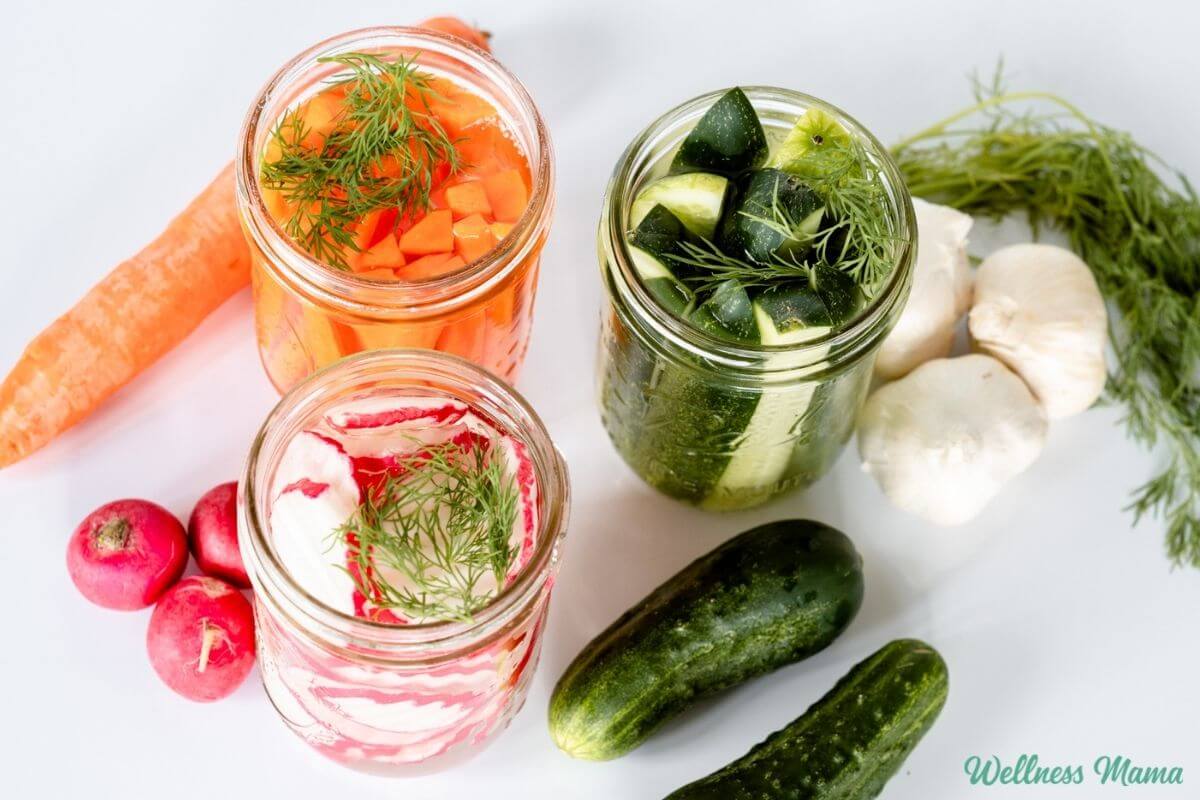
When we think of pickles, we usually think of cucumber pickles. But you can pickle many different foods, including green beans, carrots, beets, and more. Here’s how to pickle cucumbers.
Sauerkraut
Germans have been fermenting cabbage for thousands of years to keep it all winter long. Not only is it practical for food storage, but it’s also great for health. You can easily learn how to make sauerkraut at home.
Kimchi
This Korean side dish is more than fermented cabbage. Traditional family recipes mix things up by adding other vegetables. For example, spring onions, cucumber, celery, bamboo shoots, seaweed, and more. Kimchi also varies in seasonings. Popular options include zingy spices and condiments like Korean chili powder, garlic, ginger, and fish sauce.
Miso
Miso is a fermented soybean paste. The Japanese first made it with salt and koji (a fungus, Aspergillus oryzae). Some add other ingredients, like seaweed, grains (rice or barley), and sesame seeds. Cooks use miso in soups and sauces and as a seasoning.
Tempeh
This fermented soybean cake hails from Indonesia. They ferment soybeans with a fungus, either Rhizopus oligosporus or Rhizopus oryzae. Many marinate it in brine or spices and then fry it. Tempeh is then eaten alone or used as an ingredient in soups, stir-fries, or sandwiches. It’s really good at absorbing the flavors of whatever you cook it in.
Natto
This is another fermented soybean food from Japan. They ferment whole soybeans with Bacillus subtilis var. Natto. It’s an acquired taste with its strong smell, and flavor and has a sticky or slimy texture. They often serve it with rice, and (believe it or not) it’s popular breakfast food in Japan. It’s eaten cold, and some people enjoy it with added onion or kimchi.
Yogurt
The yogurt most people buy today is nothing like its original form. We used to make yogurt with raw milk and without added sugar, colors, or flavors. The cultures break down the proteins and sugars in the milk to make it more digestible. The live bacteria also benefit the gut microbiota in our digestive system.
Cheese
Another form of fermented dairy is cheese. A different type of culture is used to make cheese than yogurt. Even the different kinds of cheeses have different bacteria cultures. Longer fermented or “aged” cheeses break down more of the sugars. This means they tend to be better tolerated by those with lactose intolerance.
Fermented Drinks
The health benefits of fermented drinks are similar to those of fermented foods:
Wine
Traditionally made from grapes, wine is also made from many different ingredients. This can include apples, cherries, dandelions, and even pumpkins. You’ve probably heard wine has the antioxidant resveratrol, which comes from grape skins.
When picking out a bottle of wine, there are certain things to watch out for. This includes pesticide levels, GMO exposures, sulfites, and more. A lot of wines add sugar and dye to make them taste and look better.
Learn more about how to choose a healthy wine in this podcast episode.
Kombucha
This now popular drink is fermented tea. It was originally made with black tea and sugar and fermented with a starter called a SCOBY. SCOBY is an acronym for Symbiotic Colony Of Bacteria and Yeast. Now, kombucha is made with a variety of teas and flavorings. Some even have fruit juices or coconut water added to them.
Commercial kombucha can be expensive and has added sugar. But luckily, you can easily make kombucha yourself. Here’s how to make kombucha at home. You can make it in batches, but I like to make continuous brew kombucha to save time and keep it always available.
Kefir
Traditional cultures made fermented dairy products, including kefir with milk. However, it doesn’t have to use cow dairy. For those who can’t do dairy, try my Coconut Milk Kefir Recipe. You can also make water kefir with this Water Kefir Soda Recipe.
Studies show the link between probiotic-rich foods and overall health. Sadly, with technological advances and changes in food preparation, these time-honored foods have been largely lost in modern society.
Where Have All the Fermented Foods Gone?
The amount of probiotics and enzymes in the average diet has declined sharply over the last few decades. Pasteurized milk has replaced raw milk. Pasteurized yogurt has replaced homemade. Vinegar-based pickles and sauerkraut have replaced traditional lacto-fermented versions… the list goes on.
Even grains were safer to eat when we prepared them by soaking, sprouting, and fermenting them. These traditions largely reduce the anti-nutrient content and make them less harmful. Phytic acid and lectins are a few examples.
Instead of the nutrient-rich foods full of enzymes and probiotics our grandparents probably ate, today’s average diet is mainly sugar-laden, lab-created dead foods.
So, why are fermented foods so good for you? We’ll cover that next.
Health Benefits of Fermented Foods
Why eat these foods? For starters, they taste amazing (I promise the taste will grow on you!). There are plenty of other reasons to start making and eating fermented foods:
- Probiotics – Fermented foods and drinks introduce beneficial bacteria to the digestive system. They also help balance the bacteria in the gut. Probiotics have even been shown to help slow or reverse some diseases. Plus they can aid digestion and enhance immunity.
- Postbiotics – Fermented foods also help improve your body’s production of POSTbiotics. These are the product of your gut bacteria digesting a prebiotic substance, like fiber. They’re actually a waste product of bacteria. Postbiotics include things you may have heard of. Like short-chain fatty acids (SCFAs), including butyrate, enzymes, lysates, and amino acids. You can learn more about postbiotics here.
- Absorb Food Better – Having balanced gut bacteria and enough digestive enzymes helps you absorb more nutrients from food. Fermentation also improves the bioavailability of food’s nutrients. For example, fermented oat gruel improves iron absorption. You may not need as many supplements because you’ll be absorbing more of the live nutrients in your foods. All thanks to the microorganisms helping you out.
- Improve Gut Health – Including lactic acid bacteria from fermented foods can improve digestive health. Fermentation basically activates nutritional compounds in foods (for example, flavonoids). They then benefit the body, improving cardiovascular, immune, and metabolic health.
- Promote Weight Loss – Fermented food may also help battle the bulge. Daily consumption of fermented foods leads to decreased body weight over time. The balance of gut microbiome species can make the difference in promoting weight loss or weight gain. For that reason, these foods are important to consider in the fight against obesity.
- Improve Mental Health – Improving intestinal health with fermented foods may improve your mental state. It feeds microbes that produce feel-good neurotransmitters like serotonin. Common antidepressants called SSRIs help recycle serotonin. Addressing the gut should be a key part of mental health care.
- Lower Inflammation – Including more fermented foods in your diet can help lower inflammation. Increasing good bacteria in the gastrointestinal tract promotes the production of anti-inflammatory postbiotics.
- Balance the Immune System – By increasing the diversity of species in the microbiome, fermented foods also help balance the immune system.
Practical Benefits of Fermented Foods
- Budget-Friendly – Adding healthy foods to your diet can get expensive. Homemade fermented foods are an easy way to pack in nutrition, even on a budget. You can make your own whey at home for a few dollars. A little bit of sea salt is an easy way to inexpensively ferment veggies and other foods. You can make drinks like water kefir and kombucha at home that cost only pennies per serving. Adding these things to your diet could also cut down on the supplements you need, helping the budget further.
- Preserves Food Easily – Homemade salsa only lasts a few days in the fridge—fermented homemade salsa lasts months! The same goes for sauerkraut, pickles, beets, and other garden foods. Lacto-fermentation allows you to store these foods for longer periods without losing the nutrients. Unlike traditional canning.
- Save Space – If you can vacuum-seal them, you can store lacto-ferments in your pantry or garage instead of refrigerating them. This is really helpful in the summer when I try to save as much fresh produce as possible.
Bring on the Bacteria! How to Incorporate Fermented Foods Into Your Diet
Adding fermented foods to your diet can be an easy process. Plus it can save you money on probiotics and digestive enzyme supplements!
On a basic level, you can make foods like sauerkraut with just cabbage, water, and salt on your counter. That recipe can be adjusted down to make one head of cabbage worth in a quart-sized jar.
You can also incorporate fermented drinks like carbonated water kefir and kombucha. These are inexpensive to make and can replace unhealthy drinks like soda. I love the starters from Kombucha Kamp to make my own! To get started, order a SCOBY culture here.
Fermented Food Recipes
Here are some more fermented food recipes for you:
- Fermented Salsa
- Sriracha Sauce (Lacto-fermented)
- Apple Cider Vinegar
- How to Make Whey and Cream Cheese
- Homemade Sauerkraut
- Fermented Pickles
- Pickled Radishes With Gochugaru
- Homemade Yogurt
Fermented Drink Recipes
- Coconut Milk Kefir
- Natural Ginger Ale
- Ginger Bug (For Natural Soda)
- Beet Kvass
- Probiotic Lemonade
- Water Kefir Soda
- Water Kefir Probiotic Drink
- Ginger Honey Switchel
- Elderberry Kombucha Soda
- Coffee Kombucha
- How to Make Kombucha Tea
If you have any digestive issues, start slow on fermented foods. You may want to begin with just a tablespoon of sauerkraut a few days a week or a few sips of kefir and work up from there. If you notice any bloating or stomach upset, slow down, stop, or talk to your doctor. You may be struggling with SIBO (Small Intestinal Bacterial Overgrowth).
This article was medically reviewed by Dr. Jennifer Pfleghaar, D.O., FACEP, ABOIM. Dr. Jennifer is a double board-certified physician, is now working in Emergency Medicine, and has an office in Ohio practicing Integrative Medicine. As always, this is not personal medical advice, and we recommend you talk with your doctor.
Are you a fan of fermented foods or still on the fence? If you already eat fermented foods, please share your favorites!


Leave a Reply