


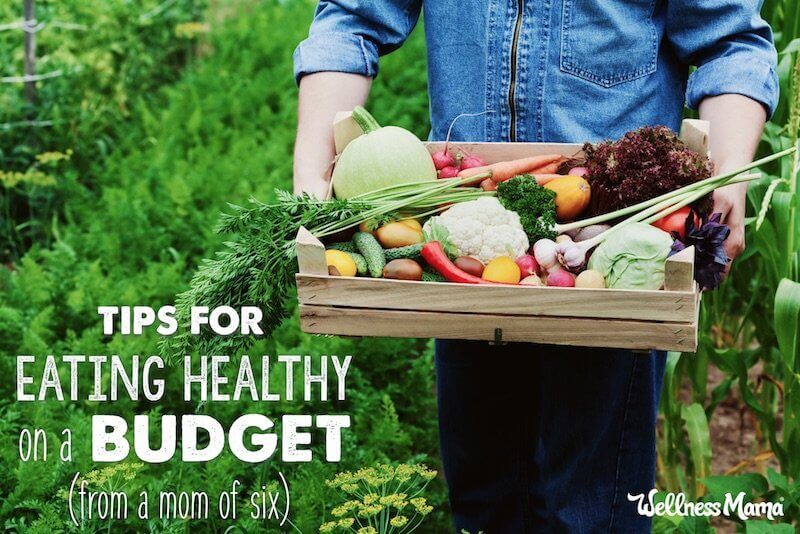

I often hear that it isn’t possible to eat a healthy diet because it is simply too expensive. Thanks to government subsidies of many processed foods, eating healthy on a budget can certainly seem impossible when organic and natural foods can be more expensive.
This doesn’t mean that they have to break the bank though … and you can eat healthy real food on a budget!
We’ve been eating a real food diet for years, and many of those years we were on a tight budget. Along the way, I’ve discovered a few resources and money-saving tricks for stretching a budget while eating healthy foods, so I’ve compiled them in hopes that they can help you too!
Eating Healthy on a Budget: Tips and Tricks
My encouragement to you would be this …
Make real food a priority as a line item in the budget and do the best you can. But don’t stress if everything isn’t organic or perfect all the time. Get enough sleep, sunshine, and exercise (all free) and support your body nutritionally the best that you can.
Tip #1: Embrace Simple Real Food Meals
Convenience foods are almost always the priciest items to buy, and the best way to cut costs while eating real food is to give up convenience foods and learn to enjoy really simple, real food meals. If you haven’t always eaten the healthiest food (I certainly didn’t once upon a time), you may need to redefine how you think about meals.
Oven-roasted chicken, baked sweet potatoes, and a field greens salad piled high with colorful veggies and doused in a delicious homemade dressing? Yes please!
Baked spaghetti squash boats with pastured sausage, sauteed onions, and peppers? Done!
I found that once I made the switch to this type of cooking, I enjoyed not only how I felt but the ease of preparation (30 minute meals in 1 pan anyone?), fewer dishes, and most of all, the quality of the ingredients.
Tip #2: Always Meal Plan!
This alone has made the biggest difference in reducing our food budget and staying on track eating healthy foods. Meal planning allows me to make some foods ahead and have them available for lunches or to repurpose for dinners.
This tip saves not only money, but time. With meal planning, I am able to only go to the store once a week or less and can often prepare most of the food for the week in one day, which cuts down my overall food prep time. I’ve estimated that it saves me over 3 hours a week!
Use a meal-planning app:
These days, I use Real Plans for all of our meal planning, since I can do it all on my phone. I love the ability to browse new recipes, save my own, and create a shopping list at the touch of a button.
Not into meal planning on the computer or phone? For years, I planned meals by hand using a recipe card system and it worked really well too.
To make your own (non-digital) healthy meal plan system:
- Write down 14-28 recipes that your family likes that are healthy. If your budget is tight, pick recipes that are also inexpensive to make.
- On the front of a 3×5 index card, write the meal and the recipe.
- On the back of the index card, write how much of each ingredient is needed for this recipe for your family size. (I usually plan for leftovers for lunches)
- To meal plan: Once a week or once a month, pick out the number of meals you need and put them in order for the week. Turn them over, add up the total of the ingredients, and you have a shopping list! (Just cross off any ingredients you have already.)
- Stick the cards on the fridge or bulletin board and put them away in your recipe box as you use them.
This system can help you stick to a list, and helps ensure that you always have foods prepared or ready to prepare, which limits impulsive purchasing and eating, not to mention wasted food!
Tip #3: Prepare in Bulk
I’ve found that bulk cooking is especially helpful with regard to meat. When our budget is tightest, I prepare a large, inexpensive cut of meat and reuse it different ways throughout the week. I always keep an eye out for items like turkey, ham, brisket, etc. to go on sale for these occasions.
Some examples of how to repurpose the meats:
- For turkey: Roll leftover meat in lettuce leaves for lunches; make into turkey enchiladas for dinner; add to omelets; put in stir-fry, etc. Use bones for broth/stock.
- For beef (brisket, roast, etc.): Season for fajitas; put in omelets or quesadillas; warm up in barbecue sauce; throw in soups, etc. Use bones in broth/stock.
- For ham: Serve with roasted cauliflower for “ham and potatoes” dish; put in omelets; wrap up in lettuce or put on salads for lunch; make a stir-fry with cabbage for a fast meal, etc. Use bones for broth/stock.
You can also prepare large amounts of ground beef, chicken breasts, or any other meat you have around and structure your meals for the week around this. Fish and seafood is more delicate and not as good to prepare ahead, but quality canned salmon is great in a soup or thrown on a salad, and good for you.
Tip #4: Stretch Meats
Grass-fed, high quality meats and responsibly sourced quality seafood is admittedly more expensive, so stretch them by serving in stews, curries, or a stir-fry with rice. Better yet, use the leftovers to make homemade broth, one of the healthiest things you can eat!
Just use the bones of any meat you eat and leftover veggie scraps to make a healthy homemade bone broth or stock. Store in the freezer or even canned (make sure you follow instructions carefully when using any kind of meat product) to stretch them even further. (I also use this store-bought broth sometimes when I don’t have time to make my own).
Tip #5: Find Inexpensive Vegetables
Veggies can vary tremendously in price, depending on the time of year and the source. Focusing on veggies that are in season will help cut costs some.
In the winter, we use a lot of frozen vegetables since they are cheaper, and in my opinion, fresher than the “fresh” produce that has been shipped halfway around the world. We also eat a lot of seasonal greens and root veggies. Summer means summer squash, salads, peppers, and tomatoes.
Vegetables like cabbage and sweet potatoes are inexpensive year-round and can be great fillers and substitutes in recipes. I stock up on things like these when they are in season, usually buying several cases of sweet potatoes in the fall from farmers markets.
Cabbage costs just pennies a pound from farmers when in season, and can be made into sauerkraut for later use. Winter squash also stores well and we buy this in bulk too. 
Tip #6: Order in Bulk
Though there is more of a cost upfront, ordering in bulk can usually save money in the long run. We order non-perishables like coconut flour, shredded coconut, olive oil, coconut oil, herbal teas, liquid castile soap, almond flour, etc. in bulk from Thrive Market at a discount.
We also order cheese in bulk 10-20 lb blocks from an organic farmer who offers raw cheese. Finding these resources in your area can be tricky, but once you find and establish a relationship with farmers, but building a personal relationship with your food source is fun and educational, not to better for you (and the animals, in most cases!).
Tip #7: Find a CSA, Farmer’s Market or Local Farmer
Websites like Local Harvest and Eat Well Guide can help you find a farmer, CSA (Community Supported Agriculture), or farmer’s market in your area. Websites like EatWild.com have resources for finding a local supplier of grass fed beef or other healthy animals.
Ask around too! We get most of our meats and vegetables from Amish farmers, but they don’t have listings online. Check with local health food stores — many will know places to find these items locally.
While it may cost a little more, there are also convenient produce box delivery companies. They support organic farms as well and even offer a natural produce box if organic isn’t in the budget.
Tip #8: Grow Your Own Food
Even if you live in a big city, it is often possible to grow at least some of your own food. Our garden has varied from a 25 x 40 foot garden to 4×4 square foot boxes for vegetables each year. We also have fruit trees, grape vines, and blueberry bushes in the works this year.
With food growing more expensive each year, I think it’s time we brought back Victory Gardens. These were popular during the World Wars … the ideas was that we could all contribute by growing some of our own food. Now, with easy methods like square foot gardening, there is no reason that we all can’t grow something!
Bonus: Gardening has many health benefits besides the delicious and healthy food.
Tip #9: Backyard Homestead!
This can mean many different things to different people, but is essentially the next step up from backyard gardening. Depending on where you live, having bees, livestock, or chickens is a way to cut down the food bill and potentially even have enough to share or sell for extra income.
Here are some tips to get started.
Tip #10: Preserve When Possible
Preserving is another great way to cut down a food bill. Freezing, dehydrating, and canning are all great ways to extend the harvest.
One year, I was able to can all of our tomato products for the year to cut down on BPA exposure from canned tomatoes. We’ve canned several bushels of apples into applesauce. Last year, we also canned condiments and pickles, and will do this again.
Freezing is another way to preserve foods, and our extra deep freeze in our shed has been a tremendous help for storing our 1/4 of beef and veggies from the garden.
Dehydrating is another option, though it takes a while and can be a slow process, at least with my dehydrator. If money is tight, look for dehydrators and canners at garage sales and thrift stores to save money over buying new.
Tip #11: Don’t Buy Drinks!
If you are trying to eat healthy, hopefully you’ve already cut out things like soda, canned drinks, and processed juices from your food budget. If not, do it now! This alone is a big percentage of most food bills and a big step in improving overall health.
Even “healthy” fruit juices cause a big insulin spike in the body, and are expensive without offering much nutrition. Conventional milk isn’t a healthy option either as it contains some levels of hormones, and the nutrients have been largely removed by the pasteurization process. (And we don’t need milk for the calcium, contrary to popular belief.)
Cutting those items from the food budget will often free up a lot of cash for healthier options. Filtered water is a great option (obviously!) but if you aren’t a fan of drinking only water for the rest of time … there are still some healthier and cheaper options for nutritious drinks.
- Water Kefir or Kombucha – These two beverages can be made at home for pennies and are great sources of nutrients and probiotics. Both are made with different types of reusable colonies of healthy bacteria and once you have these, they take only sugar and water to make again and again. They are so easy to make with these starter kits. Added benefit: water kefir gets carbonated like soda, so it is a naturally satisfying sub for one of the most unhealthy drinks available!
- Herbal Teas – To help my kids get vitamins in, I make herbal teas and keep them in a large pitcher in the fridge. It works out to under a dollar a gallon, usually much less. The kids love it, and I love that they are getting vitamins.
- Homemade Milk Substitutes – Almond milk and coconut milk are inexpensive and easy to make at home and save a lot over store brands. I’ve found that making coconut and almond milk is much cheaper and healthier than buying them. It also lets me sneak in extra vitamins and good fats! Or try my favorite, pecan milk.
Tip #12: Use Cash for Grocery Shopping (& Eating Out)
One of the surest ways to become aware of spending is to use cash. The grocery store is full of impulse buys (and designed to be that way). When you really have to count your pennies, decide upfront what you have to spend on groceries for the month (don’t forget to take online sources and purchases into account) and take that — and only that — shopping each week.
Cutting down on spontaneous purchases doesn’t always feed good in the morning, but when the budget comes in on target and you still served your family healthy meals — it’s gold!
Tip #13: Be Flexible
Be willing to adjust the meal plan based on what is on sale in the store. Sometimes this means refiguring the list right in the aisle, but if it means I can buy a little extra of what’s on sale it helps me stock a real food pantry and put the money-saving power of cooking in bulk to work.
At the same time, challenge yourself to improvise instead of running to the store to buy extra things for dinner. Some great new dishes have come about from repurposing leftovers or modifying a recipe on the fly, and even the “disasters” have been perfectly edible … and healthy!
Tip #14: Don’t Eat Out (Much)
I admit, I love eating out. Not because the food is good (it usually isn’t) but because I don’t have to cook or clean for one whole meal. This is a big deal when you cook three meals from scratch a day and then have to do the dishes. That being said, eating out even once a month can use up a lot of the food budget at once.
Saving the money from eating out lets me provide healthier options for my family at home, and none of us miss eating out much. (The one exception here is t my husband and I go out on a “real date” once a month when have a sitter.)
Full disclosure: I also order from The Good Kitchen sometimes and these are my go-to meals when I don’t feel like cooking. They are real food, delicious and still cheaper than eating out.
Tip #15: Make Expensive Items at Home
In the past, I’ve saved money by making my own natural homemade baby wipes, baby food, and using cloth diapers. All of these items are expensive in stores and healthier when made at home.
Which leads me to Tip 16 …
Tip #16: Make Your Own Natural Beauty and Cleaning Products
This is another area to save money and get healthier options. Try using some homemade substitutes for conventional beauty products or making your own deodorant and toothpaste.
Tip #17: Make Your Own Cleaning Products
This one is so easy and saves a lot of money. If you aren’t doing this already, try it and you’ll be amazed how easy it is. You probably even already have the ingredients at home! Try these recipes to make the switch easier:
Homemade Laundry Detergent
All-Purpose Cleaner
Natural Oven Cleaning
Homemade Glass Cleaner
Homemade Scouring Powder
Floor and Tile Cleaner
Tip #18: Cut Back on Supplements
While quality supplements are necessary for certain conditions, chances are you can back off of some supplements when you start eating healthier. You can also get vitamins, minerals, and probiotics much more inexpensively by making herbal teas, bone broths, and kefir or kombucha. (Back to Tip 11 for those recipes!)
In general, it is better to have healthy food options than to pop pills.
Tip #19: Exercise at Home or With Your Kids
Chances are you already have running shoes (or exercise barefoot… the trend is growing). If you are paying for a gym membership, consider using this money for real food instead. Do some sprints outside or learn how to do pushups at home. Make exercise fun without being a gym-rat by playing a game of soccer with the kids.
Added bonus: you are keeping your kids active too!
Tip #20: Do a Media Detox
If you’ve made the above changes and money is still tight, consider doing a media detox and cutting back on entertainment related expenses. Face it — the news is usually depressing and it doesn’t seem to be getting much better. Consider getting rid of the cable, newspaper subscription, news radio, etc. to have money to put in healthier areas of your life.
Our kids don’t get video games either (oh, the horror!), and they don’t care… they have this great entertainment called the backyard!
Tip #21: Count Your Savings in Medical Bills
When eating healthy on a budget feels hard, remember the biggest advantage to eating a real food diet: saving on doctor bills! I guess this is largely anecdotal, but with six kids and almost 12 years of parenting, we’ve only had to go to the doctor for two broken bones. I truly believe that our nutrient-dense diet has saved us from the ear infections and constant colds that so many children have.
Tip #22: Don’t Give Up!
Ultimately, we as parents are responsible for the food we bring into our homes. It’s hard to work against the tide but we do have the power to change the food climate and vote with our dollars for better food, at better prices! I’m confident changes are happening for the better and we’re creating a healthier future for our kids.
How do you eat healthy on a budget? Have any additional tips to share?


Leave a Reply