


Do You Have a Wheat Belly? Interview with Dr. Davis!

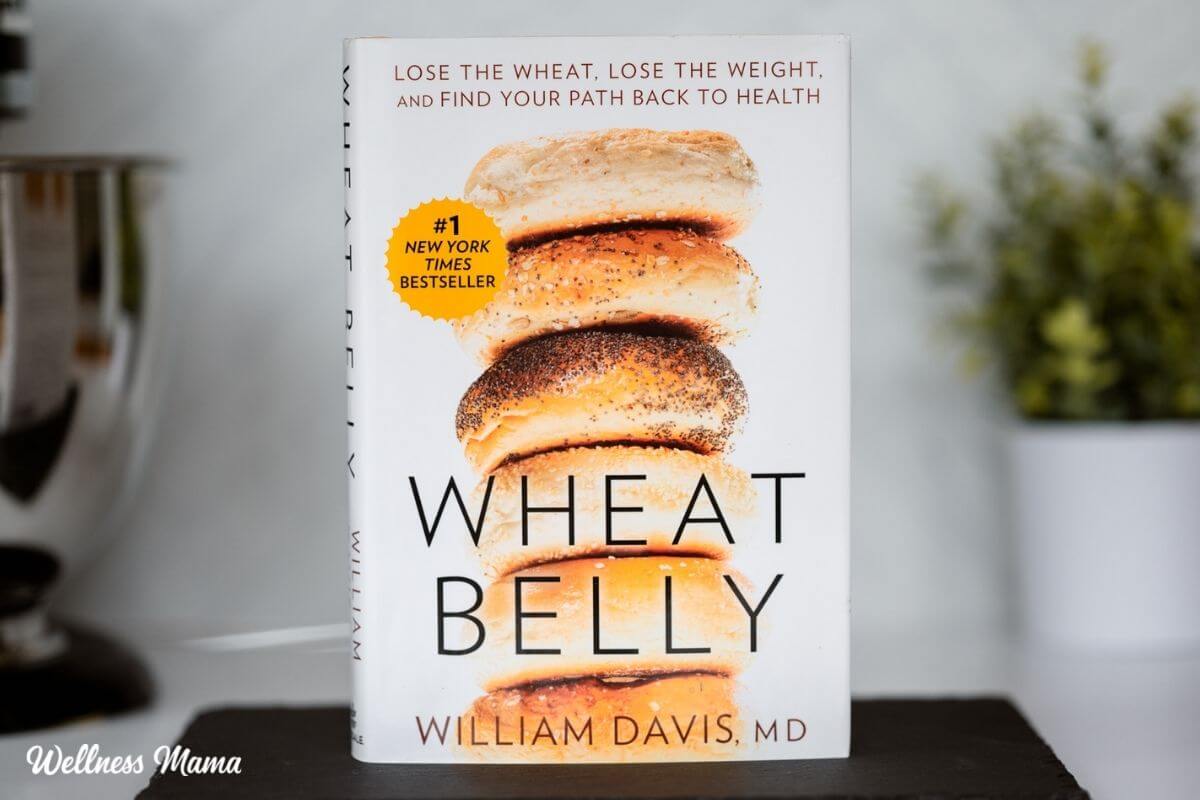
wheat belly 202x300 Do You Have a Wheat Belly? Interview with Dr. Davis![Note from Katie: I am so excited to post this interview with Dr. William Davis who wrote the book Wheat Belly:Lose the Wheat, Lose the Weight, and Find Your Path Back to Health

William Davis, MD, is a preventive cardiologist whose unique approach to diet allows him to advocate reversal, not just prevention, of heart disease. He is the founder of theTrack Your Plaque program.

He started recommending a wheat free diet with his patients because wheat products raise the blood sugar more than a snickers bar. Besides blood sugar improvements, he was surprised to see his patients also experience: "weight loss of 25 to 30 lbs over several months, marked improvement or total relief from arthritis, improvement in asthma sufficient to chuck 2 or 3 inhalers, complete relief from acid reflux and irritable bowel syndrome symptoms, disappearance of leg swelling and numbness. Most reported increased mental clarity, deeper sleep, and more stable moods and emotions."

Check out Dr. Davis' Blog Here]

Enter Dr. Davis:


1. How did you come to the conclusion that wheat is harmful in its current form?

I learned just how bad wheat was when I asked patients in my cardiac practice to remove it from their diet. I did this because 80% of people I’d meet for the first time were diabetic or pre-diabetic, situations that double or triple heart disease risk. In an effort to minimize this situation, I applied a very simple fact: Two slices of whole wheat bread raise blood sugar higher than 6 teaspoons of sugar, higher than a Snickers bar. (Most people are unaware that the glycemic index of whole wheat bread is among the highest of all foods.)

So I asked everyone to remove wheat to observe the blood sugar effects. People would come back after a 3-6 months and, indeed, their blood sugars and HbA1c (a measure of prior 60 days blood sugar) would be much lower, even to the point at which some diabetics were no longer diabetic. But people told me plenty more: They lost 30 pounds, lost 4 inches from their waist, felt better than they had in 20 years with more energy, less moodiness and deeper sleep. They told me how they experienced complete relief from acid reflux, irritable bowel syndrome, migraine headaches, hand and finger arthritis and joint pain, sinus congestion and chronic sinus infections. They told me about how their asthma improved so much that they threw away three inhalers, their rheumatoid arthritis was so much better they were in the process of reducing medication, their ulcerative colitis and Crohn’s had improved so much that no medication was required any longer, their leg edema had disappeared and rashes were gone.

At first, I dismissed it as pure coincidence. But the effects became so frequent and consistent that the conclusion became unavoidable: Wheat was the underlying cause for an incredible array of health problems and weight gain, and that eliminating was key to astounding health.

And note that this was not gluten avoidance for the gluten-sensitive; this was wheat avoidance for everybody, as it was a rare person who didn’t experience at least some measurable improvement in health, if not outright transformation. I now recommend complete wheat avoidance for all my patients, as well as anyone else interested in regaining control over health and weight.


2. How is wheat consumption linked to heart health?

Wheat consumption causes heart disease. It’s not cholesterol, it’s not saturated fat that’s behind the number one killer of Americans; it’s wheat.

The nutrition community has been guilty of following a flawed sequence of logic: If something bad for you (white processed flour) is replaced by something less bad (whole grains) and there is an apparent health benefit, then a whole bunch of the less bad thing is good for you. Let’s apply that to another situation: If something bad for you—unfiltered Camel cigarettes—are replaced by something less bad—filtered Salem Cigarettes—then the conclusion would be to smoke a lot of Salems. The next logical question should have been: What is the health consequence of complete removal? Only then can you observe the effect of whole grains vs. no grains . . . and, from what I witness every day, you see complete transformations in health.

Consumption of wheat, due to its unique carbohydrate, amylopectin A, triggers formation of small, dense LDL particles more than any other common food. Small, dense LDL particles are the number one cause for heart disease in the U.S. The majority of adults now have an abundance of small LDL particles because they’ve been told to cut their fat and “eat plenty of healthy whole grains.” This situation of excessive small LDL particles can appear on a conventional cholesterol panel as higher levels of LDL (“bad”) cholesterol, along with low HDL cholesterol and higher triglycerides that often leads to statin drugs. When more sophisticated lipoprotein testing is obtained, then the explosion of small LDL particles becomes obvious.

Compound this with the increased appetite triggered by the gliadin protein in wheat that acts as an appetite-stimulant, and you gain weight. The weight gained is usually in the abdomen, in the deep visceral fat that triggers inflammation, what I call a “wheat belly.” Wheat belly visceral fat is a hotbed of inflammation, sending out inflammatory signals into the bloodstream and results in higher blood sugar, blood pressure, and triglycerides, all adding up to increased risk for heart disease.

Say goodbye to wheat and small LDL particles plummet, followed by weight loss from the wheat belly visceral fat. Inflammation subsides, blood sugar drops, blood pressure drops. In short, elimination of wheat is among the most powerful means of reducing risk for heart disease.


3. What other conditions have you seen to be associated with wheat consumption?

A shorter list might be what conditions have not been associated with wheat consumption.

Gastrointestinal consequences of wheat consumption include the common conditions of acid reflux and irritable bowel syndrome symptoms of gas, cramps, and diarrhea. People with inflammatory bowel diseases such as ulcerative colitis and Crohn’s disease experience improvement and, sometimes, complete relief from cramps, pain, diarrhea, and bleeding.

Brain and nervous system effects range from mood disruption, such as depression, to behavioral outbursts in children with ADHD and autism, to triggering of hallucinations in people with schizophrenia and mania in people with bipolar illness. Wheat can also inflict direct damage on the brain and nervous system and show up as a condition called cerebellar ataxia, the progressive loss of balance and bladder control, and peripheral neuropathy, the loss of feeling, usually in the feet and legs. A British research group, for instance, has found that 50% of unexplained peripheral neuropathy can be blamed on wheat. There’s also the recent detailed description of gluten encephalopathy, or dementia from wheat by the Mayo Clinic; diagnosis is usually made at autopsy.

Joint pain and swelling are common accompaniments of wheat consumption. The most common form involves the wrist and fingers. Others experience relief from back pain and hip and knee pain with eliminating wheat, especially if weight loss from the abdomen develops, since this belly fat serves as a repository for inflammation; lose the wheat belly, inflammation subsides.

Skin conditions commonly improve or disappear with wheat elimination. Common conditions like acne improve, as well as a long list (enough to fill four pages) of other skin conditions from granuloma annulare, to allergic dermatitis, to gangrene.

From the head down to the toes, there is no body system not affected by consumption of wheat.


4. What are the most important things to understand when it comes to wheat consumption?

I believe one of the most crucial aspects of the wheat conversation for people to understand is that the gliadin protein in wheat acts as an appetite-stimulant. People who consume the gliadin protein in wheat consume, on average, 400 more calories per day. People who eliminate the gliadin protein of wheat consume 400 calories less per day, even if calories, fat grams, or portion sizes are unrestricted.

I think that this fact has been used to advantage by Big Food. Put wheat flour, and thereby gliadin, into every product you can, you increase appetite, increase consumption, increase sales. I believe this explains why wheat flour can be found in the most improbable places like tomato soup and licorice.

The gliadin protein in wheat exerts this effect on the human brain because it is degraded to a group of compounds called exorphins, or exogenous morphine-like compounds; these effects that can be blocked with administration of opiate-blocking drugs. Yes, the appetite-stimulating effect of wheat can be completely disabled by administering the same drugs that heroine addicts take to block their “high.” Studies in volunteers have demonstrated that people administered opiate-blocking drugs have much reduced desire for cake, cupcakes, and cookies. A drug company filed its application in early 2011 for the drug naltrexone for weight loss; in clinical trials, naltrexone was successful, with participants losing 22 pounds per month by reducing calorie intake 400 calories per day.

As long as wheat remains a part of your diet, you will not have full control over impulse and hunger. Calorie consumption is higher, especially for carbohydrate foods. Weight accumulates, particularly around the middle. Eliminate wheat, on the other hand, and you regain normal physiologic control over hunger.


5. If a person decides to eliminate wheat, should he/she turn to “gluten free” alternatives or what type of diet have you found to be optimal?

First, I believe we should return to real, unprocessed foods as often as possible. It means eating vegetables, raw nuts, meats, fish, eggs (including the yolks), cheese, healthy oils like extra-virgin olive and coconut. I do not believe that we should count or limit calories, especially after we’ve eliminated the potent appetite stimulant, wheat. If you miss baked goods, I provide recipes in the Wheat Belly book, as well as on The Wheat Belly Blog (www.wheatbellyblog.com). These recipes for chocolate chip cookies and cheesecake, for example, are wheat-free, nearly sugar-free, low-carbohydrate and are generally healthy enough to eat anytime with none of the adverse health consequences like weight gain or bloating.

I strongly urge people to avoid commercial gluten-free products. This is because, in place of wheat flour, these products, such as gluten-free whole grain bread, are made using cornstarch, rice starch, tapioca starch, and potato starch. These powdered starches are among the few foods that increase blood sugar higher than even whole wheat. It means these foods trigger weight gain in the abdomen (“gluten-free belly”), increased blood sugars, insulin resistance and diabetes, cataracts, and arthritis. They are not healthy replacements for wheat.


6. Ok, a tough one… can you give us a 10-15 second elevator speech that can help us explain the reasons to avoid wheat to doubting friends and relatives?

Sure. The American public needs to be aware that agribusiness and Big Food companies have sucker punched you. They have learned how to use this Trojan horse, wheat, harboring its hidden gliadin protein that increases appetite.

Wheat is a weak opiate. Eat wheat, you want more wheat, you want more carbohydrates. The gliadin of wheat is converted to exorphins, morphine-like compounds that can be blocked with opiate-blocking drugs.

Even worse, we’re advised by our own government agencies like the USDA and Health and Human Services that whole grains are good for us and we should eat more. Eat more “healthy whole grains,” we eat more, we gain weight, we acquire all the health consequences of wheat and weight gain such as hypertension, high cholesterol, arthritis, acid reflux, and diabetes. Big Food makes out, Big Pharma makes out; we all pay the price.

The epidemic of diabetes and obesity has been blamed on us. We’re told that Americans are overweight and diabetic because we are gluttons and we’re lazy. I don’t buy it. I believe the majority of Americans are fairly health-conscious and try to get at least some exercise. I do not believe we are that different from, say, the people of 1950 or 1960. I think we’ve been duped into blaming ourselves, when all along a big part of the blame should be placed on this corrupt product of genetics research, propagated by agribusiness, and put to profitable use.

If you haven’t already, check out Dr. Davis’ book Wheat Belly. I’ve found that is a great resource, especially for friends and relatives who have trouble grasping how “heart-healthy-whole-grains” could possibly be bad.

Have you read Wheat Belly? Noticed any health improvements after removing grains? Share below!

Related posts:

About Wellness Mama

Wellness Mama is a full-time housewife with a background in nutrition, journalism and communications. Her passion is helping others achieve optimal health through a “Wellness Lifestyle.” She has helped hundreds of clients lose weight, increase athletic performance, improve fertility, and overcome numerous health problems and diseases.

  • http://pittiefullove.wordpress.com/ Jess D

    This is an awesome post!  And an awesome website—which I just stumbled upon after my friend posted this article on facebook.  I LOVE this and have no idea how I didn’t find your website/blog before!  I can’t wait to spend all day looking through everything!  Thanks for sharing this awesome info!

  • Ellyn

    I can speak from experience–my husband in just about 6 weeks, dropped his blood sugar from 110 to 78.  He had eliminated all grains.  I must admit that he ate very low carb during that time–no fruit even.  But I’m convinced that dumping bread and pasta played a HUGE role.  He also decreased his weight 25 lbs. as a wonderful bonus.  Dare I say he’s even in a better mood??  I’ve put Dr. Davis’ book on my Christmas wish list.

  • http://wellnessmama.com Wellness Mama

    Hi Ellyn, Just wanted to let you know I got your email and have been meaning to reply! Congrats on his big improvements! So glad for you both!

  • Laynniharrison

    I am just so intrigued by this whole study! I have been such an advocate for whole grIn….on the Oprah bandwagon, I buy all kinds of whole grain and don’t prepare before eating the way you say. Now I come to your page today and this is on here! Wow! The reason this is so amazing is I just so believe this is God. Thanks for the info and the interview. I have so much work to do with my family of 8. 5 boys, 1 girl…..lots.

  • Jim Purdy

    Awesome information. Largely because of Doctor Davis, I’ve trying to eliminate lots of stuff — gluten, wheat, grains, carbs — and switch to a high-protein Paleo-ish diet. I’m definitely feeling much better.

  • Mazaltaj

    I just wanted to mention how important I’m finding this kind of a diet in my current (third) pregnancy, and I wish that prenatal practitioners would add this to their world view!!  My first pregnancy was a nightmare — chronic nausea, morphing to wicked heartburn and eventual full-on pre-eclampsia.  The doctor knew to tell me I should be eating high protein for the pre-eclampsia part, but nothing about the “low carb” part.  My husband and I ended up eating massive quantities of brown rice and meat (I was on full time bed rest and he found vegetables too daunting), with ww toast snacks in between.  My husband is chronically skinny (5’8″ and still weighs about 130 soaking wet) but in that pregnancy we both ballooned to our highest weights EVER (he to about 150, I to 200!!), I was swollen with the kind of edema that makes ones skin like mushy marshmellow, my joints ached, in fact, I felt like even my hair ached!

    And then, after a long bought of barely controlled pre-eclampsia, I ended up in (what still seems to me a necessary) c-section and gave birth to a boy who appeared healthy in all respects, though he was extremely thin (despite being at least 42 weeks cooked), attached to a cord that looked like a shoe string.  He was a voracious nurser, and even though I thought I was eating a healthy diet (full of organic whole grains, vegetables, meats, etc.) and exclusively nursed him, he started getting sick at 6 weeks old and by the time he was a kindergartner, he was having month long bouts of bronchitis, given Albuterol (asthma steroid), and spitting up puddles of mucus or sneezing out ropes of mucus.  He never slept through the night (at his worst, he only slept 45 minutes at a time), his bowl movements were never solid, and he alternated between hyper/aggressive/manic and morbidly depressed (this, from a 3-4 year old!!).

    I have done an immense amount of reading and investigation since then (he’s 10 now) and learned SO MUCH, and luckily have been able to help him a great deal — to the point where he has slept solidly through the night for the past 5 years or so, has normal bowel movements, can function at school and at home, etc.  He can and does eat wheat and other grains now, though I know this isn’t the best for him and would like to find a way to help him off them again.  While we were going through the bulk of his physical healing, though, we went on a strict elimination diet and increased the good Weston-Price type foods recommended here.  I have experienced (either personally, via my son, or in working with my diabetic mother in law) everything that is addressed in this article.

    So, anyway, this current pregnancy started out with similar extreme symptoms as my first, but this time, I had some idea how to handle it.  As soon as I made some major restrictions to my diet (including eliminating all grains), the symptoms stopped immediately.  And when I get tempted to cheat, I feel them start back up.  DIET IS POWERFUL STUFF!!!

  • Jessica West

    What a great article! I have this book on hold at my library, but I’ve been waiting forever already, because it has become so popular (a good thing!). I will be sharing this article with everyone – I’ve been trying to explain my diet change to family and friends, and I think this will really help.

  • Cryogenicape

    If the results are so astounding why not do a scientific study with verifiable results where your peers can pour over the work?  I”m all for new ideas promoting a healthier lifestyle, but if an actual Dr. doesn’t feel like legitimizing his point of view through research then why should he be trusted more than anyone else off the street with an opinion?

  • http://wellnessmama.com Wellness Mama

    It is actually very expensive to do full clinical testing, and he would never get the funding because there is no profit in it for anyone who could sponsor him. He has clinical experience with hundreds of patients to back up what he is saying and supports much of it with scientific research in his book. Also, studies on wheat and its affect on these conditions have been done, just with whole wheat vs. processed wheat. Certainly, the whole wheat showed better, though they never took it to the logical conclusion that perhaps no wheat could cause even more improvement. All that aside, there is NO biological need for wheat (or other cereal grains) and no nutrients in it that can’t be found more abundantly in other foods. Add to that the rising rates of autoimmune disease and celiac disease (and these are recorded in scientific literature) it would seem wise to at least experiment by temporarily removing these potentially harmful foods and seeing how one’s own body responds…

  • Cryogenicape

    I would never claim to know anything in this field having taken no classes in nutrition or a school of dietetics.  Although some things are obvious (eat your vegetables, exercise..) claiming outright that one thing could be even the potential cause of another without any scientific evidence to back it up is dangerous.  Small scale tests can be run at the university level with doctors overseeing students with little cost to the doctor, if he approached certain students within the school of nutrition at certain universities I’m sure at least some students would take interest in his theory and put it to testing. While I have no doubt that wheat is more harmful than good for us, 

    I put little if any faith in people in power that won’t back up what they say.  Individual cases simply aren’t enough, and patients backing him up without hard data equates to a popular country doctor spoon feeding placebo to the masses.  People have been modifying the human diet for the greater good since society was formed, and as we live longer lives of course new maladies will affect us.  If everyone died at 20, then cancer would be practically non existent.

    Look, if I was a Doctor of any science whatsoever that held the miracle key to ending diabetes, obesity, arthritis, asthma, and so on then I would do more than write a book, interview with blogs.  I would want to save as many people as possible.  Provided his theories can be substantiated then more power to him.  In my 30+ years of living and eating, I’ve slowly modified my diet and exercise to the point where I can say I’m a generally healthy guy.  I don’t eat tons of wheat products anymore, but I did for quite a long time, without any of the issues associated by Dr. Davis.  As I’ve eaten less and less grains overall I’ve not noticed more or less of anything other than it’s easier to count carbs/cals/fat/protein with less grains.  

    I guess I hope he’s right, but people smarter than him have made bigger mistakes proven wrong later by scientific observation (Einstein, and the Static Universe theory).  Thanks for making me think about it more though!

  • Pingback: Link Roundup « Sceptically Fit

  • Casein

    Sorry, but I disagree with your statements.  Do I just go believe this doctor because he says so???  Where is the scientific proof? Seriously, think about it.  There are billions of people in OTHER countries who are perfectly fine on grains, healthy and slim.  Have you you thought that perhaps over consumption of other things (hint: milk, please research casein)could also be a cause of diseases in the US?
    Funny how the book is titled Wheat Belly but then the author talks about eliminating all grains not just MODIFIED wheat.
    Please be transparent and always quote a study where you derived your conclusions from.  You are not doing anyone favors by posting anecdotes.

  • Casein

    Great post.  I have a similar experience.  I have been eating grains all my life and have not experienced any diseases mentioned.  I am slim and perfectly healthy.  I can say that grain causes no issues in ones health based on my personal experience. My saying so has the same credibility as the authors as both mine and his are based on personal experience and not a placebo-controlled randomized study.

  • http://wellnessmama.com Wellness Mama

    Dr. Davis cites numerous studies in his book, but space is somewhat limited in a blog interview. I absolutely agree with you that there are problems with over-consumption of dairy as well, but from my experience, grains are also a big problem for many people. The grains we eat have been highly modified, and it doesn’t take a scientific study to see that processed white flour is much finer than the stone ground versions that were eaten years ago. Most countries where people are thin and eat grains (like asian countries with rice, etc) not as many gluten containing grains are consumed, and there are different preparation methods. I’d encourage you to read Wheat Belly before drawing a conclusion, if you haven’t done so already. I do know that for all the clients I’ve worked with who have removed grains and seen major changes like return of fertility, weight loss, improvement of skin issues, reduced digestive troubles and more, it doesn’t matter if a scientific study has proved that grains are harmful to them…

  • Casin

    I am sorry but you just gave me another anecdote.  I don’t want to be confrontational but give me links to studies done.    As far as the blog goes there is always room for simple links.  That’s how credible blogs differentiate themselves from the ones which supply anecdotes.  I am not dissing the arguments but I don’t take things at face value.  I am not arguing for grains to be beneficial when then they are modified or stripped of nutrients via commercial applications.  Yes, you can obtain these nutrients from other sources but by that argument you can say exactly the same thing about any animal protein (grass fed or not in case of beef), which you are a big proponent of.

  • http://wellnessmama.com Wellness Mama

    I lent out my copy of Wheat Belly, but can cite those specific studies when I get it back. In the meantime, here are some articles (with links to studies) and some studies for you. I would also disagree that you can’t obtain the same nutrients from other sources that you get from animal proteins, at least not in anywhere near the same ratios without a lot of excess carbs (as in the case of beans) and lectins (see studies below).
    http://www.ncbi.nlm.nih.gov/pmc/articles/PMC1115436/ (about lectins, which are found in high amounts in grains, beans and dairy) http://www.krispin.com/lectin.html (article with links to further studies about lectin) http://rawfoodsos.com/2011/12/22/the-truth-about-ancel-keys-weve-all-got-it-wrong/ (good analysis of some of the studies on both sides) http://www.fathead-movie.com/index.php/2010/09/20/amber-waves-of-pain/ (also links to articles) http://www.direct-ms.org/pdf/EvolutionPaleolithic/Cereal%20Sword.pdf (about problems with cereal grains) http://www.ncbi.nlm.nih.gov/pmc/articles/PMC433288/ (the harmful effects of some grains in relation to insulin activity) http://www.ncbi.nlm.nih.gov/pmc/articles/PMC1115436/?tool=pubmed (on lectins and disease) http://www.marksdailyapple.com/why-grains-are-unhealthy/#axzz1hHhgoHja (good article, linked to a couple of studies, but explained concisely)
    I’ve got more linked in another email account, but will have to post those when I’m not holding a bouncing 6 month old who is attempting to teethe on my keyboard. :-)

  • Pingback: My Reading List from 2011 — Wellness Mama

  • Arianna

    I just wonder if wheat is so bad how come italians eat pasta and/or bread almost every day and don’t seem to have the problems that we do? :(

  • Ursula

    I was born and raised in Germany and have lived in this country for many years now. I find it amusing how all kind of misinformation flies back and forth across the Atlantic. Europeans think all Americans are fat and wasteful (which they’re not), Americans think all Japanese and Italians are thin (which they’re not), all Italians eat tons of pasta and bread (which they don’t), and all Germans eat lots of sausage and cake, and drink lots of beer (which they don’t). It is very dangerous to make any kind of generalization about any culture’s lifestyle. Italy and Germany have the same celiac epidemic we have here.
    As for a grain free diet, I have personally experienced everything Dr. Davis addresses in his interview. I lost my gallbladder last May (major inflammation involving even the liver), and have been through every imaginable test to find out why I continued to have serious intestinal issues. I have been gluten-free for three years, but cannot tolerate even gluten-free any longer. I have belly fat even though I was religious about a low-fat low-everything lifestyle. I also have Hashimoto’s. I finally consulted a nutritionist and she advised a grain-free diet. I’ve been on it for a week and have lost about a pound, and the bloated feeling is gone. If you don’t have problems with grain, well, that’s great for you. My own husband doesn’t. But if you do, and if you’ve tried everything to starve yourself into a thin belly, and your nutritionist tells you to avoid all grain to stabilize your blood sugar, this website is a Godsend. Any blog by nature is ‘story telling’, relaying personal experience. Physicians also learn from stories their patients tell them, at least the good ones do. The bad ones stubbornly stick to ‘scientific evidence’, which sometimes is nothing but story telling, the outcome dependent on who’s telling the story. I, for one, am very grateful to ‘wellness mama’. Thank you for giving us an option to try!

  • Shasha Andrews

    I have had stomach probs for years, I mean- more than 10!  I was so tired of feeling cruddy that when a friend suggested I stop eating wheat, I thought, “How in the world will I do this, almost everything I eat contains wheat!?”  But, I tried it, results were all but immediate, I felt better.  To solidify this, after two weeks, I ate a small cheese quesadilla made with a flour tortilla, and suffered acid reflux the remainder of the evening.  Now, I didn’t do that on purpose, I just wasn’t thinking when I ordered it.  After reading this article, I can attest to having better night’s sleep, less mood swings, and almost no heartburn!  I do eat sprouted wheat bread, I handle it fine, and it usually tastes and is less expensive than the gluten free.  I have been wheat-free since July.  Sometimes it can be a pain in the neck when everyone is eating cookies & goodies made with “normal” flour, but- again, after reading this article, I must say, I really don’t know if I want to go back to having horrid moodiness, sleepless nights, and what I thought was IBS.  I also read the article on Grains and the Bible.  It is true that grains in this day and age are a far cry from those of Bible/Jesus’ time.  All the GMOs in our foods these days, how are we all not sick and dying all over the world?  Thank you for letting me share!

  • Shasha Andrews

    I have had stomach probs for years, I mean- more than 10!  I was so tired of feeling cruddy that when a friend suggested I stop eating wheat, I thought, “How in the world will I do this, almost everything I eat contains wheat!?”  But, I tried it, results were all but immediate, I felt better.  To solidify this, after two weeks, I ate a small cheese quesadilla made with a flour tortilla, and suffered acid reflux the remainder of the evening.  Now, I didn’t do that on purpose, I just wasn’t thinking when I ordered it.  After reading this article, I can attest to having better night’s sleep, less mood swings, and almost no heartburn!  I do eat sprouted wheat bread, I handle it fine, and it usually tastes and is less expensive than the gluten free.  I have been wheat-free since July.  Sometimes it can be a pain in the neck when everyone is eating cookies & goodies made with “normal” flour, but- again, after reading this article, I must say, I really don’t know if I want to go back to having horrid moodiness, sleepless nights, and what I thought was IBS.  I also read the article on Grains and the Bible.  It is true that grains in this day and age are a far cry from those of Bible/Jesus’ time.  All the GMOs in our foods these days, how are we all not sick and dying all over the world?  Thank you for letting me share!

  • Shasha Andrews

    I have had stomach probs for years, I mean- more than 10!  I was so tired of feeling cruddy that when a friend suggested I stop eating wheat, I thought, “How in the world will I do this, almost everything I eat contains wheat!?”  But, I tried it, results were all but immediate, I felt better.  To solidify this, after two weeks, I ate a small cheese quesadilla made with a flour tortilla, and suffered acid reflux the remainder of the evening.  Now, I didn’t do that on purpose, I just wasn’t thinking when I ordered it.  After reading this article, I can attest to having better night’s sleep, less mood swings, and almost no heartburn!  I do eat sprouted wheat bread, I handle it fine, and it usually tastes and is less expensive than the gluten free.  I have been wheat-free since July.  Sometimes it can be a pain in the neck when everyone is eating cookies & goodies made with “normal” flour, but- again, after reading this article, I must say, I really don’t know if I want to go back to having horrid moodiness, sleepless nights, and what I thought was IBS.  I also read the article on Grains and the Bible.  It is true that grains in this day and age are a far cry from those of Bible/Jesus’ time.  All the GMOs in our foods these days, how are we all not sick and dying all over the world?  Thank you for letting me share!

  • Shasha Andrews

    I have had stomach probs for years, I mean- more than 10!  I was so tired of feeling cruddy that when a friend suggested I stop eating wheat, I thought, “How in the world will I do this, almost everything I eat contains wheat!?”  But, I tried it, results were all but immediate, I felt better.  To solidify this, after two weeks, I ate a small cheese quesadilla made with a flour tortilla, and suffered acid reflux the remainder of the evening.  Now, I didn’t do that on purpose, I just wasn’t thinking when I ordered it.  After reading this article, I can attest to having better night’s sleep, less mood swings, and almost no heartburn!  I do eat sprouted wheat bread, I handle it fine, and it usually tastes and is less expensive than the gluten free.  I have been wheat-free since July.  Sometimes it can be a pain in the neck when everyone is eating cookies & goodies made with “normal” flour, but- again, after reading this article, I must say, I really don’t know if I want to go back to having horrid moodiness, sleepless nights, and what I thought was IBS.  I also read the article on Grains and the Bible.  It is true that grains in this day and age are a far cry from those of Bible/Jesus’ time.  All the GMOs in our foods these days, how are we all not sick and dying all over the world?  Thank you for letting me share!

  • Shasha Andrews

    I have had stomach probs for years, I mean- more than 10!  I was so tired of feeling cruddy that when a friend suggested I stop eating wheat, I thought, “How in the world will I do this, almost everything I eat contains wheat!?”  But, I tried it, results were all but immediate, I felt better.  To solidify this, after two weeks, I ate a small cheese quesadilla made with a flour tortilla, and suffered acid reflux the remainder of the evening.  Now, I didn’t do that on purpose, I just wasn’t thinking when I ordered it.  After reading this article, I can attest to having better night’s sleep, less mood swings, and almost no heartburn!  I do eat sprouted wheat bread, I handle it fine, and it usually tastes and is less expensive than the gluten free.  I have been wheat-free since July.  Sometimes it can be a pain in the neck when everyone is eating cookies & goodies made with “normal” flour, but- again, after reading this article, I must say, I really don’t know if I want to go back to having horrid moodiness, sleepless nights, and what I thought was IBS.  I also read the article on Grains and the Bible.  It is true that grains in this day and age are a far cry from those of Bible/Jesus’ time.  All the GMOs in our foods these days, how are we all not sick and dying all over the world?  Thank you for letting me share!

  • Shasha Andrews

    I have had stomach probs for years, I mean- more than 10!  I was so tired of feeling cruddy that when a friend suggested I stop eating wheat, I thought, “How in the world will I do this, almost everything I eat contains wheat!?”  But, I tried it, results were all but immediate, I felt better.  To solidify this, after two weeks, I ate a small cheese quesadilla made with a flour tortilla, and suffered acid reflux the remainder of the evening.  Now, I didn’t do that on purpose, I just wasn’t thinking when I ordered it.  After reading this article, I can attest to having better night’s sleep, less mood swings, and almost no heartburn!  I do eat sprouted wheat bread, I handle it fine, and it usually tastes and is less expensive than the gluten free.  I have been wheat-free since July.  Sometimes it can be a pain in the neck when everyone is eating cookies & goodies made with “normal” flour, but- again, after reading this article, I must say, I really don’t know if I want to go back to having horrid moodiness, sleepless nights, and what I thought was IBS.  I also read the article on Grains and the Bible.  It is true that grains in this day and age are a far cry from those of Bible/Jesus’ time.  All the GMOs in our foods these days, how are we all not sick and dying all over the world?  Thank you for letting me share!

  • Anita

    Hi Ursula.  I just wanted to respond to your comment that you were “ religious about a low-fat low-everything lifestyle.”  One can’t be low-everything, unless one is fasting!  And the low-fat thing automatically implies in increase in either protein or carbs (more likely) or both.  Having done low fat for a few decades,  it was a revelation to me to read Adkins first book about ten years ago and see another way of looking at food.  At the time, I had belly fat for the first time in my life after having my first child and no amount of exercise or portion control was touching it.  When I did the low-carb thing, that it what finally made the difference.  And I have been a big fan of FAT (dietary fat, that is, not the fat on my belly which carbs help produce) ever since.  I remember that Adkins even states at the end of his book that he would expect that extremely obese people who cannot get their weight to change on even a very low-carb diet go on a primarily fat-only diet!  I’m not sure how you could figure out a palatable way to eat just fats, but the theory of it is interesting.  And I can definitely say with confidence and experience that plenty of fat in a low-carb diet makes one lean, not corporeally fat.  So, as long as you’re eating natural, good fats (extra virgin olive oil, cold pressed coconut oil, animal fats from properly raised animals, etc.) don’t be afraid of fats!!  :-)

  • Lyndylou

    Okay, breads and pasta are obvious, but what other foods have grains in them that I might not suspect?