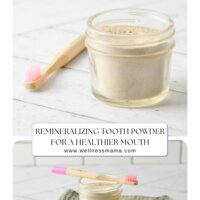

Remineralizing Tooth Powder For a Healthier Mouth

Katie Wells Avatar

Reading Time: 5 minutes

This post contains affiliate links.

Read my affiliate policy.

remineralizing tooth powder
Wellness Mama » Blog » Natural Remedies » Remineralizing Tooth Powder For a Healthier Mouth

My remineralizing toothpaste is one of the most visited posts at Wellness Mama. Over the years I’ve had a lot of emails from people who’ve switched and love it. After I remineralized my teeth and reversed cavities, I became a convert to natural toothpaste!

The only downfall to my homemade toothpaste is that it can leave residue on sinks. Plus there’s some concern with the coconut oil if you have a septic system (like we do). I also wanted to figure out how to incorporate the benefits of healing clays into our oral health regimen. However, there were some definite texture issues with the clays and coconut oil.

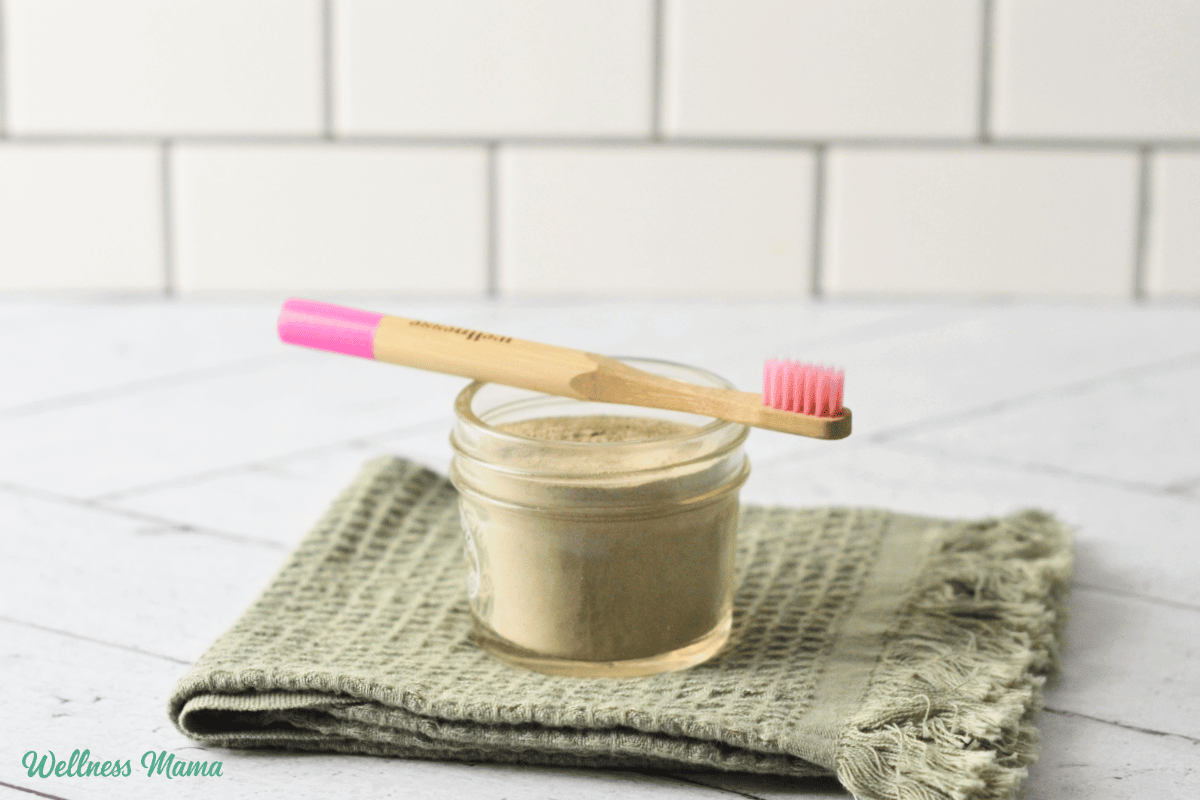
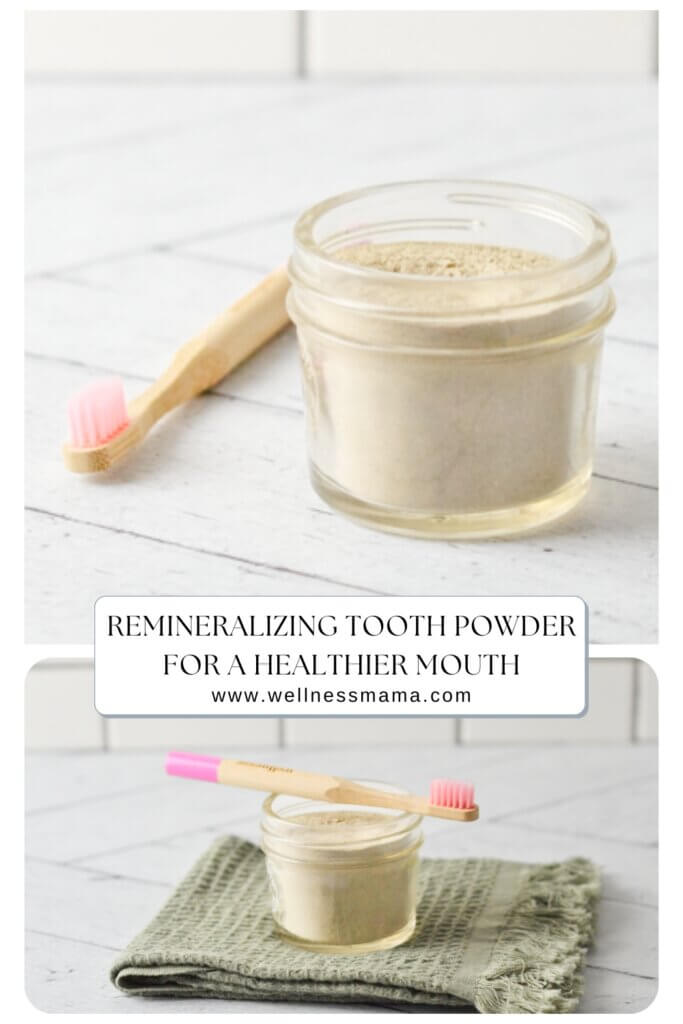
What resulted was this remineralizing tooth powder and I couldn’t be happier with the results. It’s even easier to make than homemade toothpaste. Plus you can use ground herbs and spices instead of essential oils if preferred.

Choosing a Natural Toothpaste

Over the past decade, more and more natural toothpastes have come on the market. They advertise fluoride-free, sulfate-free, and natural ingredients. Some are certainly better than others, but there are some good ones on the market. I compare different natural toothpastes in this article. Or you can find the toothpaste I helped develop here (we have tooth whitening toothpaste plus a kid’s strawberry flavor!).

You’ll still find DIY products in my bathroom though because I love being able to customize my oral care products.

Why Tooth Powder?

Natural tooth powder is less messy than a tube of toothpaste. This makes it easier to travel with or take camping. I don’t have to worry about toothpaste all over my clothes if it accidentally gets squished in my suitcase. And it has a much longer shelf life since we’re not introducing any liquids.

The main ingredient in this homemade tooth powder is bentonite clay. Years ago I became a big fan of bentonite clay for its amazing health properties. Not only does it bind and draw out heavy metals and toxins (a big plus for the mouth!), but it’s also mineral rich.

You can take bentonite internally to help remove toxins, so it’s safe to use in the mouth. Be sure to get food-grade bentonite clay though! The one I have linked in the recipe below is safe to use internally. In recent years there’s been talk about the lead naturally found in bentonite clay. While there is a tiny amount of lead (like many things), it’s bound within the clay and not bioavailable. You can read more about that here.

Bentonite is also rich in calcium, magnesium, and silica to help nourish teeth. So how does it work? Bentonite clay is unique because once mixed with water the molecules develop an electrical charge. This charge attracts and soaks up toxins, drawing them into the inside of the clay structure and holding them there.

To put it another way…

Bentonite is a swelling clay. When it becomes mixed with water it rapidly swells open like a highly porous sponge that traps toxins. It’s also very gentle and has a milder taste. I use it for facial masks, healing poultices, and even my hair.

Healthy Tooth Powder Ingredients

The other tooth powder ingredients also support a healthy oral microbiome. The blend of herbs and minerals fights bad breath and leaves your mouth feeling squeaky clean. For a pure mint flavor you can use more mint and omit the cinnamon and clove. You can adjust the amount of powder to your preferences. Personally, I love the balanced blend of organic peppermint powder, cinnamon, and refreshing clove.

  • Baking soda – Helps remove stains and whiten teeth but it’s gentle enough that it won’t harm enamel. Helps remove plaque and reduces gum bleeding and inflammation. Because it’s alkaline it supports a healthy mouth pH to discourage harmful bacteria.
  • Calcium Carbonate powder – Provides the calcium needed for strong enamel and can help reduce tooth sensitivity.
  • Ground cloves – Naturally antioxidant and a broad spectrum antimicrobial. Clove freshens breath, increases circulation for healthier gums, soothes inflammation, and can reduce the pain of sensitive teeth. It also gives the tooth powder a yummy taste.
  • Cinnamon – Also antimicrobial and antifungal (especially against candida). Tastes great and helps discourage bacterial growth in the mouth for fresh breath. Reduces gum inflammation and increases circulation.
  • Mint – Tastes great and soothes the gums. Mint is antimicrobial, helps relieve tooth pain, and freshens breath. There’s also some evidence it can help fight the virus that causes cold sores.
  • Xylitol – This sweetener adds to the tooth powder flavor but also has some impressive oral health benefits. Studies show it helps fight plaque and gingivitis inflammation. It also helps prevent cavities and binds with calcium to help remineralize teeth.

Adding Essential Oils

It’s completely optional, but you can add some essential oils to your tooth powder. They’re a potent way to increase the oral health benefits. Most antimicrobial essential oils are strong so a little goes a long way. When I add essential oils to this recipe, I just add a few drops total per batch.

Here are some essential oils to try in your DIY tooth powder!

The great thing about this tooth powder is you can customize the flavor however you want. You can add essential oils to increase the potency or leave them out for a milder taste (that even my kids like).
remineralizing tooth powder
Print
4.62 from 121 votes

Remineralizing Tooth Powder

This homemade tooth powder uses ingredients that rebuild enamel, freshen breath, and detox your mouth.
Author: Katie Wells

Materials

Instructions

  • Mix all of the ingredients in a bowl. Use a fork to mash any clumps and mix in any essential oils (if using).
  • Store in a small glass jar with a lid.
  • To use, place some powder in your palm and dip a wet toothbrush into the powder. Brush and rinse.

Notes

You can customize the powder to your taste and all of the herbal ingredients are optional. Create your own flavor with the herbs and essential oils of your choice.

How to Use Tooth Powder

Dump a little powder into your palm and dip the bristles of a wet toothbrush into the powder. Sometimes I’ll also add a few drops of the OraWellness Brushing Blend. Brush and rinse with cool water. Adults and kids can use this daily (or multiple times a day). Follow it up with some mouthwash or flossing if needed.

Shelf Life and Storage

This tooth powder will last for several years if stored properly. Store away from direct light and heat (like the car in summer). While it doesn’t have any water and the ingredients are antimicrobial, be sure to avoid getting the tooth powder jar wet. Always put a little powder into your palm before applying it to a wet toothbrush. Never dip the brush into the jar of powder as this introduces bacteria.

Oral Health Regimen

My teeth have never been whiter or healthier (according to my dentist) thanks to my oral health regimen. I eat foods that support oral health and use mouth-healthy products. I don’t do the same thing every single day, but here are some of the things I use. I’ve changed it up some since I reversed my cavities and often now I’ll just use Wellnesse toothpaste.

Have you ever had success reversing a cavity? What does your oral health routine look like? Leave a comment and share below!
Sources
  1. Valeii, K. (2022, August 8). Does Brushing Teeth With Baking Soda Really Work? Very Well Health.
  2. Gasmi Benahmed, A., et al. (2020). Health benefits of xylitol. Applied microbiology and biotechnology, 104(17), 7225–7237.
  3. Lin, S. (n.d.) How to Cure Tooth Decay | A Dentist’s Guide to Reverse Cavities in 3 Steps. Dr. Steven Lin.

Become a VIP member!

Get access to my VIP newsletter with health tips, special deals, my free ebook on Seven Small Easy Habits and so much more!

Easy Habits ebook on ipad
Katie Wells Avatar

About Katie Wells

Katie Wells, CTNC, MCHC, Founder of Wellness Mama and Co-founder of Wellnesse, has a background in research, journalism, and nutrition. As a mom of six, she turned to research and took health into her own hands to find answers to her health problems. WellnessMama.com is the culmination of her thousands of hours of research and all posts are medically reviewed and verified by the Wellness Mama research team. Katie is also the author of the bestselling books The Wellness Mama Cookbook and The Wellness Mama 5-Step Lifestyle Detox.

Comments

772 responses to “Remineralizing Tooth Powder For a Healthier Mouth”

  1. Pat Avatar

    HI, I’ve been using the powder for almost 3 weeks now, and my teeth have started to feel a bit sensitive just where they touch each other, not sure why…

    Then reading the comments today, I saw that the link to Amazon for the Calcium Powder was wrong? or maybe not… so now I’m confused and wanted to check whether I’m using the right Calcium. I bouthg NOW Foods Calcium Carbonate https://www.amazon.com/gp/product/B004421K68/ref=as_li_ss_tl?ie=UTF8&linkCode=ll1&tag=wellnessmama-20&linkId=268ffb4ba82a722cf49ed643b2aa952e&language=en_US) and it doesn’t have magnesium.

    Is this the right one or am I damaging my teeth?

    Sorry, I’m quite new and still learning, but I really found the blog super-usefull!!

  2. Amy Avatar

    Thank you for this awesome recipe.

    I got inspired from your mineralizing teeth diet article and now on it myself. I have metal and composite fillings. Can I use this wonderful toothpaste recipe for brushing my teeth?

  3. Jenna Avatar

    WM, I have used your toothpaste recipe in the past with success. I find tooth powder, in theory, more pleasing. I am gathering the necessary ingredients and, after reviewing your account of what is to be gained from each one, am left to ask what accounts for the magnesium component. The calcium link you provide terminates in NOW Calcium Carbonate that states it is 100% Pure and Other Ingredients are None. NOW has a Calcium & Magnesium however your link does not terminate in that offering. So, please, tell me where magnesium is coming from.

    Thank you for the work you do. I have gained much insight from the information and the leads you provide and from conducting independent research.

    1. Wellness Mama Avatar

      Unfortunately, the brand I used in the past that had calcium and magnesium carbonate doesn’t seem to be available, but the calcium alone is still effective.

  4. Susan Avatar

    This recipe reversed TWO cavities!! Thank you so much for this! I am so grateful and you have many more fans since I started this a year ago.
    Question! The bentonite clay I’ve recently been using has been found to have higher than safe levels of lead in it. Super yikes.
    Do you have any brands you can recommend? Now I’m almost too nervous to buy any other kind wondering if I’ll get another notice from the health department.

    ThanK you!

    1. Jordan Avatar
      Jordan

      Hello! Just curious how long you were using this recipe before your cavities were healed. My dentist wants to put a crown on a tooth and put a filling in another — I’m really hoping to avoid it but I don’t know how much time I have. Thanks!

      1. Jordan Avatar
        Jordan

        Also! Is it safe to use with metal fillings and/or braces? 🙂

  5. emery Avatar

    I just got some bentonite clay from a local buying club so I could make the hair mask. The packaging says not for internal use or for toothpaste. It says it is non-irradiated. Is there a special kind of bentonite clay to use for this toothpaste? Or is this just a standard warning they have to comply with?
    Thanks!

  6. Colleen Avatar

    Hi!
    Is this tooth powder, along with the Ora wellness drops, safe to use while pregnant?
    Thanks!

  7. Vivian Avatar

    Quick question: could I use bone meal powder instead of calcium powder?

  8. Megan Avatar

    Hello, I was really excited to start using the tooth paste powder as I didn’t like the texture of previous tooth pastes I’ve made. However after a couple of weeks of using the powder I noticed discolouration (greyish) lines where my teeth meet the gum. I scrubbed extra hard to get rid of these lines and even used my finger nail which helped a little bit but with every tooth being effected it was too much work. I switched back to regular toothpaste and the lines have gone away. What happened!? I really liked the powder and wish I could go back but it seems to discolour my teeth at the gums.

  9. Shruthi Avatar
    Shruthi

    I started using this recipe with full enthusiasm more than 3 months ago when my 5-year old was diagnosed with multiple cavities. I didn’t yield to the dentist’s call to get it filled. I was hoping this and the home-made brushing blend oil (with coconut oil and essential oils) will heal my child’s cavities. But sadly nothing healed and he developed a new visible cavity and also pain in the old one. Now I’ve switched back to colgate sensitive toothpaste and have booked an appointment with the dentist to have his cavity filled (or rot-canalled if need be).. I’m sadly disillusioned… sigh!

    1. Jonathan Sevy, DC Avatar
      Jonathan Sevy, DC

      IMPORTANT NOTE: Some things work for most people, most things work for some people, nothing works for all people. The reply about nutritional requirements for healing caries is very apropos, but there may be genetic or other factors at play in your son’s case. My mother was very conscientious about keeping sugars, soda pop, etc. out of our home and habits, Served us plenty of veggies, whole wheat bread, and so forth. I did not fight it, but had a mouth full of amalgam fillings by the time I hit puberty. Go figure.

      I am on my first trimester of testing a system of
      A. Twice daily Bass micro-motion brushing with a couple drops of Orowellness Heal Thy Mouth Blend and about 1/8 tsp of my own dry blend of
      1. baking soda,
      2. CaChloride,
      3. sea salt,
      4. Epsom salt (for Magnesium), and
      5. Xylitol,
      plus
      B. Oil pulling 4-8 times weekly with coconut oil, and
      C. Below the gumline application of anti-microbial solution of 1% hydrogen peroxide and a drop of Lavender essential oil or the Orowellness Blend – on the right side of my mouth only so that I can see whether this particular new habit is making the expected difference in periodontitis, subgingival tartar/calculus, and caries.

      I had a careful dental exam last month to get a solid baseline of where I am so that I can go back and repeat that process in a couple of months to measure what progress I am making, if any. If none, I won’t quit, but intensify my trial for 1 more month and have another exam. If none then, I will quit. Frankly, I am very confident that there will be large, measurable improvements. The science and peer-to-peer reviews of success are compelling.

      My experience in chiropractic practice was that a patient with chronic health issues would know with certainty within 1-3 weeks whether or not my care was making a positive change in their health. Not a month, certainly not 3 or 6 months. I fully expect that rule to hold in dental matters, too.

      If I forget to add a comment here sharing my own measurements when that next exam is performed, any reader is welcome to remind me via a reply here. Going through all this work and expense for only myself would be silly.

  10. Jezka Avatar

    Can I use a stevia leaf extract powder instead of xylitol? Or will the stevia extract cause tooth decay?

  11. Kim Avatar

    Last June, I had migraines that turned into a nasty head cold. My teeth on my right side hurt for months to the point I barely chew. My dentist could find anything wrong. I started using this exclusively and eventually the pain disappeared. My youngest son started complaining about tooth pain and I had him use this exclusively and had the same results.

    I’ve made tooth powder before but this one is the best formula because of the clay.

  12. Crystal Wagner Avatar
    Crystal Wagner

    Could you use cocoa powder in this recipe? I have a child that hates most flavors kids like, so I am looking into doing cinnamon, cocoa, or some kind of vanilla flavor. Any tips would be appreciated, as I am totally new to all of this. 🙂

  13. Olivia Avatar

    I have idea about hardly gettable BENTONITE to replace with FACIAL MASK CLAY in tooth recipe.

  14. Olivia Avatar

    Hello, Wellnessmama!
    Thank You for Your wonderful web page!
    I have a question.
    Could coconut oil be replaced with olive oil/haselnut oil (in toothpaste soda recipe and in handwash soda recipe).

  15. Sam Avatar

    I use your tooth powder modified, and really like it! I just add white oak bark for gum health and cacao powder to help the teeths enamel. I find that when I stop using store bought tooth paste and only use the powder I don’t need mints often. Thanks much!

  16. Shane Avatar

    Is it normal to experience increased tooth sensitivity in the first week after using this powder?

  17. Tan Avatar

    Should I use sodium bentonite clay or calcium bentonite clay?
    Should I use calcium carbonate or calcium citrate or some other form of calcium for the powder? Does it matter?

    1. Taylor Avatar

      Sodium vs Calcium

      There is a difference in ‘Bentonite Clays’ and both have different functions.

      Sodium Bentonite Clay has a swelling action. (external)…good for sealing ponds.
      Calcium Bentonite Clay has a detox action. (internal, non-swelling)

      The Redmond Bentonite Clay is SODIUM Bentonite and most western states mine Sodium Bentonite Clay.

      Calcium Bentonite Clay is mined in the SE-USA (Alabama or Mississippi).

      Please understand which Bentonite Clay you should use.

  18. Elise Avatar

    The xylitol I ordered is more crystal-like than powdered, larger than regular granulated white sugar, more like sugar in the raw. Should I break it down more in a food processor or something? Also, you say to rinse with cold water after but my 20 mo old (with tooth decay) fights me even brushing his teeth let alone getting him to rinse. I know all the ingredients are *technically* edible but I was curious if there was any other purpose in the rinsing other than just to get leftover powder out of your mouth.

    1. Tom Cornwell Avatar
      Tom Cornwell

      Elise, Yes, grinding the Xylitol to a powder first, would be the way to use it. I find that granulated Xylitol doesn’t dissolve as easily as sugar, for example, so if it isn’t going into solution during brushing, then we may be missing out on all of the benefits of adding Xylitol to the mix in the first place. While the author writes that the purpose of adding Xylitol to the recipe is to add sweetness and is completely optional, I would counter by stating that it should be considered one of the main ingredients, for all of the many benefits to the teeth and oral environment as a whole, including balancing pH, aiding in mineralization of the enamel and the role it plays in the regulation of growth of harmful bacteria, which destroy tooth enamel. Don’t worry if your child doesn’t want to rinse after brushing, as leaving Xylitol on the teeth is actually very beneficial!

  19. Amy Signs Avatar
    Amy Signs

    Hey I made this recipe but didn’t have the cloves or mint. I used it for a while…maybe almost a year and noticed my teeth were getting dark brown stains on them. It has taken weeks of switching back to coconut oil and baking powder to clear up the stains. I am disappointed…wondering if I did something wrong?

4.62 from 121 votes (90 ratings without comment)

Leave a Reply

Your email address will not be published. Required fields are marked *

Recipe Rating