


Chances are you’ve seen some negative press about salt. Dietary guidelines often recommend less sodium and the low-sodium industry is booming! Thank goodness sodium reduction and low-fat diets have significantly improved the average American’s health.
What’s that? It hasn’t?
Is Salt Bad For You?
Maybe you can see the importance of eating good fats, but you agree too much salt is bad for you. And you’d be right… if we’re talking about the chemically produced table salt in most processed foods. Fast food, cold cuts, and junk food are just some of the culprits to blame for our unhealthy high salt intake.
Table Salt = BAD!
Table salt is 97% sodium chloride and devoid of most other nutrients. It’s chemically produced, bleached, and not something you’ll find in my salt shaker. It’s also often contaminated with heavy metals like lead and cadmium. Iodized salt may have added dextrose (aka sugar). Then there are the anti-caking chemicals.
This type of salt isn’t naturally occurring. To the point, when salt-water fish are placed in salt water made with table salt… they die. Plus it doesn’t have the essential nutrients our bodies need.
When companies reduce table salt to make foods low-sodium, they don’t replace it with trace minerals and healthier options. Instead, you’ll find MSG and other chemical additives to achieve flavor.
Different Types of Salt
Unfortunately, many studies done on sodium consumption use table salt. So there’s now a body of evidence showing salt consumption is harmful. In reality, there’s no distinction made between table salt and natural salt.
Most of the unhealthy salt we eat comes from fast food and prepared foods. Even something that you would think should be fine. Soups are supposed to be healthy, but have you noticed the mg of sodium in a can of soup lately? That’s not to mention the preservatives, sugar, and other unhealthy ingredients in these foods.
I don’t recommend using table salt for food, but it does have its uses. You can use it in natural cleaning, stain treatment, and homemade playdough (just don’t eat it!).
Real Salt = Good!
While table salt isn’t good for anyone, real salt is healthy, necessary, and beneficial. The research linking table salt to heart disease, bloating, and other health disorders is correct. The bad news is we’ve thrown out the baby with the (salt) water.
Consider this:
- The body has high concentrations of many minerals and nutrients. While it needs water, it also needs the right concentration of these nutrients in bones, blood, and organs to function correctly.
- A person can’t get an IV of plain water — it must have a careful balance of minerals, including sodium!
- Salt, in its natural form, is not only necessary for the body to function, but adequate sodium levels are extremely important for health.
Even conventional healthcare experts will tell you we all need some sodium content in our diets to survive. We need daily sodium to conduct nerve impulses, use muscles, maintain water and mineral balance, and more.
Does Salt Cause Heart Disease?
Many accept the common belief that high sodium intake leads to hypertension. The idea is excess sodium creates fluid retention, overwhelming blood vessels. Organizations like the American Heart Association warn this is a big risk factor in heart failure and heart attack. According to mainstream health experts, salt reduction is necessary for heart health.
But what if we’re pointing the finger at the wrong thing? Harvard researchers followed 60,0000 nurses and monitored their diet. The nurses who had very low calcium or magnesium were 23% more likely to develop high blood pressure.
Other studies show it’s all about the proper mineral balance between magnesium, potassium, calcium, and sodium. Sodium reduction isn’t what improves blood pressure, hypertension, and other problems.
So where did the idea originally come from? Back in the 1940s, the notion that salt intake and blood pressure were related first emerged. Kempner discovered he could lower high blood pressure in patients with kidney failure using a rice and fruit-based extremely low-salt diet.
Over the years researchers have compared the amount of salt someone consumes to their blood pressure levels. The result has been a mixed bag with many poorly or inadequately designed studies.
Digging Deeper
Unconvinced, this eventually led to more comprehensive research on worldwide salt intake. These researchers found that:
In 1989, researchers at the London School of Hygiene and Tropical Medicine decided to re-evaluate the link between salt and blood pressure through a study of more than 10,000 people in 52 cultures around the world. Participants ranged from Yanomamo Indians in Brazil, whose diet is almost salt free, to residents of northern China, who eat as much salt in a day as a Yanomamo eats in three years. Instead of merely estimating salt consumption, the researchers calculated precise values based on urine samples. They took into consideration obesity and alcohol consumption. Among their findings were that except in a few places with extremely low salt consumption, the amount of sodium in the diet was unrelated to the prevalence of hypertension in a society or to its average blood pressure. Moreover, although the high rates of hypertension in the United States had long been considered a function of this country’s love for salty processed food, the study placed Americans right in the middle of the world’s salt intake curve.
Additionally, researchers at Indiana University put patients on a low-salt diet. While one-third of the patients had lower blood pressure, an equal amount developed higher blood pressure. Another study done in Canada concluded that how much salt someone ate didn’t matter… as long as they ate enough calcium and weren’t a heavy drinker.
Health experts use the studies linking sodium intake and hypertension to justify a low-sodium diet. This is especially true for cardiac patients and those with kidney disease. However, the science isn’t that cut and dry.
Salt and Sugar
You’ve heard me say before how bad processed sugar is. But sugar may be partially to blame for our salt problem. Too much sugar causes high insulin levels which leads to insulin resistance. Sugar also depletes the necessary minerals that we need for salt absorption. According to Robb Wolf, this causes us to hold onto sodium.
“Insulin causes an upregulation in the production of a hormone called aldosterone. Aldosterone causes the kidneys to retain sodium. And so it’s interesting because there is a reason to be concerned about sodium and blood pressure, but it’s not really the way that we’ve been looking at things.”
It’s All About Mineral Balance
Unfortunately, these studies fail to take into account the difference between real salt and table salt. A 2021 Harvard study followed a group of people for 9 years, monitoring their salt and potassium intake. The table salt only group had high blood pressure (of course!). The group that had potassium chloride along with the unhealthy salt was 31% less likely to have cardiac problems.
In 2016 researchers examined salt’s role in the health of salt-sensitive lab rats. This time though they used natural salt. They concluded that natural sea salt consumption helped protect against hypertension and kidney damage.
So is salt bad for you? The moral of the story isn’t that real salt is bad. But that eating it in a refined form isolated from other natural minerals is what’s harmful. If you’ve been avoiding salt for health reasons, it’s important to differentiate between table salt and natural salt.
Are You Low in Salt?
So how much salt do we actually need? As with most things, it depends on the person. People who sweat a lot, workout, sauna, or are very active typically need more salt. Excessive amounts of table salt are harmful, but not getting enough real salt is just as bad.
In one study with type 2 diabetic heart patients, researchers found less salt wasn’t better. Those who had less than 2 grams of salt a day had worse symptoms than those who ate 5 grams. Patients didn’t see negative results with more salt until they reached over 12 grams. That’s about two teaspoons of salt.
I’d recommend everyone cut out overly processed foods and stick to whole foods instead. When we do that though, we’re cutting out large amounts of (unhealthy) salt. If we’re not salting food to taste, this can create a salt and mineral deficiency.
Symptoms of Low Salt
Do any of the following symptoms sound familiar? If so you may not be getting enough salt. Studies show that too little salt (as well as too much), can cause health issues.
- Cellulite
- Feeling lightheaded or dizzy
- High Blood Pressure
- Kidney Stones
- Gall Bladder Problems
- Sore or Swollen Joints
- Gout
- Fatigue
- Brain Fog
- Poor Sleep
- Asthma or Respiratory Illness
- Irregular heartbeat
- Poor adrenal health
- Diabetes or blood sugar issues
- Poor muscle tone or lack of coordination
- Water retention, edema, or swelling (can actually result from too little salt)
These conditions can result from too little sodium and trace minerals and the resulting mineral imbalance. It’s important to note regular table salt can make these conditions worse. It creates more mineral imbalance by delivering too much sodium and chloride and not enough of the other necessary minerals.
In our efforts to remove processed table salt, we’ve created a mineral deficiency. According to Rick Wagner of Eidon Ionic Minerals, Sea Salt contains every known element on the planet.
Benefits of Natural Salt
The negatively charged ions in real salt support a host of hormonal, chemical, and electrical processes in the body.
Its trace minerals especially support nerve and heart health. (Scary, since cardiac patients are often told to reduce sodium). Some doctors have even had success in improving irregular heartbeat and neurological disorders with real salt.
Here are some more processes salt can support:
- Food absorption: Proper mineral balance in food and water helps the body better absorb and assimilate food and water.
- Cell Cleansing: The negatively charged ions in real salt and the trace mineral concentration let it cross into cells and pull toxins from them.
- Blood Pressure: Some evidence shows it may help regulate blood pressure (not raise it) when taken in the correct amounts.
- Heart Health: The negative ions help stabilize an irregular heartbeat and support electrochemical reactions in the body.
- Blood Sugar: Proper mineral balance from real salt helps increase insulin sensitivity and has even been shown helpful in patients with diabetes. It’s especially helpful with type II diabetes. While Type I diabetes can’t be reversed, it helps nutrient assimilation and other health factors in these patients.
- Allergies: Some evidence shows real salt dissolved in warm water is an effective natural antihistamine.
- Asthma and Sinus Trouble: Some patients experience asthma and sinus relief from taking salt internally and from using a salt inhaler. Salt can also help clear excess mucous and phlegm.
- Improved sleep: Balancing our trace minerals supports hormones and can improve sleep quality and duration.
- Reproductive Health: By supporting natural hormone function, real salt also supports natural fertility. It can improve reproductive health in both men and women.
- Cellulite: There’s some evidence you can reduce cellulite by getting enough salt. (I’ve seen this personally.)
- Cell Communication: Its pH and ion concentration help improve chemical communication between cells.
- Muscle Cramps/Tension: The trace minerals and pH in real salt help alleviate muscle cramps (magnesium is also important here). This is one reason that you often see athletes soak in salt water/Epsom salt baths.
- Bone Health: Over ¼ of the body’s salt is in the bones. When our sodium and trace mineral stores aren’t high enough, it can pull salt from the bones to keep the rest of the body functioning. This can be a tremendous factor in osteoporosis. Magnesium is important here as well.
- Adrenal and Thyroid Health: the pH and trace minerals in salt are extremely important for proper adrenal and thyroid function. If you have problems with either of these glands, increasing salt consumption can greatly improve symptoms.
- Nerve function: The electrical properties in real salt support bodily nerve function and communication.
- Water Content of Body: An IV needs the right electrolyte concentration for us to absorb it. Similarly, the trace minerals in real salt help us regulate the amount of water and trace minerals we need.
- Sexual Health: The same hormone-supporting properties of salt make it great for libido and sexual function.
- Digestive Health: Combined with water, it can help optimize our digestive system and increase stomach acid. This makes it helpful in dealing with digestive disorders and heartburn.
- There’s anecdotal evidence that salt water can help with issues like arthritis, Lyme disease, hypertension, neurological disorders, and skin issues.
- Eczema and Psoriasis: The same helpful properties make it helpful both internally and externally for skin conditions like eczema and psoriasis.
- Oral Health: Salt’s trace minerals can help oral health and for remineralizing teeth. Swishing with salt water daily can help improve oral health and regulate mouth pH.
What Kind of Salt is Best?
At our house, we have several types of natural salt, including Real Salt, Celtic sea salt, and Himalayan salt. One of my favorites is Himalayan Salt.
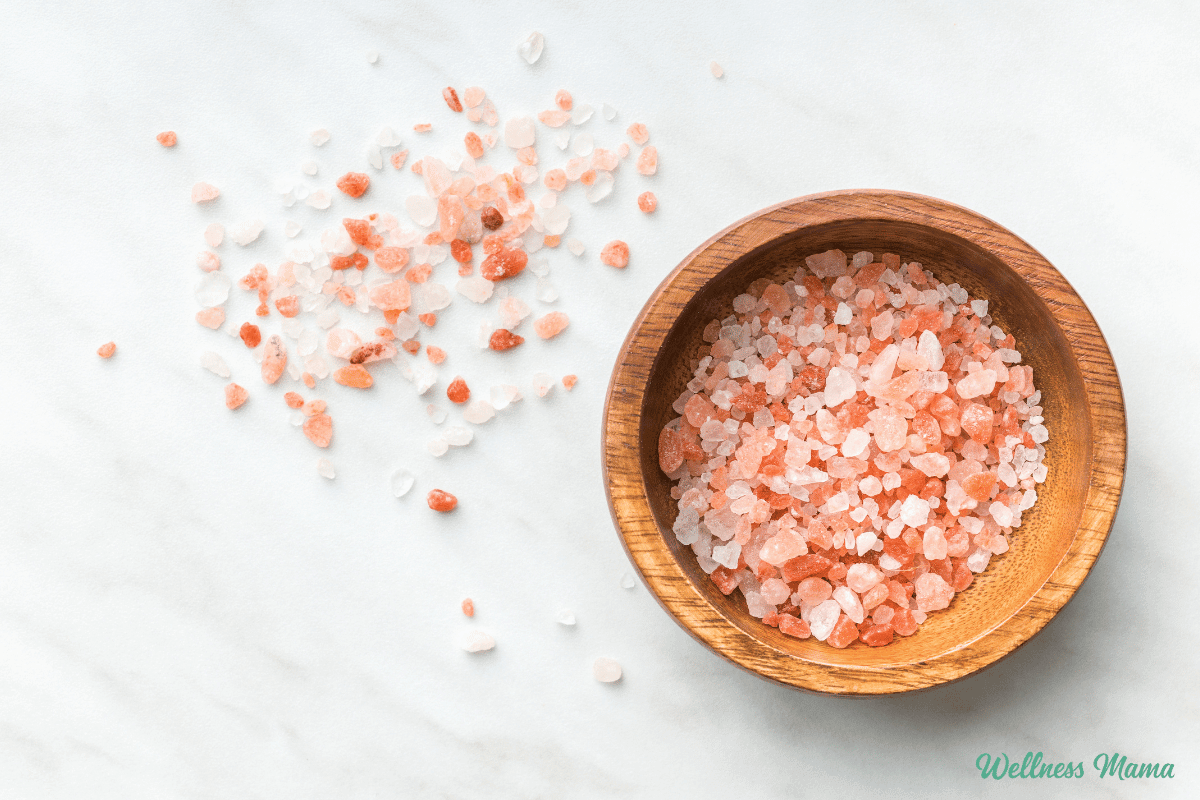
It’s found deep in the Himalayan mountains and is full of trace minerals. Himalayan salt is naturally pink or red and has a much milder flavor. I like that it’s mineral rich and not affected by the toxins that contaminate many sea salts. We use it to salt food or I’ll add some to water and drink it.
Others like Celtic sea salt and black lava salt (contains activated charcoal) are also beneficial. Another favorite is Redmond Real Salt. This brand comes from an ancient seabed in Utah not exposed to modern pollution.
How To Consume It
If you aren’t used to salt, it may be difficult to transition back to healthy amounts. Although many find their bodies crave it and respond well immediately. Here are easy ways to get more healthy salt.
- Add it to real, whole foods and salt to taste. Avoid processed or restaurant foods as these have large amounts of table salt.
- Drink ½ tsp in a quart of water daily to help raise electrolyte and trace mineral levels. (This mixture is called sole)
- Use a salt board for cooking and curing foods.
- Make sure you’re getting enough magnesium and other minerals. Most people are also magnesium and potassium deficient. These minerals help us absorb other minerals and vice versa.
Skin Health and More Benefits of Salt
- Soak in a relaxing bath with Epsom salts and Himalayan or Celtic salt. I use 2 tablespoons of each.
- For skin issues: Make a poultice of real salt and water (or honey). Apply this to areas with eczema or psoriasis.
- Make your own Himalayan salt scrub to reduce cellulite and improve lymphatic flow.
- Have asthma or allergies? Try a sea salt inhaler to alleviate symptoms
- Use a Himalayan Salt Bar “Soap” in the shower to soothe and restore skin. Some say it’s anti-aging and gentle for children with eczema.
- Try a salt deodorant bar made with Himalayan salt.
- Swish your mouth with salt water for 30-60 seconds. The trace minerals help remineralize teeth and it’s alkaline to improve mouth pH.
Where to Get Healthy Salt
Most grocery stores now sell healthy salt, but be sure to check labels for sourcing. I like buying salt in bulk (hello, 6 kids!) so I usually shop online. Here’s where to get it:
- Himalayan salt
- Redmond Real Salt
- Celtic Sea Salt
- LMNT electrolyte drink. These portable packs are high in trace minerals along with healthy sodium.
Switching to real salt is an easy (and tasty) way to improve our health. Our bodies naturally crave salty foods. Many people even crave the beach (real salt plus vitamin D). Make sure you’re getting enough healthy salt!
Do you avoid salt? Which kind of salt is your favorite? Leave a comment and share below!


Leave a Reply