

Spill the Beans: Are They Healthy Or Not?

Are beans healthy or not Spill the Beans: Are They Healthy Or Not?

Beans, Beans, good for your heart…

To quote a favorite saying among male classmates when I was in second grade. This quote claims that beans are good for your heart, among other things.

Not that we can put any stock in a childhood saying, of course, but the general consensus in the health community is that beans are in general, a “health” food and that when combined with rice, form a perfect protein for vegetarians.

Beans show up in some form in many different cultures and countries, though preparation methods vary vastly. Americans, for our part, get most of our bean consumption from soy and soy products.

Peanuts, technically also a legume and not a nut, also make up a substantial part of our bean consumption, and are also a rapidly rising allergy, especially among children.


What’s In A Bean?


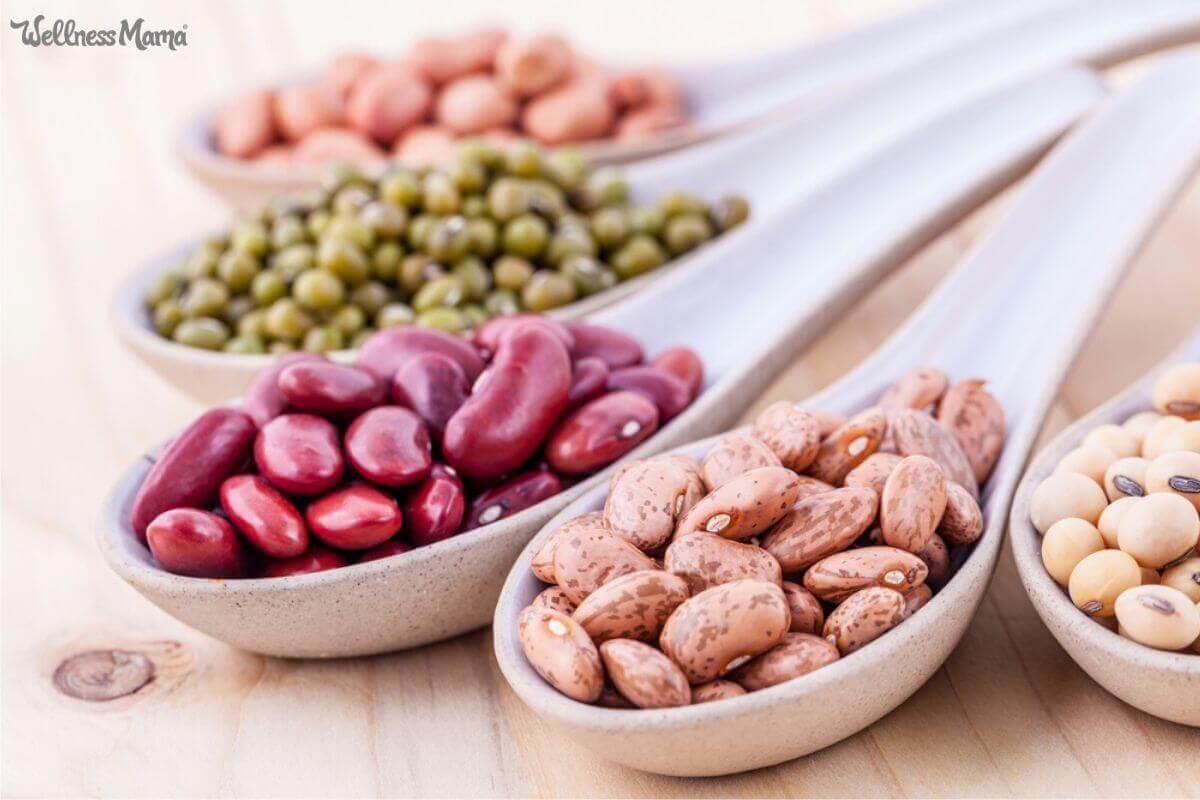
Beans contain a lot of soluble fiber, protein, carbohydrates, folate and iron. They also contain Lectins, which are also present in high amounts in grains. Because of their protein content, beans (legumes) often get a primary role in the diet of vegetarians, though not without cost.

The lectins in legumes are an important protective measure for the bean plant, and a potentially harmful one for humans. Before the dawn of genetically modified disease resistant soybeans (gee, thanks Monsanto) and their corresponding toxic pesticides and herbicides, legume plants were actually quite able to defend themselves.


What do Lectins Do?


Lectins are specific proteins that bind to carbohydrates, and exist in plants in varying levels as a protective mechanism. When animals who are not adapted to consuming particular types of lectins eat them, they will experience pain or death.

This reaction is not absent in humans, as I mentioned when I explained why grains can be so harmful. As Wikipedia explain, one example of lectin reaction in humans:

Some kinds of raw beans and especially red and kidney beans, contain a harmful toxin (the lectin Phytohaemagglutinin) that must be destroyed by cooking. A recommended method is to boil the beans for at least ten minutes; undercooked beans may be more toxic than raw beans.[8] Cooking beans in a slow cooker, because of the lower temperatures often used, may not destroy toxins even though the beans do not smell or taste ‘bad’[8] (though this should not be a problem if the food reaches boiling and stays there for some time).

At the extreme, lectins are potent enough to be a biological warfare agent as in the case of Ricin, Ricin is a lectin isolated in the castor oil bean and it acts on certain protein cells, allowing the ricin to enter the cell and prevent protein synthesis, eventually leading to cell death.

Obviously, some lectins have more toxic effects than others, as evidenced by the example above, but all lectins have some effect on the body. This is the reason that grains, beans and other lectin containing foods cannot be eaten raw.

Lectins are capable of harming the lining of the intestines, especially the microvilli. This happens when the lectins bind to the protein receptors in the intestinal lining, causing damage.

When the intestines are damaged, lectins, and the foods that they bind to, can pass through the intestinal wall and into the blood stream. These sticky molecules can then wreak havoc in the bloodstream.

Once lectins are floating around in the bloodstream, they can bind to any carbohydrate containing protein cells, including insulin and leptin receptors, desensitizing them. Without proper insulin and leptin function, problems like diabetes and metabolic syndrome can emerge.It is speculated that lectins may cause insulin and leptin resistance, two major factors in obesity and diabetes. As Whole Health Source explains:

What is not so speculative is that once you’re leptin-resistant, you become obese and insulin resistant, and at that point you are intolerant to any type of carbohydrate. This may explain the efficacy of carbohydrate restriction in weight loss and improving general health.

Wikipedia adds:

Lectin may cause leptin resistance, affecting its functions (signal have high levels of leptin and several effects gathering to protect from lipid overload), as indicated by studies on effects of single nucleotide polymorphisms on the function of leptin and the leptin receptor.[9]

Such leptin resistance may translate into diseases, notably it could be responsible for obesity in humans who have high levels of leptin.

Lectins also have the potential to bind to any carbohydrate containing tissue in the body, from the thyroid to the heart. (Maybe beans aren’t so good for the heart after all!). My personal theory is that sticky particles and pre-digested food floating around in the bloodstream does much more to clog arteries than slippery saturated fats, which get the bad rap!

So, lectins can contribute to disease and obesity when they pass through the intestinal wall and float through our bloodstream with other parts of pre-digested food. Personally,I’m not a big fan of the idea of partially digested food floating around in my blood, so is there a solution?


Reducing Lectin in Beans and Grains


I certainly don’t want to let beans take all the heat here! Grains contain just as high of levels of lectins and can wreak just as much havok, if not more.

All plants, in fact, contain lectins in varying amounts. Grains and beans (especially soybeans and peanuts) have especially high concentrations, along with nuts, pasteurized dairy, and genetically modified foods.

The harmful effects of lectins (and phytic acid) can be mitigated some by using traditional methods of perpetration, like sprouting,fermenting and soaking, though even these do not remove the lectins completely. Unfortunately, these methods are rarely practiced anymore, and grains in the processed forms we typically consume are little lectin powerhouses.

Over time, these lectins can cause serious damage to the intestinal lining and eventually cellular damage within the body.


What Level of Lectin Consumption is Safe?


This is a difficult question with no single answer. Certainly, if foods containing high levels of lectins are going to be consumed, traditional methods like soaking, fermenting and sprouting should be used to minimize the lectin content.

My personal recommendation is the get rid of the highest sources of lectins and reduce the other sources if possible. From wikipedia:

Foods with high concentrations of lectins, such as beans, cereal grains, seeds, and nuts, may be harmful if consumed in excess in uncooked or improperly cooked form. Adverse effects may include nutritional deficiencies, and immune (allergic) reactions[7]. Possibly, most effects of lectins are due to gastrointestinal distress through interaction of the lectins with the gut epithelial cells. A recent in vitro study has suggested that the mechanism of lectin damage may occur by interfering with the repair of already-damaged epithelial cells.[8]

Personally, I avoid the grains (and legumes except rare occasions), soak nuts overnight, and trust that the much lower levels in other plants won’t harm my intestines too much. Removing all processed and commercially prepared foods will remove the worst offenders: grains and soy.

If you are overweight or attempting to lose weight, a more stringent avoidance of lectins might be helpful. Since lectins can bind to leptin and insulin receptors, they can increase resistance to carbohydrates and cause weight gain or inability to lose weight.

For many, avoiding lectins, especially for a year or so, can help heal the intestinal lining, and facilitate weight loss, reduction of allergy symptoms and other health improvements.

So, I guess second grade logic isn’t so solid after all…. beans aren’t necessarily good for the heart, though other parts of the saying still ring true!

Shared on Fight Back Friday.

Like What You Read?

Sign up for exclusive Wellness Mama updates to get my newsletter, coupon codes, & bonuses emailed FREE! (No spam ever, I promise!)

About Wellness Mama

Wellness Mama is a full-time housewife with a background in nutrition, journalism and communications. Her passion is helping others achieve optimal health through a “Wellness Lifestyle.” She has helped hundreds of clients lose weight, increase athletic performance, improve fertility, and overcome numerous health problems and diseases. Connect with her on Twitter, Facebook, Google+, & Pinterest.

Disclaimer: Many of the links on my site, especially those from Amazon, Mountain Rose Herbs, Tropical Traditions and OraWellness are affiliate links. Should you click on these links and decide to purchase anything, I will receive a small commission and you will have my sincere thanks for supporting Wellness Mama!

DISCLAIMER: The statements made here have not been approved by the Food and Drug Administration. These statements are not intended to diagnose, treat or cure or prevent any disease. This notice is required by the Federal Food, Drug and Cosmetic Act.

  • http://www.wringingoutmysponge.blogspot.com Laura

    What about buying canned organic black beans, rinsing them well and eating them heated? We avoid most grains and eat sprouted wheat bread, but we love black beans and include them in our meal rotation. I would love to hear your thoughts on this. Thank you!

  • Dee

    wow – this is really interesting – I have been eating a lot of nuts thinking they were good fat and low carb, but have been going a bit overboard and noticed I have begun to gain weight. What about hemp seeds? I find that I can limit myself to 3 T which is the recommended serving size – should these be soaked?

  • Mary

    Love this blog (although I am a fan of occasional grains – they are so tasty! – and eat a lot of lentils), but wikipedia as your main source? Really? Not to go all teacher-y on you here, but you’d be much more convincing if you cited studies directly.

  • http://www.facebook.com/michelle.albanese2 Michelle Albanese

    I even make my own almond flour for this reason.  I follow the directions in the Nourishing Traditions cookbook. I Soak them for at least 8 hours with a tbsp of Celtic sea salt, then I rinse them and blot them dry and dry them in the oven at 150 degrees for 24 hours. (I dry my pecans for 12, but the almonds take longer). Then I grind them in my food processor.

  • Pingback: The Only Thing I’m an Expert in is Googling… « Effortless Effervescence

  • Rgb707

    This is such BS! I have been eating beans almost every day for years, chic-peas, kidneys, navy,etc. with no ill health effects. You  can’t take a common substance in a food and analize it “out of context” without the other substances it was a part of and then jump to the conclusion that its bad for you. Kind of like vitamin A which we all need and is in a lot of foods but we have also heard that too much can be harmful. Beans are an excellent source of fiber and protein with no fat and I am NOT going to stop eating them just because of a bunch of crack-pot scare articles. Remember all those studies years ago about how bad coffee was? 

  • Sam

    sounds like a registered dietician to me…

  • IgnoranceisBliss102106

    If you don’t agree, O.K., but you don’t have to be nasty. Good grief. 

  • MSU Nutritionist

    Does anyone else have a problem with that fact that this article was researched using Wikipedia? Any halfway serious academic knows that many of the sources used for Wiki articles are biased, not fully researched, and/or full of dated material. Wellness Mama, if you care about your credibility, you should probably use ACTUAL research studies/academic sources, not Google.

  • guest

    And what’s wrong with being an registered dietitian? (note the spelling). What career do you have that you consider superior?

  • http://wellnessmama.com Wellness Mama

    I agree that Wikipedia is no scientific journal, but the components of beans are very well documented and wikipedia provided an easy overview that was more readable than a scientific article in this instance. If you disagree that beans contain lectins (as wikiepdia stated) i’d like to see your cite…

  • Jwwace

    Those concinced against their will,are of the same opinion still–and that is not BS

  • Djbethell

    Really??? This is just another of those scare articles. The facts are all out of context and  just plain humpty-dumpty. Beans, pulses and grains are really great for you, especially for us vegans.
    Got to ask when did ever see a fat vegan??? We eat beans all the time!

  • jonathan

    Traditionally beans are to be soaked overnight to reduce digestive distress!  Perhaps the source of this is the knowledge or understanding that it removes such toxins from the bean?

  • http://twitter.com/LifeisBaffling Dough_net

    Countless researches have shown that beans are healthy! Filled with protein, iron, fiber and vitamins. Plus, both grains and legumes are heart healthy since they have shown to lower cholesterol.

    If you prepare your beans the right way, how is it still bad? Honestly, I feel like the good outweighs the bad when it comes to beans.

  • http://wellnessmama.com Wellness Mama

    I’d actually like to see any “actual” research that backs up any of the claims you just made. I’d also like to see a single study that shows that low cholesterol is a good thing: http://wellnessmama.com/1853/prevent-heart-disease-eat-more-cholesterol/ . Yes, beans are low fat, as our grains… in fact, this is part of the reason I don’t eat them…

  • Tenuod888

    The studies done to prove beans are high in protein, fiber and vitamins is a fact.  It’s real. But about the other studies…

    http://www.msnbc.msn.com/id/15145789/ns/health-diet_and_nutrition/t/benefits-beans-include-lower-cancer-risk/

    shows that studies have proven beans lower the risk of colon cancer (a major problem in America right now)

    “New analysis of almost 35,000 participants in the Nurses’ Health Study shows that women who ate four or more servings of legumes a week were 33 percent less likely to develop colorectal adenomas than those consuming one serving a week or less.”

    “These health benefits of legumes may come from this food’s unique phytochemicals. Saponins, lignans and phytosterols are under study for potential benefits in fighting cancer and heart disease. ”

    http://heart-healthy-recipes.fitsugar.com/Health-Benefits-Common-Beans-1090505
    “Many legumes, especially soybeans, are demonstrating impressive health benefits. Diets rich in legumes are being used to lower cholesterol levels, improve blood glucose control in diabetics, and reduce the risk of many cancers. Legumes contain many important nutrients and phytochemicals, and when combined with grains, they form a complete protein. According to studies conducted by the United States Department of Agriculture, richly colored dried beans offer a high degree of antioxidant protection (see below). In fact, small red kidney beans rated the highest just ahead of blueberries.”

    From personal experience, beans have helped me a lot.  Beans have helped me lose weight and give me energy throughout the whole day.  I don’t feel sick or have digestive problems and I have been eating them for years now.  

    People in Asian countries eat legumes and soy, and aren’t they mostly healthy when compared to other countries who eat less legumes and grains?

  • http://wellnessmama.com Wellness Mama

    Again, I believe the high fiber in beans is actually a bad thing, not a good thing, and compared to meat, liver, vegetables, or healthy fats like avocado or coconut beans are not nutrient dense at all! 4 ounces of liver will blow beans out of the water on protein and nutrients, as will some sardines. The studies you link to compare bean consumption to non-bean consumption, but there are a couple flaws: (a) since beans are considered a “healthy” food, people who are trying to be healthier tend to eat them. This usually also means they are doing other things to be healthier (and that would reduce cancer risk) like exercising, eating more vegetables, avoiding sugars, etc. Also, these studies don’t study the rates of autoimmune problems in people who eat beans, which I believe is where the major part of the risk is.
    Soybeans are one food I will absolutely not eat in any form. Not only are virtually all of them genetically modified and sprayed with a lot of pesticides (I live near fields where they are grown… they are sprayed a LOT) but they contain estrogen mimicking substances which are especially harmful to women of child bearing age and males of any age.
    As far as a complete protein… animal fats don’t have to be combined with anything to form a complete protein and they are higher in nutrients, especially ones like B-12 which aren’t in beans in any significant amount.
    Have you considered perhaps that the department of AGRICULTURE would have a slight bias in supporting studies that would shed beneficial light on products created through modern agriculture (wheat, corn and soybeans?). As far as antioxidants, even dark chocolate has many times more antioxidants than beans.
    People in asian countries consume beans in a mostly fermented state, and eat mostly rice, which is the least harmful of the grains, so to compare this to countries who eat less legumes but more processed foods is not an apples to apples comparison. Also, having studied this extensively (I actually was majoring in International Studies emphasis in Mandarin for part of college) the asian people also eat mineral rich bone broths and seaweeds with almost every meal, and these both negate some of the harmful effects of the grains. They also have slightly different genetics and eat less processed foods. To give this as a justification for consuming grains and legumes is a stretch to say the least.
    I’m glad you feel that beans have helped you, and certainly, if you don’t agree with me, you won’t stop eating them. I stand firmly behind my stance that they aren’t healthy though, and your n=1 experience bears little scientific weight.

  • http://twitter.com/LifeisBaffling Dough_net

    “I stand firmly behind my stance that they aren’t healthy though, and your n=1 experience bears little scientific weight”
    I am not the only person who has benefited from beans.  If I have benefited from eating beans, then others have the chance to benefit from beans too.  It’s okay that you don’t agree with me but you also got most of your information from Wikipedia.  Which is basically a horrible place to get sources.  

  • http://wellnessmama.com Wellness Mama

    I had one link to wikipedia above, so I’d hardly call that all of my information and even Wikipedia does seem to have a basic grasp of the biology of a bean… didn’t feel the need to bring out scientific studies to prove that a bean is, in fact, a bean. Like I said, I’m glad they worked for you, and certainly they are a better option that some highly processed foods, I just disagree that they are actually a health food.

  • http://twitter.com/LifeisBaffling Dough_net

    okay, lets agree to disagree since I will always regard beans as power foods:) Good luck on your high cholesterol foods though.

  • http://www.facebook.com/profile.php?id=1371631686 Samantha Lauren

    WIKIPEDIA is not a credible source. Many credible sources (peer-reviewed studies and centenarian studies) disprove your conjecture. Do you have any information provided by a legitimate source?

  • http://wellnessmama.com Wellness Mama

    I was not using wikipedia as a source for the claims I was making, just merely to illustrate that beans do indeed contain lectins (which is common information and is found in textbooks as well… they are just much harder to link to online). I don’t use Wikipedia to back any conclusions, just to illustrate points. For instance, wikipedia also says that there is folate in green leafy veggies (there is) and I don’t doubt that claim simply because it is on wikipedia. For instance, here’s evidence from sources that beans do, indeed, contain lectins: From cornell: http://www.ansci.cornell.edu/plants/toxicagents/lectins.html Here’s one from Oxford Journal: http://glycob.oxfordjournals.org/content/14/11/53R.full University of Leuven: http://www.sciencedirect.com/science/article/pii/0924224496100157 PLOS: http://www.plosone.org/article/info%3Adoi%2F10.1371%2Fjournal.pone.0000687 Lund University: http://www.biomedcentral.com/1472-6823/5/10

  • kstuff

    Wow. This is getting a lot of heat. This actually makes perfect sense to me. My husband is a huge consumer of grains and beans. He has had GERD for seven years and takes proton pump inhibitors to manage it. He has crazy problems with his intestinal tract. Occasionally food will come out not having been digested at all, other times he’ll get horrid gas. His body has been destroyed by lectin overdose. I can’t say that it’s from the beans, but if beans are high in lectins, I don’t see why it wouldn’t be from the beans as well as the grains.

  • sheesh

    Did you really not read anything above? Wik was not her main source….and she explains why she didn’t use studies…..

    Wellness Mama MOD • a month ago • parent

    I
    was not using wikipedia as a source for the claims I was making, just
    merely to illustrate that beans do indeed contain lectins (which is
    common information and is found in textbooks as well… they are just
    much harder to link to online). I don’t use Wikipedia to back any
    conclusions, just to illustrate points. For instance, wikipedia also
    says that there is folate in green leafy veggies (there is) and I don’t
    doubt that claim simply because it is on wikipedia. For instance, here’s
    evidence from sources that beans do, indeed, contain lectins: From
    cornell: http://www.ansci.cornell.edu/p… Here’s one from Oxford Journal: http://glycob.oxfordjournals.o… University of Leuven: http://www.sciencedirect.com/s… PLOS: http://www.plosone.org/article… Lund University: http://www.biomedcentral.com/1

  • Elena Garrulo

    If lectins are destroyed by cooking, what’s the issue? We don’t eat raw legumes, do we?

  • http://wellnessmama.com Wellness Mama

    They aren’t completely destroyed… jus somewhat lessened…

  • http://www.facebook.com/kirsten.cleigh Kirsten Cleigh

    Where do legumes like sugar snap peas, snow peas, and green beans fall into things? They are often eaten raw, so the lectins can’t be very high in them.

  • http://wellnessmama.com Wellness Mama

    They are on the lower end of the scale on lectins, except for regular green peas, which I typically recommend for those trying to increase fertility as there is a compound in them that can suppress it…

  • Pingback: Soaked chickpeas smell like poop | Kumquaty It

  • Pingback: Why Soy is Not Healthy | Gluten Free Salafi

  • Hallie

    I’m a vegetarian and my main source of protein is nuts and beans. I eat a lot of lentil and bean soups and bean patties but not much grain. This article has scared me to death; I’ve been a vegetarian and have been eating nut butters and beans all my life! I want to do what is healthiest for me but I also have a strong ethical opposition to eating meat; I just can’t do it. Even looking at pictures of meat, poultry or fish makes me gag. What should I do?! I’m an avid 16 year old female runner, yogi, skiier, and soon to be Crossfitter and I really need the best fuel to keep up with my very active lifestyle.

  • Alex-p

    I wouldn’t worry to much if i were you. Vegetarians/vegans have been around for a very long time and numerous studies were conducted on their diets, with no proof that it might be a health risk in any way. Vegetarian/vegan diet tend to be rich in those foods that contain lectins. I assume some people may be genetically predisposed (have a genetic defect) to lectin damage, however this number would be insignificant as there would be plenty of studies to show that. I think variety in the diet is the key, so consuming soya beans everyday might not be the best thing. But there are so many plants around that i’m still discovering every week ( and i have been mostly vegan for 9 years now). By the way i also have acive lifestyle doing cycling, running, tennis, gym workouts and snowboarding. Regarding people being omnivourous, well until we had tools to hunt we ate very little meat as it was simply not accessible to us, and those teeth that we have aren’t proof either, look at vegetarian gorilla, their canine teeth are bigger than ours.

  • http://twitter.com/davidrkoester david koester

    Oh my god. so much bashing. thanks for the information. I will keep this in mind.

  • http://www.facebook.com/people/Erwin-Anciano/1528387646 Erwin Anciano

    Wellness Mama, your attempt at academics is laughable. You cite Wikipedia not just to say beans have pectin, but that Lectin causes diseases and obesity. Wile you can get away with Wikipedia to say beans have Lectin, going over to diseases and obesity is a whole different ball game that requires far more convincing research than Wikipedia.

    Soy and beans are widely consumed in Asia and many parts of the world. If you want to prove their propensity for intestinal damage, disease and obesity, why not look for studies in scientific journals linking higher rates of obesity and intestinal damage et al to these populations that consume high quantities of beans?

    That would be far more convincing than this pseudo science you are doing here.

  • http://www.facebook.com/people/Erwin-Anciano/1528387646 Erwin Anciano

    I’m also wary of this article as it seems to be implying that eating foods high in saturated fats is better than eating beans. That is just crazy. Are we going through another Atkins Diet era here?

  • http://wellnessmama.com Wellness Mama

    If you’re actually interested in looking at the science, I suggest you re-evaluate saturated fat as science has never proven (and never will) that healthy saturated fats (coconut oil, grassed butter, grassed meats, tallow, etc) cause heart disease or obesity…

  • Aizhan Mynbaeva

    Thank you so much. I agree 100%. I have been treated in an ayurvedic clinic run by a Siddha from Sri Lanka. He has thousands of clients healed from terrible diseases including cancer. He tells every patient to stop eating any sorts of beans. I have become a vegan thanks to him, but in all the vegan/vegetarian sites beans are often the main ingredients in the recipes. The Veda (doctor) simply explained that I don’t digest beans very well, but this article explained everything for me.

    Those skeptical about the reasoning may just go on consuming the beans. However those who just would give it a try and reduce grain and beans in their diet, will feel an incredible effect, that’s a fact.

  • RD Intern

    Hello Wellness Mama,

    I actually came across this article because my friend was curious as to how correct the information was. As an student in training (Masters in Dietetics currently working on my RD hours at various hospitals) I want to simply put out that I think you’ve approach the situation in a way that might not be completely true. I understand that you might not like to eat fruits, vegetables, grains, legumes, etc. that are highly concentrated in lectin (as you’ve stated above) however everyones different.

    What you have recommended above is similar to how a lot of people have turned gluten free because they think it’s better. In fact, gluten free diets should really ONLY be used for those with diseases that deal strictly with gluten intolerance (i.e.: celiac disease). As I tell my patients all the time, if there’s nothing holding you back why not eat it? Unless it has shown in multiple ways that eating beans have caused major negative changes to your health there is no reason NOT to eat them.

    I have a variety of patients would unfortunately can not have beans, why? Because they suffer from digestive cancers. Of course, there will be issues when you suffer from digestive cancers, which is why many cancer patients are ask to eat items with a variety of nutrients. Fish (high in selenium) is a good staple for some patients with cancer. But fish can also be high in mercury. Do I tell my patients not to eat fish then? No, but choose wisely. So I understand your last paragraph about choosing to eat legumes with low concentrations of lectin. But I really don’t see a reason behind you not eating legumes other than personal reasons.

    I hope I didn’t come off strong. I see that you’ve labeled yourself a nutritionist, which is fine. But in my own professional defense, I really would advice that in the future if you should post information like this that you should advice people to seek medical professional help in the article.