

Powerful Natural Remedies for Seasonal Allergies

Katie Wells Avatar

Reading Time: 8 minutes

This post contains affiliate links.

Read my affiliate policy.

natural remedies for seasonal allergies
Wellness Mama » Blog » Natural Remedies » Powerful Natural Remedies for Seasonal Allergies

Oh, seasonal allergies. They truly can make life miserable. The good news is, there are things we can do! Many unnecessarily suffer from seasonal allergies when a few simple natural remedies can offer allergy relief, even without medicine. 

According to the CDC, over 30% of the population deals with some kind of allergy. And over 25% have seasonal allergies specifically. Common triggers include pollen from grass and trees, dust mite fecal particles, animal dander, certain foods, air pollution, personal care products, or even insect bites.

These triggers can lead to allergic reactions with a variety of symptoms, including a runny nose, itchy eyes, and watery eyes. 

As prime allergy season is here (at least in our area), I’m sharing the natural remedies I’ve used and that work for my family when needed. These aren’t as fast or immediately effective as medication, but over the long term, these methods have lessened my seasonal allergies greatly. Some people even see permanent reversal. 

What Causes Seasonal Allergies?

Diet, strong gut health, and overall health can make a big difference when it comes to seasonal allergies. That’s because an allergic response has everything to do with the immune system.

I like to describe the body as a bathtub. Every time anything enters our bodies — be it from food, water, air, etc. — our body reacts. This is a good thing and nature’s way of keeping the body in a state of balance (homeostasis).

At a certain point, if too much goes into the bathtub, it’s going to overflow. Overloaded and overstimulated, the immune system responds to normally harmless substances as if they’re a foreign invader.

How Allergy Symptoms Start

Clemens von Pirquet first coined the word “allergen” and helped pioneer the field of immunology in 1906. Since then, scientists have learned a lot about allergies. 

“It may sound ridiculous at first that antibodies (which should protect against disease) are also responsible for disease. ” Pirquet

Allergic disorders are basically an overreaction by the body’s immune system. They happen when the body treats a harmless substance like a threat and responds by making more IgE antibodies. These IgE molecules then stick to mast cells. At the same time, T helper cells (specifically Type 1, called Th1) become involved, triggering the allergic response.

The immune system mistakenly goes into attack mode against things that aren’t really dangerous. The reactions can include a tight feeling in the bronchial tubes, more mucus, and more vascular permeability. Sometimes within minutes. 

If the exposure is strong enough to get past the body’s first line of defense, the reaction then triggers more leukocytes and Type 2 T helper cells (Th2). This creates a stronger immune response that the body normally uses to fight off things like parasites and other physical invaders.

The reaction manifests in different ways depending on the person’s genetics and where the body perceives the invasion. Symptoms may include:

  • fatigue (sometimes extreme)
  • hay fever (runny nose, itchy eyes, congestion)
  • nasal drip
  • digestive upset and nausea
  • eczema
  • asthma
  • even anaphylaxis

When Allergies Become Chronic

And the more the person is exposed to the trigger, the more the body will chronically have the inflammatory response. A 2008 journal article explains how the system’s inflammatory response and the misery allergy sufferers feel is very real and more than a case of the sniffles!

Allergy testing can help show what’s triggering the issue, but conventional treatments are almost always the same, no matter the cause. This includes taking an antihistamine or corticosteroid, which can have unwanted side effects. 

If you want to tackle allergies naturally, there are two main approaches:

  1. Limit exposure to possible allergens (like putting less in the bathtub)
  2. Support a strong, healthy immune system (like increasing the size of our bathtub)

This isn’t an either/or problem, but a both/and solution. 

Natural Remedies For Seasonal Allergies

My kids and I don’t really have seasonal allergies anymore after doing the GAPS diet to strengthen our gut and immune system health. However,  I still occasionally get hit with an allergy attack from dust after cleaning (a reason not to clean? I think yes!).

We’ve found these simple natural remedies to be very effective for allergy relief. Different people seem to benefit from different remedies depending on certain genetic factors and which allergens they react to. It might be worth trying more than one of these natural remedies for allergies to see which works best for you. 

Simple tips like using an air purifier with a HEPA filter reduce indoor allergens, like dust mites and pollen. Essential oils can also offer support during peak allergy season. A popular diffuser blend is lavender (antihistamine), peppermint (opens nasal passages), and lemon (thins mucus). Even these anti-inflammatory golden milk mango popsicles are a yummy way to lessen allergies!

Here are some other ways to tackle your allergies for good!

1. Apple Cider Vinegar

Apple cider vinegar is an age-old remedy that’s often used for a variety of health issues. I’ve used it for allergy relief (and heartburn relief) with great success. The theory is that it can help reduce mucus and cleanse the lymphatic system, both of which are helpful for allergies. 

There’s also some research to suggest ACV can help reduce inflammatory responses and support the immune system. While there isn’t a ton of research behind this remedy, many feel it’s worth a try. 

What I did: When allergies hit, I mixed a teaspoon of organic, raw, and unfiltered apple cider vinegar into a glass of water. I drank this three times a day. This kind of vinegar has “the mother” in it, a colony of beneficial bacteria. Check the label, it should list if it has it.

I use this brand, but it’s easy enough to make your own. Apple cider vinegar helped me relieve acute allergy symptoms and seemed to help avoid allergy attacks as well when I do it daily. If you suffer from allergies at a certain time of year, you may want to start taking ACV well before. 

2. Wash Your Nostrils

This remedy works by hindering the offending allergen from entering your airways and reducing nasal congestion.

Neti Pot

It took me a while to try the Neti Pot simply because I’m a big scaredy cat about pouring things in my nose. I’m glad I took the leap though because it’s not half as bad as it sounds! The basic theory is that you use a Neti Pot filled with a sterile saline solution to flush allergens out of the sinuses. It also helps prevent pathogens from invading during cold and flu season. 

I was surprised to find that both conventional and holistic practitioners recommend nasal rinses. Be sure to use boiled and cooled or distilled water, not water from the tap (because parasites….ewww). 

To use: Either use a pre-made saline rinse or make your own. Once at body temp, fill the Neti Pot, pour through one nostril, and let it drain out the other. Get full instructions here.

Saline Spray

An option for Neti Pot sissies like me. I like this natural saline spray with xylitol for extra help with soothing inflammation and opening airways. One of my kids with large tonsils uses it to help keep post-nasal drip and sore throats away. Regularly using a nasal spray can help reduce irritation from allergens. 

To use: Spray saline into the nostrils a few times a week or even daily for routine maintenance.

3. Quercetin

Quercetin is a natural bioflavonoid that helps stabilize mast cells to keep them from releasing histamine. It’s also a potent anti-inflammatory that can help reduce overall allergy symptoms. It’s best used as a long-term remedy and many people start taking it about 4-6 weeks before allergy season.

To use: Although quercetin is naturally found in foods like citrus and broccoli, it’s very difficult to get enough to relieve allergies from food alone. Quercetin supplements can help prevent allergies and help with acute symptoms. 

4. Nettle Leaf

Stinging nettle leaf is another natural antihistamine that can be very effective. It works by naturally blocking the body’s ability to make histamine. You can use nettle tea, tincture, or capsules for allergy relief. It’s available online, but grows wild in many places. 

You can also combine nettle with other herbs to make a soothing herbal tea. Peppermint, raspberry leaf, and nettle make a refreshing allergy relief tea. Lavender is another powerful antihistamine that pairs well with nettle in tea. 

What I do: I often include nettle in homemade anti-inflammatory tea during allergy season and use capsules for acute relief.

5. Probiotics

Allergies are the result of an imbalance in the immune system that causes the body to react too strongly. Research shows that when the gut has a good balance of healthy bacteria, people notice fewer allergies. There’s even emerging evidence linking a pregnant mother’s gut bacteria to their child’s likelihood of getting allergies throughout life. Not getting enough exposure to dirt and some germs can also negatively impact the immune system. 

While we can’t do much about our mothers’ diets while they were pregnant, there’s still hope. Balancing gut bacteria now and getting enough beneficial bacteria can have a positive effect on allergies.

What I do: We eat a varied diet that includes plenty of fermented foods and drinks, which can help boost gut bacteria. We also take a quality probiotic.

6. Local Honey

Eating raw honey that’s produced near your home may help your body adapt to local allergens, like pollen. Some compare it to a natural version of allergy shots, but without the side effects. There isn’t much scientific evidence to back this one, but there seems to be a lot of anecdotal evidence from people who have tried it. 

Research shows raw honey has anti-inflammatory effects and can suppress inflammatory IgE levels and modulate mast cell response. A 2013 study also found honey had anti-histamine effects in those with allergic rhinitis. 

What I do: Eat a teaspoon (or more) of raw, locally produced honey once or more a day. Some suggest starting this a month or so before allergy season. 

7. Anti-Inflammatory Foods

Anti-inflammatory foods, teas, and spices may help reduce unpleasant allergy symptoms. A 2016 animal study found that ginger reduced sneezing and congestion as well as lowered mast cell response. Researchers have also looked at green tea for calming allergies and inflammation with good results. 

What I do: Serve plenty of herbs and spices with meals, as well as green and herbal teas. This ginger switchel drink combines raw honey, ACV, and anti-inflammatory ginger for a delicious probiotic drink. It’s a powerhouse of support for allergies. 

8. Homeopathics and Herbal Remedies

I’ve already mentioned some different herbs to take, but there are several really good pre-made allergy blends now. Homeopathics and herbal supplements are different modalities, but both can work well for allergies. These can often work faster for acute symptom relief than long-term solutions, like diet changes. 

Want something quick and easy in pill form? Genexa offers natural homeopathic remedies that work well for allergies without the OTC or prescription meds. 

9. Addressing the Root Cause of Seasonal Allergies

Going back to the bathtub analogy: some of us are born with a smaller bathtub due to genetics and early environmental exposures. Things like mold exposure, Lyme disease, and past trauma can also cause our bathtubs to fill up fast. Identifying and addressing underlying health issues that are stressing the body and immune system helps bail out our tub. 

This is where working with a qualified practitioner for personalised dietary advice and testing can be really helpful. 

Diet Changes

Often, our gut health is the key to truly reversing allergy symptoms. This deeper healing can reduce chronic inflammation and support long-term immune balance. Elimination diets and bone broth are a good place to start. Those with histamine issues often find that meat stock is a better option than bone broth at first (which is high in histamines). 

I’ve found that addressing gut health is key for severe allergies and gut healing/rebalancing.

What we did: We followed the GAPS diet for several months and had success improving our seasonal allergies. One of my kids even reversed some rather severe food allergies with this approach. 

Gut Testing

If you truly suffer from allergies and suspect you have a compromised gut, consider testing. This helps give a clear picture of what’s going on in your body and how to fix it.

Yes, this literally means mailing poop to a lab (kids may find this one fun!), but I learned so much from this test. I still continue to benefit from knowing specific ways to improve my individual gut. Advances in at-home testing mean you don’t need to go to a doctor or a lab.

What I use: Viome is the company I use and trust. See the results of my gut health test here

Final Thoughts on Natural Remedies For Seasonal Allergies

Getting faster symptom relief while working on the root causes of seasonal allergies was key for our family. After implementing these changes, I hardly deal with allergies anymore!

Don’t feel like you need to try all of these natural remedies at once, but see what works best for you. Speaking from personal experience, they can work really well!

Do you have allergies? What’s helped you the most? Share below!
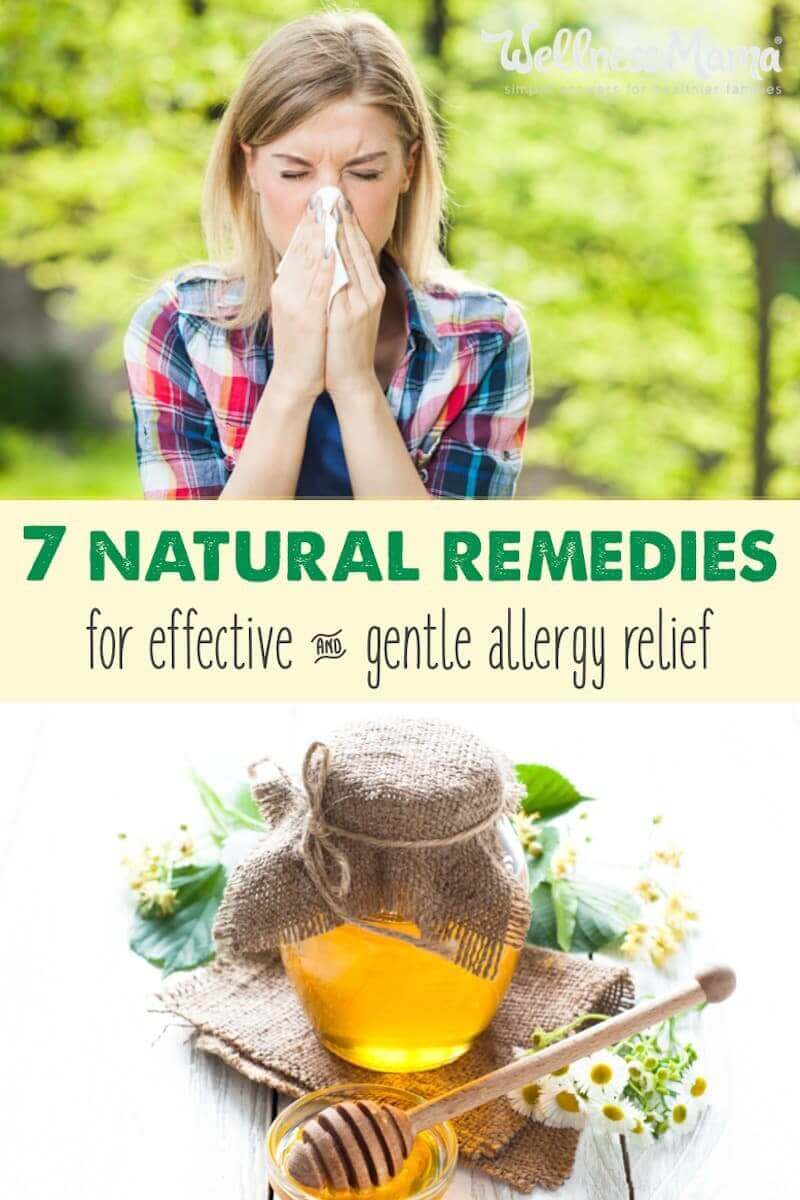
Get natural allergy relief with these natural remedies including herbs like nettle, supplements like quercetin and remedies like apple cider vinegar, honey and more.
Sources
  1. Furrie E. (2005). Probiotics and allergy. The Proceedings of the Nutrition Society, 64(4), 465–469.
  2. Galli, S. J., Tsai, M., & Piliponsky, A. M. (2008). The development of allergic inflammation. Nature454(7203), 445–454,
  3. Kawamoto, Y., et al. (2016). Prevention of allergic rhinitis by ginger and the molecular basis of immunosuppression by 6-gingerol through T cell inactivation. The Journal of nutritional biochemistry27, 112–122.
  4. Tyurin, Y. A., et al. (2017). Cytokine Profile of Patients with Allergic Rhinitis Caused by Pollen, Mite, and Microbial Allergen Sensitization. Journal of immunology research2017, 3054217.
  5. Wallace, D. et al. (2017). Pharmacologic Treatment of Seasonal Allergic Rhinitis: Synopsis of Guidance From the 2017 Joint Task Force on Practice Parameters. Annals of internal medicine167(12), 876–881.
  6. Romagnani S. (1991). Type 1 T helper and type 2 T helper cells: functions, regulation and role in protection and disease. International journal of clinical & laboratory research, 21(2), 152–158.
  7. Shulman S. T. (2017). Clemens von Pirquet: A Remarkable Life and Career. Journal of the Pediatric Infectious Diseases Society, 6(4), 376–379.  
  8. Aw Yong, P. et al. (2021). The Potential use of Honey as a Remedy for Allergic Diseases: A Mini Review. Frontiers in pharmacology, 11, 599080. 
  9. Healthline. (2018, October 26). Apple Cider Vinegar for Allergies.
  10. Lecturio Medical. (2025, December 15). Adaptive Immune Response. 

Become a VIP member!

Get access to my VIP newsletter with health tips, special deals, my free ebook on Seven Small Easy Habits and so much more!

Easy Habits ebook on ipad
Katie Wells Avatar

About Katie Wells

Katie Wells, CTNC, MCHC, Founder of Wellness Mama and Co-founder of Wellnesse, has a background in research, journalism, and nutrition. As a mom of seven, she turned to research and took health into her own hands to find answers to her health problems. WellnessMama.com is the culmination of her thousands of hours of research and all posts are medically reviewed and verified by the Wellness Mama research team. Katie is also the author of the bestselling books The Wellness Mama Cookbook and The Wellness Mama 5-Step Lifestyle Detox.

Comments

265 responses to “Powerful Natural Remedies for Seasonal Allergies”

  1. Lori Avatar

    Bee pollen helps my sister with her allergies. She doesn’t need Allegra anymore.

  2. May Avatar

    I use a sinus rinse bottle every morning as I didn’t like the Neti pot. I see a post to use it a couple hours before bed, I’m going to try that because my nose stuffs up every night while I sleep. I will try the raw local honey (as soon as I find some) daily and the sinus rinse at night. Today I am very stuffed up. Zyrtec is not working and I don’t want to go back to allergy shots again.

  3. annette Avatar
    annette

    I was wondering if anyone is suffering from swollen turbinates’? I was diagnosed with them after an ear/sinus infection. I have been tested for allergies and I have a sensitivity to tree mold and yes I now live in the woods. I would get a sinus infection once a year prior to this, but this is horrible it feels like a dizziness like being in a lava lamp sometimes I get a clogged ear sometimes I get congested and eyes feel swollen…I do use the sinus bottle rinse with salt water and baking soda I also take ACV 1 tbs in the am with about 6 oz of water and 1 tbs daily of local honey I also see my chiropractor once weekly …when I was seeing my ENT I was given Qnasal spray and ended up in the ER…it left me with acid reflux that I now have under control …if anyone has any of these symptoms and has some natural relief please share…I also take 1 tbs of bee polen and spirlina a day

  4. Nicole Smith Avatar
    Nicole Smith

    I can vouch for the raw local honey!! When I moved from FL to PA I developed horrible seasonal allergy symptoms- constant sneezing followed with needing to blow my runny, congested nose only to trigger another sneeze, paired with eyes that itched and burned so bad that sometimes ripping them out seemed like a good option. I tried all the OTC meds to no avail, and neti pots only seemed to provide temporary relief.
    At my local flea market, a honey/ beeswax shop promotes that their raw local honey can be used to treat seasonal allergies. There is a spring bloom harvest and a fall bloom harvest for respective seasonal allergies. In desperation, I bought some, followed the 1TBS a day instructions, and within three days, ALL of my allergy symptoms disappeared! I use it for both fall and spring allergies. The honey needs to build up within your system in order to work, so take it consistently. Once it is built up, occasionally forgetting to take it for a day will not change the effects as long as it is started up again. Sometimes I will forget for a couple days and notice the allergy symptoms returning. The shop I purchase my honey from claims that if you take the honey long enough, your allergies will disappear permanently. (Although I have yet to experience this.) Now I always make sure to purchase honey before allergy season and start taking it just before the flowers come up.

  5. Bethany Noles Avatar
    Bethany Noles

    Do you feel GAPS as a solution to allergies is appropriate for a nursing mom? My nine month old has terrible seasonal allergies and I’m looking for a natural soluteion. We both have been taking daily probiotics for awhile, and I already do ACV and local honey. Nettle capsules haven’t seemed to help. Thanks! 🙂

  6. Judith Avatar

    Hello – thank you for sharing your info.
    My experience rinsing sinuses: began using saline solution – store-bought squirt into nostrils. Graduated to using neti-pot. Moved on to simple, daily flushing of water into eyes and nostrils as part of daily wake-up routine. I run tap water to desired temp – using hands, I scoop it up to my face and try to keep eyes open and gently inhale through nostrils. I do this until sinuses are moist and begin to run and then wipe mucous out of corner of eyes where it accumulates and blow nose. This is no different than rinsing off in the shower. BTW using same “tap” water previous commenter has been scared into not using by MD. Now, is all our tap water 100% safe? Probably not. However, it is what I shower in at this time. Using described method, after some months, I was relieved of allergy reactions for years. I also use this method after working in dirt/garden and mowing/trimming grass. Effective for me and has helped me forgo using potentially harmful products/meds.

  7. Jean Avatar

    I use a neti pot, I used it daily for a few years, now I use it when I’ve been outside, around a lot of people or feel like I’m beginning to have allergy related sinus problems. When I started oil pulling, my sinuses got so much better that I didn’t need to use it so often. If you have sinus problems related to allergies, you will be amazed at the difference if you will oil pull daily.

  8. Teresa Ramsey Avatar
    Teresa Ramsey

    Thank You for this site. Very helpful info. Several family members have allergies. Especially kids. It’s so helpful to have dosage for them. I would love to follow your web site for future remedies.

  9. Laura Avatar

    I swear by my neti pot. I don’t get sick much but when I do it will always turn into a sinus infection if I do not use the neti to prevent it. Previous posters are correct when they advise to not use tap water. I also find that waiting for boiled water to cool down enough to use takes longer than I would like so I stick to distilled water at room temperature. My pot came with a lot of saline pouches to mix with the tap water but pink himalayan salt is great too.

    When I am feeling like I might get sick I use once in the morning and once in the evening and it helps hold off congestion quite well. Another trick to prevent an allergy attack is to use after being outside on a windy day or after yard work to flush out anything that might cause problems.

    For those who are squeamish about using one, just breathe through your mouth and even if you cough a little there really is no need to worry about the “drowning sensation”. Using the pot really is not unpleasant at all and you get used to it quickly.

    Those who are plagued with dry sinuses should benefit way more than just with sinus spray / mists alone. Getting the salt water all the way to the back of your sinus cavity will loosen up any dried mucus that has set up like concrete and is difficult to expell. Then you can gently blow it all out and be amazed how moist and soft your sinuses feel. Doing this an hour or so before bed time can really make it much easier to sleep if you have chronic dry sinuses!

  10. steve Avatar

    This is a bit intense but instantly gets rid of any allergy or begining cold symptoms. At least it did for me, the few times I tried it. I make a very weak brew of cayenne tea with a little bit of baking soda and salt added. Strain well so there are no cayenne particles in the tea. When it’s luke warm I use a straw and snort a little into each nostril. It’s not dangerous but as I said it is a bit intense for a few seconds and then I’m left with clear sinuses and a warm glow for a while. Just google cayenne for sinuses and you’ll find a bunch of recipes and peoples experiences.

  11. Michelle Avatar
    Michelle

    I put 3 drops of oil of oregano into a glass of juice (something very strong, like cranberry). I don’t know if it’s a placebo effect, but it seems to help both me and my dad (including reducing his high tendency for bronchitis).

  12. Teresa Avatar

    I love my Neti pot! I started with the squeeze bottle and then graduated to the ceramic pot because I am trying to avoid plastic.

    When I feel a sinus infection coming, I use it with distilled water heated to 98-100 degrees and Himalayan salt, but I also add a drop or two of food-grade hydrogen peroxide. I use it morning and night and the infection is usually gone within 2-3 days. No need for antibiotics!

  13. Kim Swan Avatar
    Kim Swan

    A very good article on alternative, natural approaches to allergy relief for so many of us sufferers! I suffer from both seasonal and environmental allergies, and a close friend who is an ear, nose and throat M.D/alternative medicine practitioner has strongly recommended that I reduce my use of medication and look to a long term natural approach. She too recommends Quercetin, which I now take three times a day and it really helps to loosen the bronchial mucus and nasal inflammation/congestion. She also recommends curcumin for more intensive overall inflammation. I think that I’ll add the local honey and apple cider vinegar to my regime as discussed in this post. I think that it’s important to customize your natural allergy treatment plan and be patient enough to reap the benefits

  14. Jody Avatar

    I’ve used the neti pot and I don’t like it. I have better results just using plain salt water in a nasal spray bottle, putting just a few drops in the nose. I spray or drip it into my nostrils before bedtime and anytime during the day that I feel I need some relief from congestion. A humidifier feels good to me too.

    One other thing I use for nasal dryness and irritation is sesame oil. Ayurveda, the traditional medicinal system of India, recommends sesame oil for this purpose. It’s been proven to be even better than saline irrigation at helping with nasal/sinus issues. Just a drop in each nostril at bed time and in the morning, then sniff deeply 3 times per nostril. Soothes and relieves sinus issues. Can be used in healing ear problems too.

  15. Laura Avatar

    We have done an allergy alternative technique to reverse allergies with great success. My son used a nebulizer for breathing issues for several years when, starting at a young age. He was able to get rid of it all together after this technique that tests for allergies using muscle strength and corrects allergies using accupressure….completely uninvasive and totally natural. I have also seen this person and reversed some allergies I had with great success.

  16. Lori Avatar

    Cindy, you really shouldn’t use tap water or shower water to rinse your nose due to danger of harmful live organisms, like brain-eating amoebas.

    1. Cindy Avatar

      Thanks, Lori. I did not read the earlier posts until now. Clean pure water seems logical now, but it also reminds me: Mothers: think carefully about allowing your child/ren to play in public pools – especially ibecause that water can be very dirty. Better yet, if you can, put a play, wading pool or slip n slide on your clean property. For diving and or swimming, nose clip is good. I did not realize how dirty a public pool could be until I took a SCUBA class at university. I saw under water what people do in pools – amazing.

      Also, I was pleased – WellnessMama – to read about the benefits of essential oils of lavender and lemon (AO as I seem to recall) for congestion.

  17. Nathan Isaac Avatar
    Nathan Isaac

    I tried the Vinegar method….. Once. That was enough for me.

    So I decided on the Local Honey solution instead.

    We purchased some local honey from a market, and we were also at the very same time given other local honey by some friends, so we had two different types of local honey to use.

    I take about a teaspoon of each every morning and evening.

    Before the honey, having recently moved to Australia, I was having bad allergies. I never get allergies.

    My nose would be running. My eyes would itch and I’d scratch them and it would feel so good, but the second I stopped, they’d burn. I would have sneezing fits, which hurt like hell when I had a chest injury.

    Since using the honey I would say about 80% of this has gotten better. I might have a bit of itchy eyes, or maybe a slight runny nose and maybe a sneeze or two in a day (one of those are probably a normal one as opposed to an allergy sneeze).

    It’s fantastic!

  18. Cindy Avatar

    Regarding the Neti pot and nasal rinsing in general. This is very useful especially if you live in the city with dirty air – like I do. Think about it: What happens after you have been body surfing in the ocean, and you walk up onshore and bend your head down? That’s right! Salt water runs out of your nose. It’s just as natural as swimming or diving without a nose clip.

    Now for an observed healing using saline nasal rinse. Several years ago, I had been speaking with a nun when I noticed that she was rubbing the interior corner of her eye and that she used something to clean the exudate. I asked her about it and she told me that she had some sort of cyst for quite some time. I just happened to mention a prescribed medicine that I had used for my eye problem, and at that time a monk walked by and probably overheard. A couple of months later, I talked with her again and noticed that she seemed to no longer have the eyelid problem. I asked her about it and she mentioned that the monk had been an M.D. before vows and he had suggested she use a saline rinse with Neti pot.

    Well it worked for her! I have and use Neti pot from time to time, but when I shower, I usually just rinse with running water, using my cupped hand – first one side and then the other.

  19. fiona Avatar

    I have taken a teaspoon of local bee pollen every day without fail for the past 6 1/2 years and have never been sick or had any allergy problems in all that time. My family laughs at me and my bee pollen ritual but when everyone else catches colds, flu or has their seasonal allergies, I’m the one that sails right through it all.

  20. Lori Avatar

    Thank you for the ACV tip. I will try this! I like using the neti pot. My family physician recommended it to me because I was always using Allegra D trying to combat congestion. His wife heard about it from the Dr. Oz show and made him start using it LOL. I was surprised my dr. recommended anything natural – he usually doesn’t like to do that. Found out that I was allergic to the type of mold that thrives and multiplies indoors. It also grows outside but in a more balanced way outdoors. Moved out of the house that had a hidden mold problem and my year-round allergies have resolved themselves. Now I just have an occasional problem with seasonal allergies.

    Important note about the neti pot is NEVER use tap water. Always use distilled water. According to the CDC, there can be a brain-eating amoeba in tap water that is fatal! A few years back there was a story about a child in Arkansas dying from it. I wouldn’t even use boiled tap water unless it was first filtered very well by small pore filters – definitely not a Brita Filter!

Leave a Reply

Your email address will not be published. Required fields are marked *