

The Problem With Night Lights (and Better Solutions)

Katie Wells Avatar

Reading Time: 5 minutes

This post contains affiliate links.

Read my affiliate policy.

night lights for kids
Wellness Mama » Blog » Health » The Problem With Night Lights (and Better Solutions)

I’ve had the privilege of interviewing and meeting a lot of amazing health experts over the years. Not a single one has ever said that sleep isn’t important. Something as simple (and common) as night lights though are enough to sabotage sleep.

I noticed a big difference once I overhauled my sleep environment and I’ve heard from plenty of readers who say the same. Sleeping in a cool, completely dark space is so important for healthy sleep. It means better sleep quality and more energy from some simple changes (like turning off the ever present night light). 

Here’s why:

What’s the Problem With Night Lights?

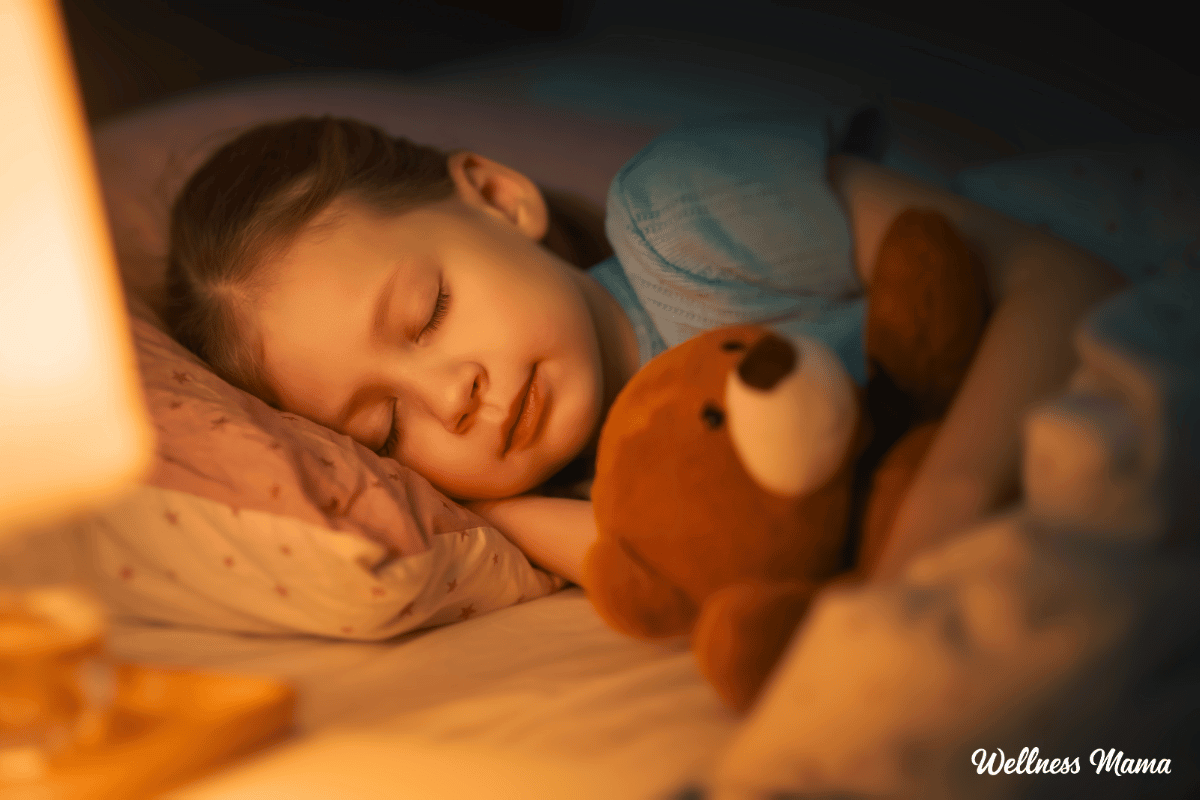
Light exposure during the night is linked with an increased risk of depression, higher breast cancer risk, brain fog, and unbalanced hormones. As PhD Joyce Walseben explains, light inhibits the secretion of melatonin. And even if we do fall asleep, our brain can still detect the light through our eyelids, making it confused. 

A cool, dark nighttime environment is vital for hormone health, yet we often put lights in kids’ rooms. Only within the last 100 years has this even been possible. Before that, there was a natural cycle of light and darkness. While people might have had candles or lamps after dark, there wouldn’t have been lights on all night.

More and more research is emerging that shows a link between nighttime light exposure and health problems. A CDC report and a recent meta-analysis showed a surprising link between lack of sleep and increased cancer risk. 

The CDC found that profoundly blind women had less than half the breast cancer risk of women with normal vision. Profoundly blind men had less than half the risk of other cancers as normally sighted men. Even more interesting, those who were legally blind but could still see light didn’t have a reduced cancer risk. 

Shift workers (those who work after dark) who are exposed to artificial blue light through the night are more likely to develop cancer. Research shows shift work raises the risk of death from all causes, likely due to circadian disruption and abnormal light exposures. 

Night Light Free Zone Importance For Kids

Nighttime light exposure can decrease sleep quality, but it can also shorten the duration of sleep, leading to further problems. A 2024 study in Biomedicines reports that children who get quality sleep are less likely to struggle with obesity.  They also point to healthy sleep as having a positive impact on the epigenetics that affect the genes linked with obesity. 

Chronic sleep deprivation may cause weight gain by affecting the way our bodies process and store carbohydrates. It may also alter hormone levels that affect appetite.

Moreover, Dr. Zee, the director of the Sleep Disorders Center at Northwestern Memorial Hospital reports:

“Perhaps even more important than sleep duration is the effect of day to day variability of sleep wake timing on weight regulation.”

Why Sleep is So Critical For Kids

Sleep is important for everyone, but especially children. This is when our brains clean up from the stress of the day, organize information, and the body goes into recovery mode. 

Children who don’t get enough sleep or have disrupted sleep may experience the following: 

  • Allergies and immune system problems
  • Anxiety and depression 
  • Obesity, diabetes, and future high blood pressure
  • Poor academic performance and trouble concentrating
  • Learning and memory problems
  • ADHD like symptoms 
  • Mood swings and irritability
  • More stress hormone levels and irregular heartbeat
  • Daytime sleepiness (which leads to many of the above issues)

Blue light from screens and most night lights is especially harmful at night since they signal to the brain it’s daytime. It’s equally important to get morning sunlight to set the circadian rhythms for the day. This further sets the stage for healthy sleep. 

Practical Changes For Better Sleep

For years I’ve made getting out into the morning sunshine a daily habit and many of my kids have followed suit. I also model a positive nighttime routine for them and made practical changes in our home lighting. Not only do we use amber lights in the evening, but I also use red light in certain areas (like bathrooms) if needed at night. 

Switching to complete darkness as an adult is a relatively easy process. It isn’t so easy for children, especially those who are afraid of the dark or are used to nightlights. 

With all the research showing the importance of nighttime darkness, I felt strongly that this was something I wanted my kids to do. It took a little time to get all of the kids used to sleeping in darkness, but they finally did.

Step by Step How to Ditch the Nightlights (Mostly)

My kids’ rooms look a little different now that I have several teens (and one grown and out of the house!). The older kids have a similar setup to my bedroom. When the kids were little, here’s how I helped them transition into a healthy sleep environment for better sleep. 

  • Removed night lights, regular alarm clocks, and other things with lights. 
  • Kept the house cool and used a mattress cooling pad as needed 
  • Used blackout shades to cover artificial light from street lights and to help with heating and cooling costs.
  • Used sound machines to help them stay asleep. The “rain” sound was a favorite. We now have air filters in the bedrooms that have ambient white noise. 

My kids have lamps with these amber light bulbs in their bedrooms to use while winding down in the evening. Once it’s bedtime though, these go off. We’ve also used these Himalayan salt lamps that have a red tone in the hallway and bathrooms. This way their rooms are dark, but they can see to go to the bathroom if needed, without blue light disruption. 

The same place where I get my amber and red light bulbs from also has red light night lights. These are also a good option for hallways and bathrooms, but I’d avoid putting them in a kid’s room at night. 

Helpful Tips For Better Sleep

Years ago when I helped my kids set their rooms up like this, I did a bedtime routine with them to help them transition. First, I turned on the sound machine and read to them with the light on. Then, I turned off the light but left the door open with the salt lamp in the hallway. From here, I slowly worked up to putting them to sleep with the door closed and complete darkness.

Here are some more helpful tips to help kids avoid blue light and get better sleep: 

  • Put screens away after dark. A DIY charging drawer to store devices has been helpful! 
  • If screens are needed, use blue light glasses or the kids’ Daytime Computer that doesn’t have blue light. 
  • A cup of chamomile tea with a little raw honey and butter blended in is a restful way to wind down. The healthy fats support hormones and the chamomile soothes and calms. 
  • Use magnesium lotion on feet and legs before bed. Magnesium promotes sleep and helps with so many other things. 
  • Switching to organic mattresses also made a big difference, especially for my son with allergies. Along with diet changes, this was one way I helped him reverse his allergies. The light made a bigger difference, so I wouldn’t put new mattresses as the highest priority. 

Let Them Be A Part of the Process

I’ve found that my kids often make healthy choices when given the information to help them do so. I talked to my older kids about the reasons why nightlights weren’t good for them. This lets them be involved in the decision making process to get rid of the night lights.

I’m continually surprised by how smart and curious kids innately are and the decisions they can come up with when given the chance. Just one of the reasons behind my unconventional parenting style!

Final Thoughts on Night Lights

Sleep is so important for everyone, but especially growing children. Making the transition to a night light free room can be challenging, but very doable with the right approach. 

Have a chat with your kids about why you want to make changes, and make the process fun. Calming bedtime rituals like a cup of herbal tea and a bedtime story go a long way in helping kids ditch the night light in their rooms. 

Do your kids have night lights? Ever thought about removing them? Share below!
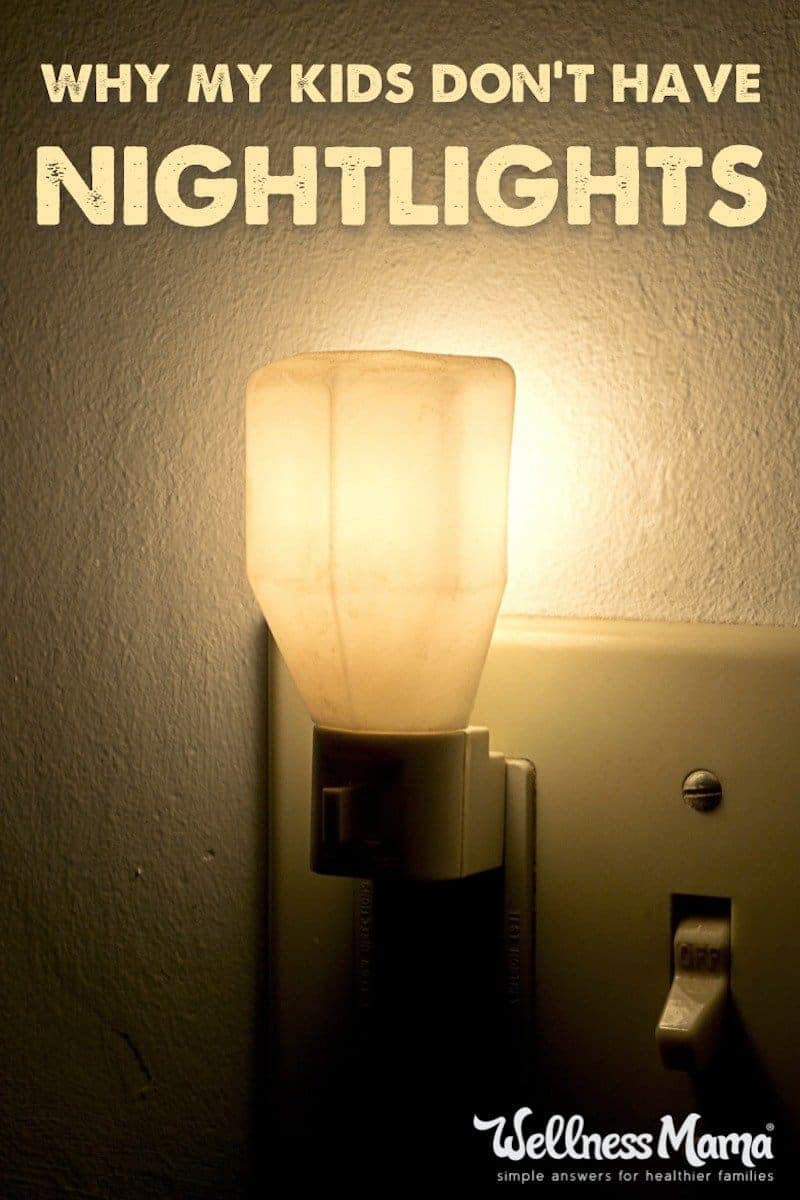
A night light can disrupt sleep, and light at night time has been linked to increased caner risk, hormone imbalances, depression and other health problems.

Sources
  1. Waugh, R. (2012, July). Too much light at night causes depression (but if you make your bedroom dark enough, you can get away with staying up late). Daily Mail.
  2. Brady, K. (2025, November 22). Is Sleeping With the TV On Bad for Your Health? Health.
  3. Medical Daily. (2011, October 11). Lack of Sleep, Light at Night Can Raise Cancer Risk. 
  4. Richter, E., et al. (2024). The Importance of Sleep in Overcoming Childhood Obesity and Reshaping Epigenetics. Biomedicines, 12(6), 1334. 
  5. Ma, S., et al.  (2024). Exposure to Light at Night and Risk of Cancer: A Systematic Review, Meta-Analysis, and Data Synthesis. Cancers, 16(15), 2653. 
  6. National Toxicology Program. (2026, April 2). NTP Review of Shift Work at Night, Light at Night, and Circadian Disruption. US Department of Health and Human Services.
  7. LeWine, H. (2024, July 24) Blue light has a dark side: What is blue light? The effect blue light has on your sleep and more. Harvard Health Publishing Harvard Medical School. 
  8. Schreiber, D. R., & Dautovich, N. D. (2019). Sleep Duration as an Indirect Link Between Sleep Timing and Weight in Midlife Women. Journal of women’s health (2002), 28(11), 1543–1554. 
  9. Pacheco, D. (2025, July 23). Children and Sleep. Sleep Foundation.

Become a VIP member!

Get access to my VIP newsletter with health tips, special deals, my free ebook on Seven Small Easy Habits and so much more!

Easy Habits ebook on ipad
Katie Wells Avatar

About Katie Wells

Katie Wells, CTNC, MCHC, Founder of Wellness Mama and Co-founder of Wellnesse, has a background in research, journalism, and nutrition. As a mom of seven, she turned to research and took health into her own hands to find answers to her health problems. WellnessMama.com is the culmination of her thousands of hours of research and all posts are medically reviewed and verified by the Wellness Mama research team. Katie is also the author of the bestselling books The Wellness Mama Cookbook and The Wellness Mama 5-Step Lifestyle Detox.

Comments

111 responses to “The Problem With Night Lights (and Better Solutions)”

  1. Maggie Dawsey Avatar
    Maggie Dawsey

    For the longest time we had night lights all through the house and in bedrooms to aide our 7 year old that was scared of the dark. Thanks to this article I realized this was not the best practice for the health of my family.
    Our solution was motion sensor night lights instead. We put them along the path our son takes if he wakes up scared and we put one in our bathroom for those times we get up too 🙂 So far it has worked out pretty well. We found these battery operated ones on amazon and they have a stand so you don’t have to mount them, and you can pack them with you for trips:
    https://www.amazon.com/Hootz-LED-Includes-Hardware-Nightlight/dp/B00YSYHNWM/ref=as_li_ss_tl?ie=UTF8&linkCode=ll1&tag=wellnessmama-20&linkId=e556981b3bc5d7b28021647478d21d27&language=en_US

  2. Christine Allnutt Avatar
    Christine Allnutt

    For hundreds of thousands of years humans slept with a fire burning, either in a cave or on the savannah. Fire = safety from animal attacks and also mean you were with your tribe . It’s not really the amount of light so much as the colour and kind of light.

    It’s a soft , warm, reddish light. The flickering can be comforting too.

    I absolutely agree that the bluish light from electronics affects the pineal grand and the production of melatonin. Turn them off early in the evening.

    Basically, if you are a parent, use your common sense and replicate the more natural human environment. Some children sleep better in a light , noisy environment because they associate it with human contact. Some children need dark and quiet. All your children will be a little different in ideal sleep environment. Too bad if they have to share a room!

  3. Rachael Avatar

    Hi! My guy, a super tekkie, brought home this very expensive unit as a “prize” for me – I thought it was more for him lol. But it does work soooo well. 🙂 Lights all controlled by phone or tablet. Individual light control, great for study or relax – or party!. It has a mode that gently wakes you from across the room, or you can set auto timer. it has loads of colors, and even a fun disco strobe light for a fun Friday night in. Other apps can have lights respond to music 🙂 Very fun!! Even though they were definitely not a cheap toy, they make life so nice and I can read in bed and turn off at a moments notice. Also, has a function where you can just manually override, in case you need a light asap. Has been a very nice addition to our home. It’s the clapper of the future.
    Here’s a link on Amazon (although he got his at home depot) https://www.amazon.com/gp/product/B00A4EUUO8/ref=as_li_tl?ie=UTF8&camp=1789&creative=390957&creativeASIN=B00A4EUUO8&linkCode=as2&tag=wellnessmama-20&linkId=6QBPCZXMIQ4JCCPD

  4. Amber Avatar

    Hi Katie!

    I love your blog so much! You have helped me a lot with my transition to a healthier life = ) I am wondering, my daughter likes to have SOME light in her room because she gets scared at night. We have artificial lights right out side her window, so moonlight is not an option. Do you know about, or have an opinion on, the NUK Natural Sleep System Sound and Light Machine? https://www.amazon.com/gp/product/B00J40DRQG/ref=as_li_tl?ie=UTF8&camp=1789&creative=390957&creativeASIN=B00J40DRQG&linkCode=as2&tag=wellnessmama-20&linkId=O4ZUPG4SKFVRV5YS

    It claims to have “amber” light rather than blue/white light. Would this be any better than a nightlight?

    Any help is very much appreciated. Thanks for all you do!

  5. Kat Avatar

    I will maybe buy that too much artificial light will make you sleep quality worse (I can’t sleep with night lights ect), but natural light I belive is fine. Moonshine and midnight sun for an example. I’m from the north of Scandinavia where it is light (even sun is up at places far enough north), at night for months, and people sleep and are not worse off health wise than anywhere else to my knowledge, And no, most people don’t have blinds but just learn how to sleep like that.

  6. Mariah Avatar

    Hi there, isn’t falling asleep to sound (like fans) bad for us? Like making us rely on that white noise to sleep? Not sure, thoughts?

  7. Katja Avatar

    The artical was very good and I liked reading everyone’s comments! I just started a new bed schedule. I go to bed every night at the same time. I also turn off ALL artificial light (TV, computer, regular lamps, overhead lights) one hour before bed and light a small candle. I have noticed that my neurologic illness has improved in only one week! I will keep you posted as to how my health responds to this new regime!

  8. Nate Avatar

    What has our society turned in to. So obsessed with safety and health that they want to force out night lights now? What the heck! Its a night light!! It helps some kids sleep better so please people stop writing stuff like “air conditioning is unhealthy!”. Have some fun and live a live. Geesh

    1. Paulo Avatar

      Wow, Nate. Sounds like you’re not getting enough quality sleep.

      Rather than just babies/children, you’re apparently unaware of the literally millions of people affected by insomnia due to our modern light-filled nights, let alone all the other health issues caused by artificial lighting.

      Surely you’ve heard of outdoor light pollution, and you’re probably against that. Well, night lights are indoor light pollution.

      Clearly you don’t know insomnia and lack of sleep are implicated in poor learning, inefficiency and error-prone sleep-deprived workers, vehicle accidents, dietary issues, and numerous other health problems. Sleep deprivation costs us millions of dollars and countless lives each year.

      Must I mention that inadequate melatonin production due to the blue wavelength in lights is also implicated in sundowning (severe agitation) for those afflicted by dementia.

      Light pollution is proven to effect many wildlife. Are humans so exceptional that somehow we’re immune to it.

      Perhaps in another several millenia humans will adapt to artificial lighting, but for now even astronauts on the International Space Center use special lighting to regulate their circadian rhythms. But I guess you know better than NASA.

      1. Hana Avatar

        Paulo you missed what Nate was even saying. Dim Night lights less than 10 lux are not causing depression, car accidents and insomnia. You are making this a much bigger issue than kids sleeping with tiny lights in their corners. While I agree that exposure to bright, artificial light late at night is not good for health, I think you are being a little extreme in your attack on Nate.

      2. Audrey Fischer Avatar
        Audrey Fischer

        Paulo is correct.

        Dr George Brainard has done extensive research on circadian disruption due to arificial light at night for NASA to benefit the astronauts aboard the ISS. The lighting aboard the ISS will be redone because of what has been learned. His research indicates that blue wavelength is the most disruptive to the human circadian, with dim red and dim amber being the least disruptive. We can apply the same information to protect ourselves and our loved ones.Dr Brainard recommends the use of a dim amber or dim red night light — placed low to the floor, if possible, where needed in the bedroom, hall and bathroom. I also recommend reading the research papers by Dr David Blask and team from Tulane University School of Medicine. His team discovered that not only can artificial light at night (ALAN) increase the risks of certain cancers, but also kill the cure, by rendering Tamoxifen and many other chemotherapy drugs ineffective. ALAN causes circadian disruption and the inability of the body to produce melatonin. A streetlight shining through typical bedroom windows or a standard night light, or a blue light from a clock radio or phone, etc are all examples of a light source capable of circadian disruption. Dim red or dim amber night lights are safe. Natural moon light is safe. Blue light at NIGHT is harmful. Blue light during the day, especially morning will maximize the amount of melatonin your body will produce at night. Shutting off TV, computers or electronics 1-2 hours before bedtime will minimize delay of your body producing melatonin. If you can’t avoid the computer screens, for example– a hospital’s patient room is full of monitors with harmful lighting (which by all means OUGHT TO BE covered with a simple thin blue-blocking film), wear blue-blocking glasses, use blue-blocking films on the monitor. Sleeping masks are effective (if you don’t take them off in the middle of the night) because only your eyes need to be in the dark. Only some portions of the ganglionic cell layer of the retina is capable of sending a signal to the SCN part of the brain, the chief regulator of the master clock. The results from the “light behind the knee” research paper has never been duplicated and has been disregarded in current circadian study.) Some of you may be interested in this free 2-day workshop… parts of it will be webcasted. https://ntp.niehs.nih.gov/pubhealth/roc/candidates/meetings/workshop_alan.html Workshop: Shift Work at Night, Artificial Light at Night, and Circadian Disruption Hosted by the National Institute of Environmental Health Studies/ National Toxicology Program.

    2. Paulo Avatar

      @Nate,

      PS: I neglected to mention sufferers of Seasonal Affective Disorder (SAD). There’s a reason many people in Seattle are depressed and some commit suicide, and it’s not because of Starbucks or grunge music.

      What to you is just a night light, is to others the equivalent of a lighthouse.

    3. Kat Avatar

      I agree with Nate. There are bigger fish to fry when it comes to what we should be worrying about. If having a night light brings you comfort, so be it.

  9. Kristine Manley Avatar
    Kristine Manley

    I just got rid of the night light in my master bathroom after reading this article, and the difference in my sleep is amazing! I don’t wake up tired and with a feeling that I have to lay down just a little longer. Thank you so very much for this information, and I’ll be sharing this with friends and family.

    1. Wellness Mama Avatar

      I am so glad it is working for you! The importance of good, deep, healthy sleep cannot be underestimated, and I am happy for you that you are getting some!

  10. Siusan Avatar

    I am really, really excited to try this. My daughter has had a night light since she transitioned to her own room/crib at 3 months (she outgrew the bassinet and HATED co-sleeping … I wasn’t ready for her to go, but she did NOT like sharing her space and, like her daddy, had a definite preferred bedtime and didn’t like any noise or disruption then) … but the night light was for me to be able to see to get to her (we have no plugs in our hallways and a very tiny house that overheads flood the whole space), and I have read several articles on the need for total darkness to get good sleep but couldn’t figure out how I was supposed to be able to get to her quickly without scrambling for flashlights, etc and be able to see to get to her without waking her up further … and I just heard about salt lamps a month or two ago and plan to go get a couple to place strategically in rooms off the hallway to give me light to see by, without it filling the nursery! This will also be excellent for being able to see as I attempt (for the second time, hopefully successfully this time) breastfeeding my newborn due in May, and will probably feel like I need to see at first to get it right.

  11. Lori Avatar

    We’ve started using blue blocker light bulbs in several lamps. These are orange and can be purchased online or at Home Depot–they are sold as “party” bulbs. At sunset, we turn on the lamps with these bulbs and enjoy the soft light. After about a week, I really started appreciating how gentle they are on you–if I accidently turned a regular light on it seemed so harsh! I think it is especially helpful during the winter when the days are short. The only down side is that I love to read before bed and these bulbs don’t offer enough light for that. Maybe I’ll try putting my feet up instead!

    I also concur on the tart cherry juice. I put a little in a martini glass and fill it with a sparkly mineral water. I usually sleep great after that!

    And thanks Katie for your great website! I’ve followed you for years now and so appreciate your helpful posts!

  12. Nancy Avatar

    My fiance and i sleep in a totally dark room, my 10 yr old however has night terrors and if we dont have a light in his room he doesnt sleep at all! Pure darkness is not good for everyone!

  13. Asha Avatar

    I have slept without a night light for a long time but then I started having recurring nightmares so I now sleep with a green night light. I can’t sleep without any light now but when I wake up at night the light suddenly seems really bright, why is this, also is there any light I could use that is better for me but still means I can see in the dark, I don’t have any disorders.

    1. Paulo Avatar

      A green light seems brighter when you wake during the night because the pupils of your eyes are wide open due to having closed eyes…your eyes have adjusted to see better in darkness.

      When you’re first going to sleep, your eyes haven’t adjusted for darkness yet, so your pupils are closed and not letting as much light in to your eyes.

  14. Hana Avatar

    As an early childhood sleep researcher I disagree with this article. Light under 10 lux (much brighter than most night lights) has been found to not disrupt melatonin’s natural secretion patterns which in fact onset 2 hours BEFORE bedtime. This means that early evening light exposure is much more responsible for disrupting the circadian rhythm than night lights in a bedroom. Children who are genuinely afraid of the dark will have more sleep problems if they are not allowed a night light as this causes anxiety. Bottom line: night lights are not the problem. Letting your children watch TV, play video games, or sit in front of artificially lit computer screens in the evening is the problem.

  15. ryan Avatar

    Cheaper way to basically follow this guide is just use a red bulb in the night light base. Use those in rooms, hallways, and bathrooms. Ive done research and found that works perfectfully fine and that seems to be the cheapest thing to do instead of spending 20-30 on a bulky salt lamp.

  16. Katie Neal-Rizzo Avatar
    Katie Neal-Rizzo

    You may want to do some research on the dangers of noise machines on brain development as well before recommending those over nightlights.

  17. Kirsty Avatar

    I’m looking into designing a product to help children with a fear of the dark, if you could replicate the light given off by the Himalayan salt lamp would that be a healthier alternative to the classic nightlight?

  18. Lorraine Avatar
    Lorraine

    My son sleeps with a salt lamp we never turn it off. Do you think I should turn it off at night?

Leave a Reply

Your email address will not be published. Required fields are marked *