
How Grains Are Killing You Slowly

wholegrain breads print How Grains Are Killing You Slowly

"Healthy Whole Grains" or Intestinal Terrorists?

When I check out at the grocery store with a cart devoid of any grain products, I get occasional odd glances. When my kids won’t eat donuts because of the health ramifications, most people don’t think anything of it. When our entire family refuses the “healthy whole grain” bread at a restaurant or party, uproar ensues.

But why? People ask, “Grains are healthy and give you necessary fiber!” and “What about the nutrients in grains?” or my favorite, “But they are low-fat!” It was surprising to me when I first learned that all the hype about grains really was just that, hype.

“Haven’t people always eaten grains?” you ask? I used to think so too, heck, even the Bible mentions grains, so they must be good. Interestingly, scientific and historical research show that not only have humans not always eaten grains, but the human body is not designed to function well on grains at all!

Hang on tight, this explanation gets messy!

Regular grain consumption began a measly 10,000 years ago by most estimates. Before the Agricultural Revolution, humans had a couple hundred thousand years of not having any regular consumption of grains, (and, are you ready for this) studies show that human brain function and physical ability peaked just prior to the agricultural revolution as well.  Since the dawn of agricultural practices, archeological evidence shows a gradual but steady decline in human strength.

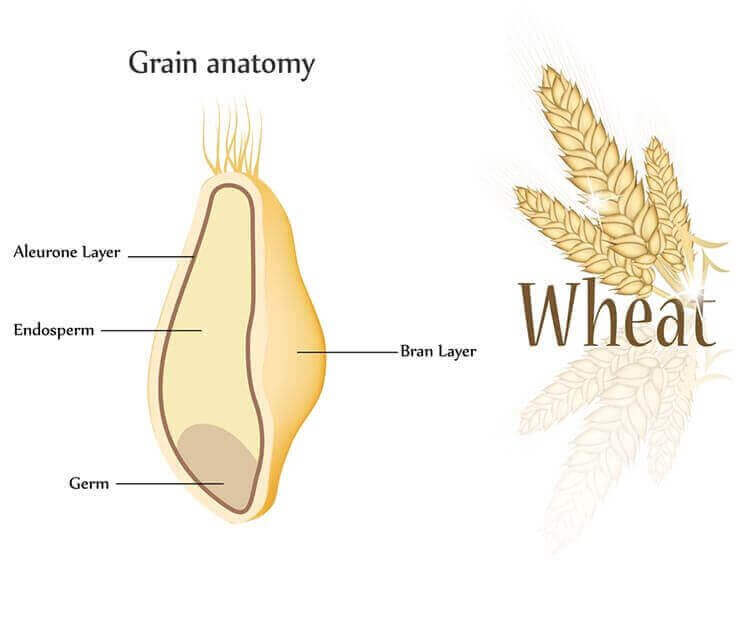
Grains contain Phytic Acid, a mineral blocker that prevents absorption of calcium, magnesium, iron, copper and zinc. This phytic acid is found in the bran of all grains as well as the outer coating of seeds and nuts. Even after grains became more mainstream during the agricultural revolution, grains were allowed to sit in the fields for several weeks before thrashing. This allowed the grains to be exposed to the elements and to sprout. Evidence shows that sprouting increases the content of many important vitamins, and breaks down the phytic acid. Unfortunately, grains today are not sprouted and are consumed in much larger quantities than ever before. The presence of the phytates blocks the absorption of calcium, a risk factor for osteoporosis and other bone-related problems. Unfortunately, many doctors provide a low-fat, high-fiber diet and a calcium supplement for those with osteoporosis but the calcium isn’t being absorbed anyway because the phytates block its uptake.

Food Pyramid 300x233 How Grains Are Killing You Slowly

6-11 Servings of Gluten, Lectins and Inflamation!

Perhaps you noticed the general consensus among medical professionals that grains are not only healthy, but the necessary foundation of our diet (solidly nested at the base of our “food pyramid”).  The trend lately is to acknowledge that processed grains are bad but to deify those “healthy whole grains” that supposedly provide the bulk of our nutrition is just 6-11 servings a day!

The sad truth is that grain consumption, especially in the the forms found today, are a blatant departure from the way humans have eaten for almost our entire history. The ability to grow and process grains more easily allowed more people to afford grain products like flour, a “luxury” previously reserved for the wealthy. The important thing to remember here is that just because humans seem to have no immediate negative effects from grains, doesn’t mean our bodies can handle them or that we can function optimally while consuming them.

Besides the phytic acid which strips your body of nutrients, another serious disadvantage to grain consumption is the astronomical spike in insulin production which throws a monkey wrench in hormone production in the body. Insulin production is an important process for storing nutrients and processing glucose in the bloodstream, but our bodies simply can’t handle the insulin requirements we throw at them with the carb load we consume these days.

Let’s take a trip back to freshman Biology, shall we? When carbohydrates enter the body (whatever the source, be it grains, fruit, sugar, etc) they are eventually broken down into glucose. Any extra glucose floating around in the body that we are not immediately using to replenish glycogen stores is stored as fat. This is a natural response of our bodies that has allowed humans to survive for thousands of years. If we aren’t using the fuel now, our bodies store it for future use in the form of fat. Unfortunately,  as we are not commonly faced with famine, we don’t often get the chance to use up these stores, and the fat accumulates. If the carbohydrate consumption is excessive (milkshake anyone?) the body throws in the added bonus of cortisol and adrenaline production to handle the extra load. This whole hormonal song and dance does the tango on the body’s endocrine and immune systems and creates inflammation in the body.

With the dawn of the roller mill in 1872, flour became accessible to virtually everyone, though the bran and germ were stripped out, leaving very little of the minuscule nutritional value the grain had to begin with. Surely though, as grains are the center of our diet, an important source of fiber, and a low-fat staple, the general health of the American population must have dramatically increased from this novel invention? Or not…

In the last 130 years of increased grain consumption, chronic disease rates have skyrocketed, fertility has fallen and the average weight of the population has steadily risen. The more consumption of grains rose, the more fertility rates fell. Research from the University of Missouri, the average sperm count of American males has dropped 50% since the 1930s. To add insult to impotence, testicle size tends to have an inverse relationship with grain consumption.

We have found that grains can deplete nutrients, cause weight gain and infertility, but don’t they still have nutrients? Unfortunately, grains do not have the nutritional profile that all the granola-pushing commercials of late make them out to have. It makes much more sense to get your nutrients from foods like vegetables, fruits, proteins and healthy fats, which offer much higher nutrient profiles without the drawbacks.

Back to the insulin equation for a second… It is no secret that the United States is facing a very real epidemic of insulin sensitivity, Type 2 Diabetes, insulin resistence and obesity. If the corresponding rates of disease and weight gain with grain consumption over the last 130 years aren’t enough to convince you, consider this: when ground into flour the surface area of a grain is increased to 10,000 times the surface area of the grain itself. The resulting high-starch food is biologically similar to consuming pure table sugar. Consider the fact that flour is often mixed with sugar to create recipes (or used to make wall-paper paste, your choice) and you have a virtual diabetic coma in a bowl (or can).

Sounds bad enough to me, but there are still a few villains left in this mystery story! Behold gluten and lectins! These two are the Bonnie and Clyde of digestive health.

Gluten is a sticky, water soluble protein that is found in your favorite grains (wheat, rye, barley, etc). Grains like corn, rice and oats have similar proteins that cause problems over time. Gluten and similar grain-based proteins work to break down the microvilli in your small intestine, eventually letting particles of your food leech into your blood stream (a lovely term called “leaky gut syndrome”) causing allergies, digestive disturbances or autoimmune problems.

Gluten’s sidekicks, the posse of  Lectins, are mild toxins the inhibit the repair of the GI track. Lectins are not broken down in the digestive process and bind to receptors in the intestine, allowing them and other food particles to leech into your bloodstream. Nothing like pre-digested food circulating the blood stream! The body views these lectins and the food they bring with them as dangerous invaders and initiates an immune response to get rid of them. This immune response to particles of common foods explains the allergy creating potential of grains.

Gluten and Lectin now move their destructive dance to the gallbladder. The Gall bladder releases bile salts that help break down and properly digest foods. When the intestines are damaged, the chemical responsible for starting this bile secretion is not released. Bile backs up in the gall bladder, and cholesterol that is left there crystallizes into little “stones” that are usually surgically removed with the rest of the gall bladder. Talk about cutting off the nose to spite the face!

These chain-reactions created by grain consumption are shown to increase your risk of:

  • Various cancers including, drumroll please:pancreatic, colon, stomach and lymphoma
  • Autoimmune diseases like Hashimoto’s Thyroiditis
  • Infertility
  • Diabetes
  • Obesity
  • Arthritis
  • Autism
  • Depression, Anxiety and Schizophrenia
  • Allergies

It all boils down to this: Grains are not healthy and are toxic to the body. That is the way they were designed. The non-digestible proteins that wreak havoc in our system allow grains to pass un-harmed through the intestines of animals and emerge victorious and in a pile of fertilizer at the other end. Good for the grains-bad for us! Studies have shown, and I have seen in my own work with clients, that a no-grain diet can lower cholesterol, lower blood pressure, reduce inflammation, promote weight loss, alleviate dermatitis or acne, end digestive disturbances like heart disease,  increase fertility and dramatically improve  energy levels.

Did she just say no-grain? That means pasta, bread, pastries, desserts, rolls, crackers, etc! (I would actually add white potatoes, corn, and any forms of “whole grains” to that list.) Say it isn’t so!

Trust me, I like them too and used to live on them! From personal experience I can tell you that there is no comparison between how you feel when you don’t eat grains and when you do. I realize that you like grains, probably a lot, and that your doctor probably even encourages you to eat them. I understand that the idea of giving them up might sound absurd, even impossible. I also know that giving up the grains is one of the best things you can do for your health.

Do you want to lose weight, or do you suffer from any of those medical conditions above? You can continue on the high insulin, pre-diabetes and cancer rollercoaster, or you could try cutting the grains for a couple months and let your body tell you what it thinks. (Important Note: Even a little exposure to grains every couple weeks can keep the intestines damaged, so to see improvements, you will have to completely cut grains like wheat, barley, oats, rice, rye, millet, corn etc and it also helps to limit beans and legumes)

Try it for 90 days! If you hate it, you can always go back to your carb consuming ways and live the rest of your life in bagel paradise. Instead you might discover that you feel better than you ever have, have more energy than you did as a kid and don’t even want the grains anymore.

If you need help making the switch, check out some sample meal plans and recipes. Also, check out the posts on nutrition, fats, proteins and fitness to help make the transition easier.

Ready to give it a shot, or prefer to chuck a donut at me… let me know below!

Related posts:

About Wellness Mama

Wellness Mama is a full-time housewife with a background in nutrition, journalism and communications. Her passion is helping others achieve optimal health through a “Wellness Lifestyle.” She has helped hundreds of clients lose weight, increase athletic performance, improve fertility, and overcome numerous health problems and diseases. Connect with her on Twitter, Facebook, Google+, & Pinterest.

  • Sf_marinrealestate

    Try xylitol as a sweetener. It’s very low carb, safe for diabetics, and has anti-fungal properties. Make sure you get the xylitol made from tree bark rather than corn.

  • Jo Atkinson101

    What’s your view on spelt? Or sprouted spelt? I now only use spelt flour for baking and eat only (1 slice a day) of sprouted spelt bread (which also has spelt sourdough in it). Have cut out pretty much the rest of the grains.

  • http://wellnessmama.com Wellness Mama

    As far as grains go, it is on the better end, and unless you have an allergy or intolerance issue, shouldn’t be awful in moderation. I would suggest getting completely off grains, dairy and sugars for at least 30 days and then reintroducing though so that you can see if you react.

  • Pingback: What’s the G.O. with your G.F? « Hot Pink Chilli

  • Pingback: Are Sprouted, Soaked and Fermented Grains Healthy? — Wellness Mama

  • Pingback: Seven Quick Takes Hanging-My-Head-In-Shame Edition « Effortless Effervescence

  • purely-beautiful

    Wellness Mama its a pleasure to meet you.
    I was thrilled to come across your artical on grains as i too discovered in 2009 by my lifestyle consultant who too believed the same about grains.
    This has been a refreshing read and I look forward to reading and discussing more about health and nutrition.
    Purely Beautiful

  • purely-beautiful

    Wellness Mama its a pleasure to meet you.
    I was thrilled to come across your artical on grains as i too discovered in 2009 by my lifestyle consultant who too believed the same about grains.
    This has been a refreshing read and I look forward to reading and discussing more about health and nutrition.
    Purely Beautiful

  • Johnny

    Okay, where do I start…

    -If you promote eating like Paleolithic man, then you must also mention that the avg. lifespan for early man was 35.  That’s right, they lived till the ripe old age of 35.  We live more than double that now, so our bodies have changed considerably from early man, thus to say that early man didn’t eat grains so we shouldn’t either is vastly inaccurate. 
    -We have been eating grains for 10,000 yrs., and only very recently (last 100 yrs.) have we felt any kind of increase in cancer, heart attacks, and obesity rates.  So there is no correlation between eating grains and any sort of increase in the diseases you mention.

    The key is: exercise (cardio, tension, some weight-training) regularly, do yoga (or any spiritual endeavour), and eat as healthy as you can.  This includes natural foods, cutting down sugars and salts, etc.  But to say that grains (you include wholegrain) is not good for you based on half-ass empirical data over the past 100 yrs. is absolutely wrong.  We nowadays live longer than man has EVER lived (this peaked with the baby boomers), so to say that we need to alter our diet to a time when our ancestors lived HALF as long is mind-boggling in its assumptions. 

    I would cut out processed grain but would definitely keep eating wholegrains (wheat germ and embryo and bran intact).  To say otherwise would be a vast assumption that you cannot prove, nor do you have the authority to.

  • http://wellnessmama.com Wellness Mama

    You are also making some broad assumptions that you don’t back up. Yes, life expectancy was much shorter long ago, but they also had to deal with the elements, predatory animals, and complications like death in childbirth with the chance of a c-section (I had placenta previa with one pregnancy, so although all my other births have been totally natural, that emergency c-section saved my life. I would have been dead at 23 if I lived back then.. has nothing to do with my overall healthy at all). Much of our life expectancy now is due to advances in medicine and hygiene, not because we eat a better diet. Though we didn’t have cancer, obesity, and heart attacks until the last century, there were other lifestyle factors (more movement during daily life, etc) that came into play there. As you also mentioned, the grains themselves and the form we eat them has changed dramatically to more processed versions in the last 100 years and we’d both agree that these processed foods should be avoided, but just because the processed foods are worse, doesn’t make the unprocessed versions good.
    -I also disagree with you that there is no correlation between eating more grains and increase in disease. This article ( http://wellnessmama.com/1853/prevent-heart-disease-eat-more-cholesterol/ ) talks about the link between rising consumption of wheat, sugar and vegetable oils and rising heart disease rates. Also, as grains have been linked to autoimmune disease and autoimmune disease is highly correlated to increased cancer risk, there is a link here too.
    -I’ll also disagree with you that cardio is the most important type of exercise http://wellnessmama.com/1098/wellness-mamas-fitness-overview-how-to-get-in-shape-without-the-treadmill/ , though I do agree that the spiritual/mental aspect is very important and usually underrated (though I don’t personally do yogo.. for spiritual reasons)
    -As far as whole grains vs. processed grains. If a person is going to eat whole grains at all, I’d highly recommend sprouting, fermenting and soaking them to reduce the anti-nutrient content in the bran, as this part has high levels of lectins and other anti-nutrients that can interfere with mineral absorption. http://wellnessmama.com/3807/are-sprouted-soaked-and-fermented-grains-healthy/
    -That being said, there is nothing in grains that can’t be obtained from real foods like meat, veggies, fruits, healthy fats, etc, so since they have high levels of antinutrients, there is certainly no NEED to consume them. There are no nutrients you will miss out on by not consuming grains (unlike those who don’t consume animal products and who don’t get B-12) so there is no danger from not eating them, and a lot of possible danger from avoiding them.
    -I find it ironic that you come to my blog and accuse me of making unsubstantiated assertions of things that I have, in fact, given reference and data for, while you make these assertions without any proof or data yourself.

  • Sarah

    Quick question, I was wondering if you could post a link to an article about grain increasing your risks for many disease states like cancer, autism, etc?  I find it an interesting topic and I haven’t been able to find actual research or documented info to support this.  Just wanted to get my ducks in a row on this topic.

  • Pingback: The Wellness Challenge-Are You In? — Wellness Mama

  • Pingback: Is Low Carb Healthy? — Wellness Mama

  • Pingback: Should I Take Supplements? | Wellness Mama

  • Pingback: Dissecting the Myth: Why Grains and Gluten Aren’t Bad for You

  • hype

    I get light-headed when I switch to a diet filled with more greens.  Is this a normal thing when making the switch from grains?  If so, how long until I feel full and energetic without the lightheadedness?

  • Pingback: Oh, For The Love of Bread (Continued…) « Jen Busy Bee

  • http://wellnessmama.com Wellness Mama

    It’s often referred to as “carb flu” and is very normal. How long have you been without grains? Do you have any other symptoms? If it is due to removing the grains and extra carbs, it should go away in a few weeks. Eat more healthy fats in the meantime to help lessen the carb flu..

  • Jenny

    Jesus made loaves of bread for people to eat.  Anything in moderation is the key.  You can find something wrong with just about anything if you look hard enough and consume enough of it..just my .02

  • Pingback: Sweet Tater Black Bean Burgers | Vegan With A Side Of Meat

  • http://www.facebook.com/profile.php?id=10238426 Patrick Meaney

    You mention that “studies show…” and “studies have shown…”  Yet, WHY DONT YOU SHOW US THE STUDIES?

    You’re citing studies without citing them.   You’re making a claim without evidence.  That results in a dubious argument.

  • Pingback: » The Evils of Wheat (and barley, and rye, and oats) MrFriggleFraggle

  • Pingback: Some misconceptions about healthy food | Mrs.B

  • Pingback: Raw Gluten Free: Cool Cucumber and Cheezy Sunflower Tomato Sandwhiches | Young and Raw

  • Pingback: Lola’s Primal Challenge: The Reason and the Breakdown

  • Lauren

    If being dairy free is so good then what do you suggest I feed an infant?

  • http://wellnessmama.com Wellness Mama

    If you are breast feeding, of course that is what baby should be getting and babies have the ability to digest lactose until a certain age. Even with formula, dairy is preferable to soy, and there are actually recipes for making your own formula from organic raw milk. The recipe is in Nourishing Traditions if you’re interested.

  • http://www.facebook.com/mckay.stewart McKay Stewart

    Can you please cite your sources?  Thanks!

  • Lianna Mueller

    Are there any healthy grains? What about quinoa? I enjoy my quinoa and thought of it as healthier than other grains…

  • http://www.facebook.com/mckay.stewart McKay Stewart

    So are sprouted, gluten-free breads just fine then?  Do you have any research on this type of product?  This article bases the negative effects of grains entirely on PHYTIC ACID and GLUTEN.  Right?

  • http://wellnessmama.com Wellness Mama

    Unfortunately, soaking and sprouting doesn’t completely remove the phytic acid, though it does reduce it a lot. I’d definitely encourage sprouted (and sourdough if possible) gluten-free breads if you consume breads….

  • http://www.EyeMeetsWorld.com/ Trevor Johnston

    You lost me at your opening sentence: “When I check out at the grocery store with a cart devoid of any grain products, I get occasional odd glances.”  You are insulting the reader’s intelligence if you expect us to believe people are giving you sideways glances because they have supposedly scanned the contents of your shopping cart and noticed it lacked grain products. Hogwash!

  • Pingback: Raw Gluten Free: Cool Cucumber and Cheezy Sunflower Tomato Sandwiches | Caleb Jennings Blog

  • http://wellnessmama.com Wellness Mama

    I’ve actually even gotten comments from others since the only things I usually buy are some meats/fish, butter and vegetables at the store. This is different from other people in line when I’m checking out and I’ve gotten comments like “my kids would never eat that stuff, etc” To be fair, these comments could be as much due to what IS in my cart rather than what isn’t, but I’ve definitely gotten those type comments and I find it humorous that you take issue with something so funny.

  • Rovers20

    I notice the same problem with my hair slightly falling out. I also always have been taking Biotin.

  • http://www.EyeMeetsWorld.com/ Trevor Johnston

    Your opening paragraph made no mention of comments made by other shoppers. You said you were getting “odd glances” because you had no grain products in your cart. I find this assumption, not humorous, but condescending, just as I am beginning to find much of this anti-wheat, anti-grain movement.

  • http://wellnessmama.com Wellness Mama

    If you have something constructive or thoughtful to add, I’d love to hear it, but debating the nuances of my grocery store checkout is getting rather old. On a separate note… your photography is very impressive!

  • http://www.facebook.com/profile.php?id=625486142 Ave Sofía

    So not even by sprouting grains such as lentils is good for health?

  • http://wellnessmama.com Wellness Mama

    They are less bad than unsprouted, but not a great source of nutrients and they still have some harmful properties, so it’s best to avoid them.

  • http://www.facebook.com/profile.php?id=625486142 Ave Sofía

    I see. On your site you have a lot of meat involved recipes…but I am vegan. And I do eat grains, lots. I eat beans, lentils, rice, and the few alternatives I have for eating out is usually sushi (has grains), soy burgers (grains), pizza (grains), or pasta. So, being a vegan and not eating grains would only leave me eating fruit and vegetables.  Pretty much. I wonder if this is balanced…? Any thoughts?

  • MBesh

    This article was forwarded to me by a friend yesterday while we were discussing the Paleo Diet and though I know it was written a year and half ago I feel compelled to address some of the claims this article makes. I believe that the two scientific assertions presented are incomplete. Specifically the claims that Phytic Acid is an issue for humans (or animals) and that humans have grown weaker since the “Agricultural Revolution.”

    These claims do not address all of the evidence. Lets start with our teeth. Many of the teeth in our mouth, which have developed over at least several hundred thousand years, are designed to grind and break down hard foods like nuts, grains and root vegetables and have little use in the mastication of meat or soft vegetables and fruit. They are supporting evidence for a long (greater than 10,000 years) history of grain consumption amongst other types of foods. Archaeological evidence also supports a robust grain diet in early humans. Additionally, the body of scientific evidence asserts that Phytic Acid passes through our digestive system unused. So why does it matter? It isn’t absorbed or accumulated in our systems in mass, the vast majority is passed though stool, abandoned by our bodies. Take a look at cultures where grains (in this case rice) are a staple of their diets such as the Japanese. Their lifestyle has yielded more centenarians than any other on Earth today. The only thing I can agree with this article on is that, if grains are killing the Japanese, it is VERY slowly.

    Now, with specific reference to the correlation of human strength to grain consumption. This is potentially just a coincidence if it is in fact in the same time frame. The reduction in strength, which seems difficult to prove scientifically any way (you can’t give a dead person a physical or run them through the NFL Combine), is easily explained by another “revolution” in human history: tool use. The use of tools and reduced the need for humans to be any stronger to survive. Tools make us more efficient and strength, as represented by the development of muscle groups, is a function of use. Just about anybody can train their bodies to move extraordinary amounts of mass. We’re weaker because we don’t need to be strong, if we are in fact weaker than our ancestors.

    I feel like its more important to moderate the amount of grains you consume, eat simpler foods with fewer ingredients so you know what you are consuming. Soy is a big issue for US consumers. It is in so many foods and you don’t realize that your over-weight in certain food groups. Know what you eat and how much of it you’ve consumed and you’ll likely be much better off.

    Keep doing what you do Wellness Mama. I’ve read up on your other stuff and you do great work. I think this is a tricky assertion (that carbohydrates/grains are bad) that stems from the Atkins diet and its results. Yes you may lose weight, but you may not live longer. Its meant to be a diet, not a lifestyle. Diets don’t always work but lifestyles tend to make sense.

  • Pingback: An Eye-Opener « zen and the art of borderline maintenance

  • Regina

    Having a sudden loss in weight can cause a reaction called telogen effluvium. It is fairly common, like losing hair after having a baby. This hair generally grows back without any long term problems.  If the hair loss continues after several months, then consult a dermatologist and let he or she know of your change in diet.