




Oh, Kegels… these pelvic floor exercises certainly get a lot of press, but do they work? And are they actually helpful?
I saw a specialist to get my pelvic floor evaluated after six pregnancies. One of those oh-so-fun things we get to do as women. The good news? Shockingly – no diastasis or pelvic floor problems for me. But I had a fascinating conversation with the therapist about Kegel exercises and what actually works to improve pelvic floor health.
Turns out that Kegels have their place, but they aren’t for everyone, and they were never intended to be a stand-alone exercise as many women use them today. Strengthening the pelvic floor is important, but Kegels may not be the best way.
What Are Kegels?
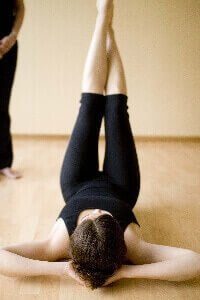 Kegel exercises are one of the many exercises that can strengthen the pelvic floor (also known as the pelvic diaphragm). These exercises are named after gynecologist Dr. Arnold Kegel, who published a paper in 1942 explaining the benefits of strengthening the pelvic floor. He found that improving muscle tone in this area helped stop urinary incontinence but also seemed to improve orgasm in women.
Dr. Kegel also invented a device for measuring pelvic floor strength. The original exercises he recommended included the use of a bladder-shaped resistance aid (here is a version similar to the one he recommended, and here is the more modern version). So, unlike what many of us are told to practice today, the original Kegels were not just simple contract and release exercises.
This is the reason that many pelvic floor therapists recommend Kegel exercise weights or even stone eggs in conjunction with Kegel exercises. My physical therapist explained that Kegels without weights are somewhat like just squeezing your arm muscle, while adding the weight is like using a dumbbell in arm exercises. Both can be effective, but adding a weight will provide better results over the long term.
Benefits of Kegel Exercises?
The pelvic floor is actually composed of several layers of muscles that connect in opposite directions. Many people envision the vagina as a tube that simply squeezes and releases, but the pelvic floor is much more complex and has several layers that all work together. In some cases, Kegels are helpful to tighten the pelvic floor. But some women have a pelvic floor that is too tight and needs to be relaxed.
As Dr. Brianne Grogan, DPT, explains:
Kegels are not for everyone. Some women hold chronic tension in the pelvic floor muscles and their muscles are short and tight most of the day. This often results in pain with intercourse, difficulty initiating urination, a feeling of tension or pain in the pelvic area, and the feeling that “no matter how many kegels I do I still don’t see results!”
For these individuals, kegels should be avoided.
I recommend seeking the care of a women’s health physical therapist who can help you release the pelvic floor muscles and re-balance pelvic floor length and tension using other, more appropriate, exercises.
Now before we throw out kegels altogether, we need to remember: kegels are not “bad.” They are simply an isolated contraction and relaxation of a muscle group, similar to a biceps curl or a hip extension! And for many women (barring the women described above), knowing how to “kegel” can be a great way to improve body awareness and even to spice up one’s sex life.
Successful isolation and contraction of the pelvic floor muscles helps functionally, as a “back-up” to prepare for a big cough/sneeze, when you really have to hold your bladder because there’s no bathroom nearby, or when lifting/pushing/pulling something heavy.
If you’re wondering what category you fall into, Dr. Brianne talks you through a step-by-step self-assessment of the core and pelvic floor in this YouTube video.
Do Kegels Work?
This is where things get a little more confusing. The answer really depends on what is actually causing the pelvic floor problem, how the Kegel exercises are being performed, and a variety of other factors. Dr. Grogan’s experience indicates some of the times these exercises are appropriate and when they aren’t:
When I was in clinical practice as a women’s health physical therapist, I had the distinct advantage of being able to physically examine my patients to determine their level of pelvic floor strength and muscular control. Most of the women who presented with complaints of incontinence truly did have weak, uncoordinated pelvic floor muscles and responded well to kegels. I saw some amazing results in women who practiced kegels as part of a total core strengthening program.
However, there was definitely a subset of women for whom kegels were NOT appropriate. Luckily, I was able to identify these women during their physical exam, and my focus with these patients was to teach them how to relax and release the pelvic floor muscles.
How to Do Kegel Exercises:
Dr. Grogan offers this advice for doing a proper Kegel exercise:
- Lie on your back or on your side. Lying down takes gravity out of the picture and gives your pelvic floor muscles the greatest advantage for a strong contraction.
- Visualize your pelvic floor muscles. They sit at the base of your pelvis and surround your vagina and your anus. Try to squeeze and lift these muscles toward your head. Imagine that you’re using these muscles to pull a marble into your vagina. I know, I know … it sounds strange. But this visualization works.
- Now relax the muscles and imagine that you’re letting the marble roll out. You just completed a kegel!
- Do another kegel, but this time hold the contraction for 5-8 seconds before relaxing. Complete 5 to 10 repetitions. These “slow hold” kegels are great for increasing strength and endurance of the pelvic floor muscles. This is important for preventing incontinence and prolapse, and – bonus – can amp up your sex life as well.
If a weight or stone egg is added, the same process is followed, but with the weight or egg inserted vaginally during the exercise.
How to Improve Pelvic Floor Strength (With or Without Kegels)
For women without pelvic floor dysfunction, there are more ways—better ways—than isolated kegels to keep your pelvic floor muscles strong and supple.
Note: If you have a specific women’s health condition or concern, such as incontinence or pelvic organ prolapse, please seek the care of a licensed women’s health physical therapist who can help identify your particular needs and come up with an individualized plan of care which may—or may not—include kegel exercises.
Here are three ideas Dr. Brianne suggests for optimal pelvic floor and core exercises (that don’t involve Kegels):
Move More Throughout the Day, Every Day
Humans were designed to MOVE … not sit in front of a computer all day long (I’m guilty of this myself!). Thus, first and foremost, we ALL must focus on increasing the quantity and quality of our movement throughout the day. Take movement breaks. Stand up, sit down, bend, get high, get low, lift things, and carry things. Just move! Park in the farthest parking spaces. Walk whenever possible. Take the stairs! Go for a hike!
And add more total-body strengthening into your daily life by attaching a quick fitness routine to something you already do multiple times a day, every day. I call this “Bathroom Fitness.” Give it a try!
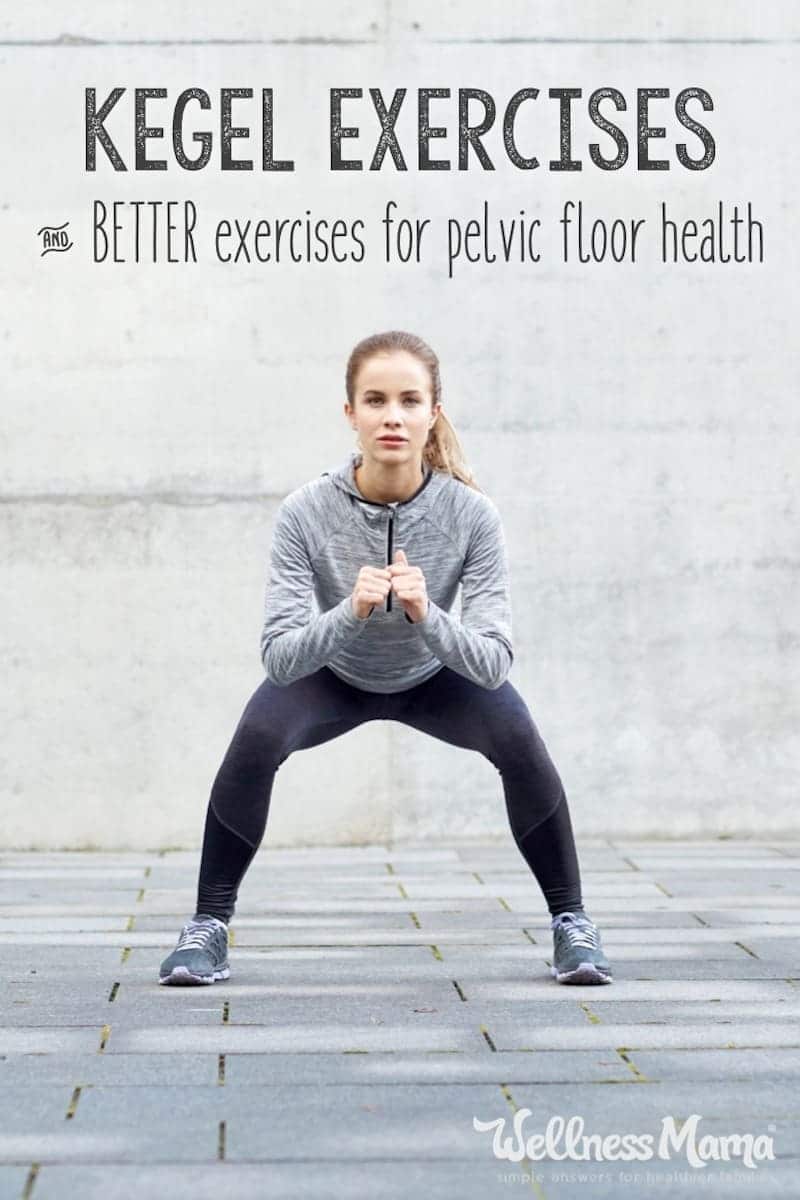
Squat!
Squats are finally getting the attention they deserve. Biomechanists like Katy Bowman are helping spread the word about the many benefits of squats and why we should all be squatting more.
Moving into and out of a squat naturally activates your pelvic floor and core muscles and, most importantly, strengthens the booty (thereby balancing the length and the work of the pelvic floor muscles). I like doing air squats (these are also described in the “Bathroom Fitness” video above) and deep squats. Particularly great when folding laundry!
Move Like a Lady
From Dr. Grogan: “Those who know me well know there’s nothing I like better than shakin’ my booty and moving my hips. Talk about a great total core exercise … And fun! Hip circles, figure 8s, etc., activate all of the muscles in your core including the pelvic floor, hips, back, and abs. Side benefit? Daily gentle hip circles keep the hip and spinal joints lubricated and pain-free.”
Of course, all of these exercises must be done with the foundation of proper posture and alignment. There are other great strengthened, including core breathing, planks, and more.
Zip It Up
Often, when we think of both posture and core strength, we focus on the abdominal muscles. We stand tall and “suck in” our bellies. But in order to truly and safely engage the muscles of the core (which helps protect your back, prevent prolapse, and keep you looking trim), you need to start at the base of the core—the pelvic floor.
Instead of isolated crunches or Kegels, the key is to engage the entire core as a whole.
Imagine a zipper that starts at the pelvic floor. Think of engaging—or starting—the zipper and begin a gentle Kegel. Next, think of pulling the zipper up as you contract your abdominal muscles, gently drawing your belly button in and up. Finally, stand tall with your shoulders drawn gently back. (Don’t let them round/hunch forward!)
Remember to zip up before you prepare to do a task that requires extra balance, control, or spinal support. A few examples: Vacuuming, taking out the garbage, and lifting weights at the gym. Zip up to prepare for the challenging task, and hold the “zipped” position while you’re completing the task. After you have completed the task, relax! But remember to “zip it up” when you need an extra dose of deep core control.
Kegels & Pelvic Floor: Bottom Line
Plugging away on the elliptical is fine, going for a walk or a run is great, lifting weights is fantastic, but strengthening and toning the middle part of the body—the core—is just as important as exercising the arms and legs.
As females, it is essential to incorporate the muscles of the core and pelvic floor into our fitness routines. This may mean using Kegels with or without weights, but it also means moving more, squatting, walking, stretching, and moving our bodies as a whole.
This article was medically reviewed by Dr. Betsy Greenleaf, the first board-certified female urogynecologist in the United States. She is double board certified in Obstetrics and Gynecology, as well as Female Pelvic Medicine and Reconstructive Surgery. As always, this is not personal medical advice and we recommend that you talk with your doctor.
Do you do Kegels? How have they worked for you? Ready to try these tips instead? Share below!


Leave a Reply