


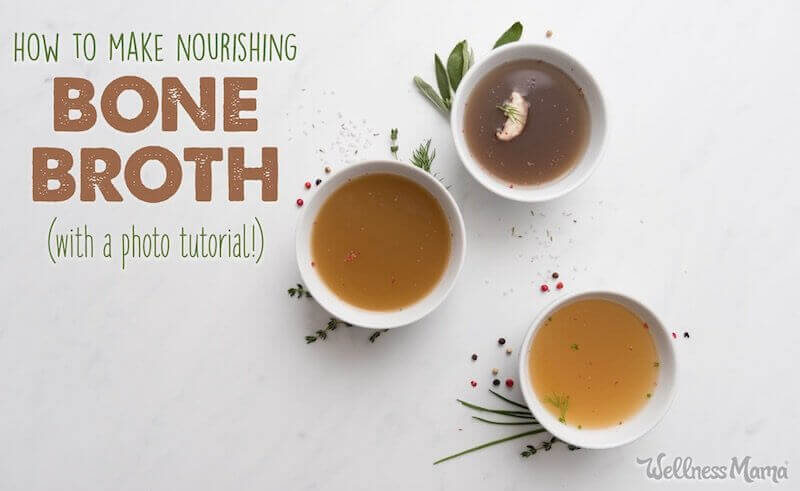

If you aren’t already making bone broth regularly, I’d encourage you to start today! It is an incredibly healthy and very inexpensive addition to any diet, and the homemade versions beat store-bought broth in both taste and nutrition (although there is some amazing homemade organic broth you can buy pre-made now).
This is the one nutrient rich food that anyone can afford to add!
What is Broth?
Broth (or technically, stock) is a mineral-rich infusion made by boiling bones of healthy animals with vegetables, herbs. and spices. You’ll find a large stock pot of broth/stock simmering in the kitchen of almost every 5-star restaurant. It is used for its great culinary uses and unparalleled flavor, but it is also a powerful health tonic that you can easily add to your family’s diet.
Broth is a traditional food that your grandmother likely made often (and if not, your great-grandmother definitely did). Many societies around the world still consume broth regularly as it is a cheap and highly nutrient dense food.
Besides it’s amazing taste and culinary uses, broth is an excellent source of minerals and is known to boost the immune system (chicken soup when you are sick anyone?) and improve digestion. Its high calcium, magnesium, and phosphorus content make it great for bone and tooth health. Bone broth also supports joints, hair, skin, and nails due to its high collagen content. In fact, some even suggest that it helps eliminate cellulite as it supports smooth connective tissue.
It can be made from the bones of beef, bison, lamb, poultry, or fish. Vegetables and spices are often added both for flavor and added nutrients.

Why Drink Bone Broth?
Anyone who has read Gut and Psychology Syndrome knows the many benefits of bone broth and how it can improve digestion, allergies, immune health, brain health, and much more.
What isn’t as well known is that broth can help reduce cellulite by improving connective tissue, increase hair growth/strength, improve digestive issues, and remineralize teeth.
Broth is also helpful to have on hand when anyone in the family gets sick as it can be a soothing and immune boosting drink during illness, even if the person doesn’t feel like eating.
Broth is very high in the amino acids proline and glycine which are vital for healthy connective tissue (ligaments, joints, around organs, etc). The Paleo Mom has a great explanation of the importance of these two amino acids:
In addition, glycine is required for synthesis of DNA, RNA and many proteins in the body. As such, it plays extensive roles in digestive health, proper functioning of the nervous system and in wound healing. Glycine aids digestion by helping to regulate the synthesis and of bile salts and secretion of gastric acid. It is involved in detoxification and is required for production of glutathione, an important antioxidant. Glycine helps regulate blood sugar levels by controlling gluconeogenesis (the manufacture of glucose from proteins in the liver). Glycine also enhances muscle repair/growth by increasing levels of creatine and regulating Human Growth Hormone secretion from the pituitary gland. This wonderful amino acid is also critical for healthy functioning of the central nervous system. In the brain, it inhibits excitatory neurotransmitters, thus producing a calming effect. Glycine is also converted into the neurotransmitter serine, which promotes mental alertness, improves memory, boosts mood, and reduces stress.
Proline has an additional role in reversing atherosclerotic deposits. It enables the blood vessel walls to release cholesterol buildups into your blood stream, decreasing the size of potential blockages in your heart and the surrounding blood vessels. Proline also helps your body break down proteins for use in creating new, healthy muscle cells.
What Kind of Broth?
Homemade, nutrient-dense bone broth is incredibly easy and inexpensive to make. There is no comparison to the store-bought versions which often contain MSG or other chemicals and which lack gelatin and some of the other health-boosting properties of homemade broth. However, if you’re short on time, I recommend Kettle & Fire’s grass-fed bone broth because it’s pretty gelatinous and made with organic ingredients.
In selecting the bones for broth, look for high quality bones from grass fed cattle or bison, pastured poultry, or wild caught fish. Since you’ll be extracting the minerals and drinking them in concentrated form, you want to make sure that the animal was as healthy as possible.
There are several places to find good bones for stock:
- Save leftovers from when you roast a chicken, duck, turkey, or goose (pastured)
- From a local butcher, especially one who butchers the whole animal
- From local farmers who raise grass fed animals (ask around at your local farmers market)
- Online from companies like US Wellness Meats (also where I get grass fed tallow in bulk- they sell pre-made high quality broth), Butcher Box, or Healthy Traditions (I order high quality beef, bison, lamb, and chicken bones from them at good prices)
This recipe for broth is my favorite and is an adaption of the recipe in Nourishing Traditions.

Bone Broth Recipe (Stove Top or Instant Pot)
Servings
Ingredients
- 2 lbs bones from a healthy source
- 2 chicken feet (optional)
- 1 gal water
- 2 TBSP apple cider vinegar
- 1 onion
- 2 carrots
- 2 stalks of celery
- 1 TBSP salt (optional)
- 1 tsp peppercorns (optional)
- herbs and spices (to taste, optional)
- 2 cloves garlic (optional)
- 1 bunch parsley (optional)
Instructions
- If you are using raw bones, especially beef bones, it improves flavor to roast them in the oven first. I place them in a roasting pan and roast for 30 minutes at 350°F.
- Place the bones in a large stock pot or the Instant Pot.
- Pour cool filtered water and the vinegar over the bones. Let sit for 20-30 minutes in the cool water. The acid helps make the nutrients in the bones more available.
- Rough chop and add the onion, carrots, and celery to the pot.
- Add any salt, pepper, spices, or herbs, if using.
Stove Top
- Bring the broth to a boil. Once it has reached a vigorous boil, reduce to a simmer and simmer until done.
- During the first few hours of simmering, you’ll need to remove the impurities that float to the surface. A frothy/foamy layer will form and it can be easily scooped off with a big spoon. Throw this part away. I typically check it every 20 minutes for the first 2 hours to remove this. Grass-fed and healthy animals will produce much less of this than conventional animals.
- Simmer for 8 hours for fish broth, 24 hours for chicken, or 48 hours for beef.
- During the last 30 minutes, add the garlic and parsley, if using.
- Remove from heat and let cool slightly. Strain using a fine metal strainer to remove all the bits of bone and vegetable. When cool enough, store in a gallon size glass jar in the fridge for up to 5 days, or freeze for later use.
Instant Pot
- Add the garlic and parsley to the pot if using, place the lid on the pot, and set valve to seal.
- Cook at high pressure for 2 hours, followed by either a quick release or natural pressure release. Either is fine.
- Let cool slightly, strain, and store in a gallon size glass jar in the fridge for up to 5 days, or freeze for later use.
Nutrition
Notes
Bone Broth Instructions
The first step in preparing to make broth is to gather high quality bones. As I said, you can find them from sources listed above or save them when you cook. Since we roast chicken at least once a week, I save the carcass for making broth/stock.

I usually aim for 2 pounds of bones per gallon of water I’m using to make broth. This usually works out to 2-3 full chicken carcasses. If possible I’ll also add 2 chicken feet per gallon of water (completely optional!).
You’ll also need some organic vegetables for flavor. These are actually optional but add extra flavor and nutrition. Typically, I add (per gallon of water and 2 pounds of bones):
- 1 onion
- 2 large carrots (if from an organic source, you can rough chop and don’t need to peel)
- 2 celery stalks, rough chopped
- 1 bunch of parsley

Since I make in bulk, I usually use about 4 times the amount of each of these. You can make in any amount, just multiply or divide the recipe up or down.
If you are using raw bones, especially beef bones, it improves flavor to roast them in the oven first. I place them in a roasting pan and roast for 30 minutes at 350°F.
Then, place the bones in a large stock pot (I use a 5 gallon pot). Pour cool filtered water over the bones and add the vinegar. Let sit for 20-30 minutes in the cool water. The acid helps make the nutrients in the bones more available.
Rough chop and add the vegetables (except the parsley and garlic, if using) to the pot. Add any salt, pepper, spices, or herbs, if using.
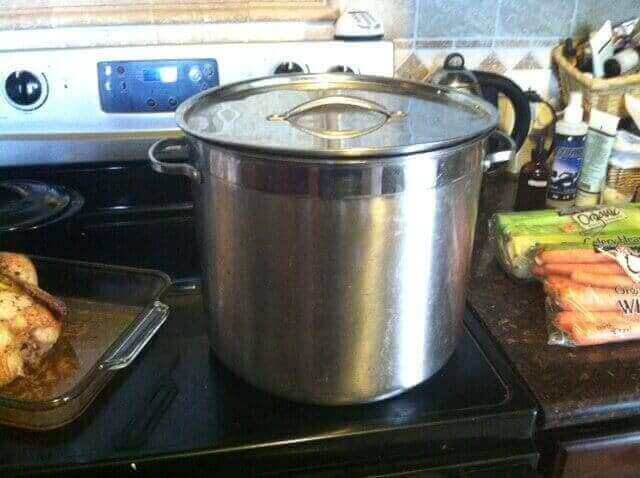
Now, bring the broth to a boil. Once it has reached a vigorous boil, reduce to a simmer and simmer until done. These are the times I simmer for:
- Beef broth/stock: 48 hours
- Chicken or poultry broth/stock: 24 hours
- Fish broth: 8 hours
During the first few hours of simmering, you’ll need to remove the impurities that float to the surface. A frothy/foamy layer will form and it can be easily scooped off with a big spoon. Throw this part away. I typically check it every 20 minutes for the first 2 hours to remove this. Grass-fed and healthy animals will produce much less of this than conventional animals.
During the last 30 minutes, add the garlic and parsley, if using.
Remove from heat and let cool slightly. Strain using a fine metal strainer to remove all the bits of bone and vegetable. When cool enough, store in a gallon size glass jar in the fridge for up to 5 days, or freeze for later use.
How to Use Bone Broth
Homemade Broth/Stock can be used as the liquid in making soups, stews, gravies, sauces, and reductions. It can also be used to saute or roast vegetables.
We try to drink at least 1 cup per person per day as a health boost, especially in the winter. My favorite way is to heat 8-16 ounces with a little salt and sometimes whisk in an egg until cooked (makes a soup like egg drop soup).
In times of illness (which doesn’t happen often) we will usually just drink bone broth until we start feeling better as it supports the body but is very easy to digest so the body’s energy can go to healing. In cases of stomach bugs or vomiting, bone broth often calms the stomach very quickly and helps shorten the duration of the illness.
If you don’t want to DIY, this is a great pre-made bone broth option shipped straight to your door!
If you aren’t already, make bone broth a regular part of your kitchen routine. It’s health boosting, inexpensive, and easy… you can’t afford not to!
This article was medically reviewed by Dr. Lauren Jefferis, board certified in Internal Medicine and Pediatrics. As always, this is not personal medical advice and we recommend that you talk with your doctor or work with a doctor at SteadyMD.
Do you already make bone broth? Will you try it now? Share your tips or questions below!


Leave a Reply