

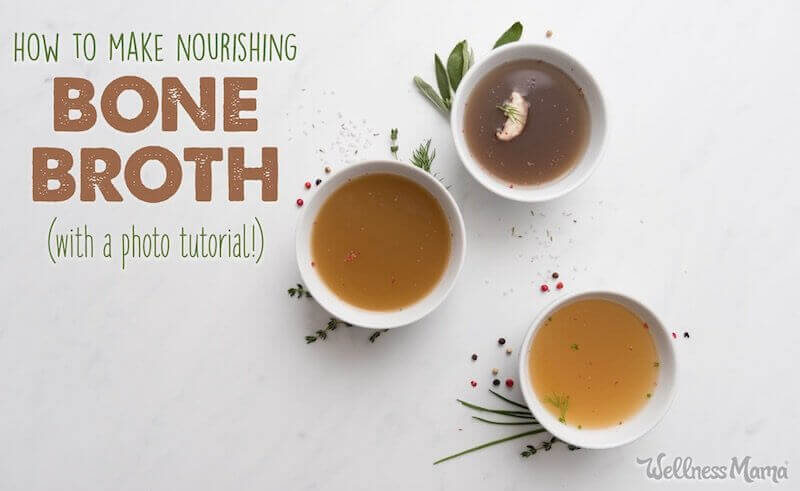

, , ,

How to Make Bone Broth (Recipe, with Instant Pot Option)

Katie Wells Avatar

Reading Time: 8 minutes

This post contains affiliate links.

Read my affiliate policy.

Bone Broth Recipe with Tutorial
Wellness Mama » Blog » Recipes » Beef Recipes » How to Make Bone Broth (Recipe, with Instant Pot Option)

If you aren’t already making bone broth regularly, I’d encourage you to start today! It is an incredibly healthy and very inexpensive addition to any diet, and the homemade versions beat store-bought broth in both taste and nutrition (although there is some amazing homemade organic broth you can buy pre-made now).

This is the one nutrient rich food that anyone can afford to add!

What is Broth?

Broth (or technically, stock) is a mineral-rich infusion made by boiling bones of healthy animals with vegetables, herbs. and spices. You’ll find a large stock pot of broth/stock simmering in the kitchen of almost every 5-star restaurant. It is used for its great culinary uses and unparalleled flavor, but it is also a powerful health tonic that you can easily add to your family’s diet.

Broth is a traditional food that your grandmother likely made often (and if not, your great-grandmother definitely did). Many societies around the world still consume broth regularly as it is a cheap and highly nutrient dense food.

Besides it’s amazing taste and culinary uses, broth is an excellent source of minerals and is known to boost the immune system (chicken soup when you are sick anyone?) and improve digestion. Its high calcium, magnesium, and phosphorus content make it great for bone and tooth health. Bone broth also supports joints, hair, skin, and nails due to its high collagen content. In fact, some even suggest that it helps eliminate cellulite as it supports smooth connective tissue.

It can be made from the bones of beef, bison, lamb, poultry, or fish. Vegetables and spices are often added both for flavor and added nutrients.
Delicious Homemade Bone Broth Tutorial- How to make perfect bone broth

Why Drink Bone Broth?

Anyone who has read Gut and Psychology Syndrome knows the many benefits of bone broth and how it can improve digestion, allergies, immune health, brain health, and much more.

What isn’t as well known is that broth can help reduce cellulite by improving connective tissue, increase hair growth/strength, improve digestive issues, and remineralize teeth.

Broth is also helpful to have on hand when anyone in the family gets sick as it can be a soothing and immune boosting drink during illness, even if the person doesn’t feel like eating.

Broth is very high in the amino acids proline and glycine which are vital for healthy connective tissue (ligaments, joints, around organs, etc). The Paleo Mom has a great explanation of the importance of these two amino acids:

In addition, glycine is required for synthesis of DNA, RNA and many proteins in the body. As such, it plays extensive roles in digestive health, proper functioning of the nervous system and in wound healing. Glycine aids digestion by helping to regulate the synthesis and of bile salts and secretion of gastric acid. It is involved in detoxification and is required for production of glutathione, an important antioxidant. Glycine helps regulate blood sugar levels by controlling gluconeogenesis (the manufacture of glucose from proteins in the liver). Glycine also enhances muscle repair/growth by increasing levels of creatine and regulating Human Growth Hormone secretion from the pituitary gland. This wonderful amino acid is also critical for healthy functioning of the central nervous system. In the brain, it inhibits excitatory neurotransmitters, thus producing a calming effect. Glycine is also converted into the neurotransmitter serine, which promotes mental alertness, improves memory, boosts mood, and reduces stress.

Proline has an additional role in reversing atherosclerotic deposits. It enables the blood vessel walls to release cholesterol buildups into your blood stream, decreasing the size of potential blockages in your heart and the surrounding blood vessels. Proline also helps your body break down proteins for use in creating new, healthy muscle cells.

What Kind of Broth?

Homemade, nutrient-dense bone broth is incredibly easy and inexpensive to make. There is no comparison to the store-bought versions which often contain MSG or other chemicals and which lack gelatin and some of the other health-boosting properties of homemade broth. However, if you’re short on time, I recommend Kettle & Fire’s grass-fed bone broth because it’s pretty gelatinous and made with organic ingredients.

In selecting the bones for broth, look for high quality bones from grass fed cattle or bison, pastured poultry, or wild caught fish. Since you’ll be extracting the minerals and drinking them in concentrated form, you want to make sure that the animal was as healthy as possible.

There are several places to find good bones for stock:

  • Save leftovers from when you roast a chicken, duck, turkey, or goose (pastured)
  • From a local butcher, especially one who butchers the whole animal
  • From local farmers who raise grass fed animals (ask around at your local farmers market)
  • Online from companies like US Wellness Meats (also where I get grass fed tallow in bulk- they sell pre-made high quality broth), Butcher Box, or Healthy Traditions (I order high quality beef, bison, lamb, and chicken bones from them at good prices)

This recipe for broth is my favorite and is an adaption of the recipe in Nourishing Traditions.
 

Delicious Homemade Bone Broth Tutorial- How to make perfect bone broth

Bone Broth Recipe (Stove Top or Instant Pot)

Make nourishing bone broth at home simmered on the stove top or in the Instant Pot in a fraction of the time.
Prep Time 10 minutes
Cook Time 8 hours
Total Time 8 hours 10 minutes
Calories 16kcal
Author Katie Wells

Servings

16 cups

Ingredients

  • 2 lbs bones from a healthy source
  • 2 chicken feet (optional)
  • 1 gal water
  • 2 TBSP apple cider vinegar
  • 1 onion
  • 2 carrots
  • 2 stalks of celery
  • 1 TBSP salt (optional)
  • 1 tsp peppercorns (optional)
  • herbs and spices (to taste, optional)
  • 2 cloves garlic (optional)
  • 1 bunch parsley (optional)

Instructions

  • If you are using raw bones, especially beef bones, it improves flavor to roast them in the oven first. I place them in a roasting pan and roast for 30 minutes at 350°F.
  • Place the bones in a large stock pot or the Instant Pot.
  • Pour cool filtered water and the vinegar over the bones. Let sit for 20-30 minutes in the cool water. The acid helps make the nutrients in the bones more available.
  • Rough chop and add the onion, carrots, and celery to the pot.
  • Add any salt, pepper, spices, or herbs, if using.

Stove Top

  • Bring the broth to a boil. Once it has reached a vigorous boil, reduce to a simmer and simmer until done.
  • During the first few hours of simmering, you’ll need to remove the impurities that float to the surface. A frothy/foamy layer will form and it can be easily scooped off with a big spoon. Throw this part away. I typically check it every 20 minutes for the first 2 hours to remove this. Grass-fed and healthy animals will produce much less of this than conventional animals.
  • Simmer for 8 hours for fish broth, 24 hours for chicken, or 48 hours for beef.
  • During the last 30 minutes, add the garlic and parsley, if using.
  • Remove from heat and let cool slightly. Strain using a fine metal strainer to remove all the bits of bone and vegetable. When cool enough, store in a gallon size glass jar in the fridge for up to 5 days, or freeze for later use.

Instant Pot

  • Add the garlic and parsley to the pot if using, place the lid on the pot, and set valve to seal.
  • Cook at high pressure for 2 hours, followed by either a quick release or natural pressure release. Either is fine.
  • Let cool slightly, strain, and store in a gallon size glass jar in the fridge for up to 5 days, or freeze for later use.

Nutrition

Nutrition Facts
Bone Broth Recipe (Stove Top or Instant Pot)
Amount Per Serving (1 cup)
Calories 16
% Daily Value*
Cholesterol 2mg1%
Sodium 458mg20%
Potassium 57mg2%
Carbohydrates 1g0%
Vitamin A 1575IU32%
Vitamin C 5.8mg7%
Calcium 21mg2%
Iron 0.3mg2%
* Percent Daily Values are based on a 2000 calorie diet.

Notes

Detailed stove-top timing instructions below.

Like this recipe? Check out my new cookbook, or get all my recipes (over 500!) in a personalized weekly meal planner here!

Bone Broth Instructions

The first step in preparing to make broth is to gather high quality bones. As I said, you can find them from sources listed above or save them when you cook. Since we roast chicken at least once a week, I save the carcass for making broth/stock.
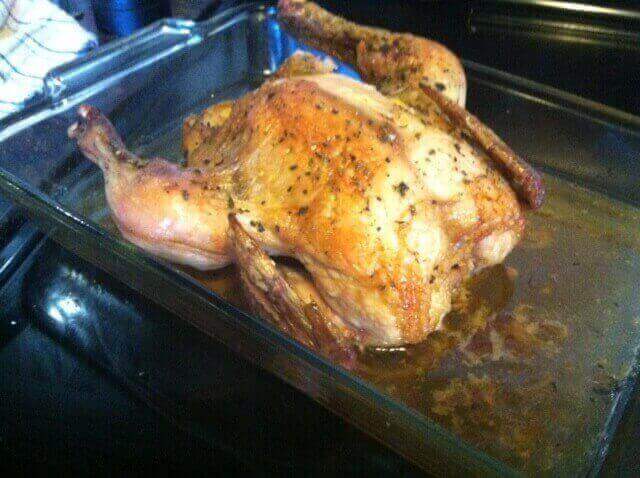
Chicken for Bone Broth

I usually aim for 2 pounds of bones per gallon of water I’m using to make broth. This usually works out to 2-3 full chicken carcasses. If possible I’ll also add 2 chicken feet per gallon of water (completely optional!).

You’ll also need some organic vegetables for flavor. These are actually optional but add extra flavor and nutrition. Typically, I add (per gallon of water and 2 pounds of bones):

  • 1 onion
  • 2 large carrots (if from an organic source, you can rough chop and don’t need to peel)
  • 2 celery stalks, rough chopped
  • 1 bunch of parsley

bone broth vegetables

Since I make in bulk, I usually use about 4 times the amount of each of these. You can make in any amount, just multiply or divide the recipe up or down.

If you are using raw bones, especially beef bones, it improves flavor to roast them in the oven first. I place them in a roasting pan and roast for 30 minutes at 350°F.

Then, place the bones in a large stock pot (I use a 5 gallon pot). Pour cool filtered water over the bones and add the vinegar. Let sit for 20-30 minutes in the cool water. The acid helps make the nutrients in the bones more available.

Rough chop and add the vegetables (except the parsley and garlic, if using) to the pot. Add any salt, pepper, spices, or herbs, if using.
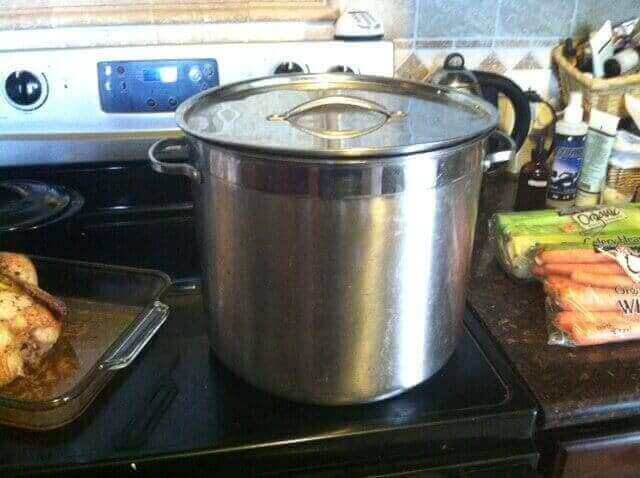
Making Homemade Bone Broth

Now, bring the broth to a boil. Once it has reached a vigorous boil, reduce to a simmer and simmer until done. These are the times I simmer for:

  • Beef broth/stock: 48 hours
  • Chicken or poultry broth/stock: 24 hours
  • Fish broth: 8 hours

During the first few hours of simmering, you’ll need to remove the impurities that float to the surface. A frothy/foamy layer will form and it can be easily scooped off with a big spoon. Throw this part away. I typically check it every 20 minutes for the first 2 hours to remove this. Grass-fed and healthy animals will produce much less of this than conventional animals.

During the last 30 minutes, add the garlic and parsley, if using.

Remove from heat and let cool slightly. Strain using a fine metal strainer to remove all the bits of bone and vegetable. When cool enough, store in a gallon size glass jar in the fridge for up to 5 days, or freeze for later use.

How to Use Bone Broth

Homemade Broth/Stock can be used as the liquid in making soups, stews, gravies, sauces, and reductions. It can also be used to saute or roast vegetables.

We try to drink at least 1 cup per person per day as a health boost, especially in the winter. My favorite way is to heat 8-16 ounces with a little salt and sometimes whisk in an egg until cooked (makes a soup like egg drop soup).

In times of illness (which doesn’t happen often) we will usually just drink bone broth until we start feeling better as it supports the body but is very easy to digest so the body’s energy can go to healing. In cases of stomach bugs or vomiting, bone broth often calms the stomach very quickly and helps shorten the duration of the illness.

If you don’t want to DIY, this is a great pre-made bone broth option shipped straight to your door!

If you aren’t already, make bone broth a regular part of your kitchen routine. It’s health boosting, inexpensive, and easy… you can’t afford not to!

This article was medically reviewed by Dr. Lauren Jefferis, board certified in Internal Medicine and Pediatrics. As always, this is not personal medical advice and we recommend that you talk with your doctor or work with a doctor at SteadyMD.

Do you already make bone broth? Will you try it now? Share your tips or questions below!
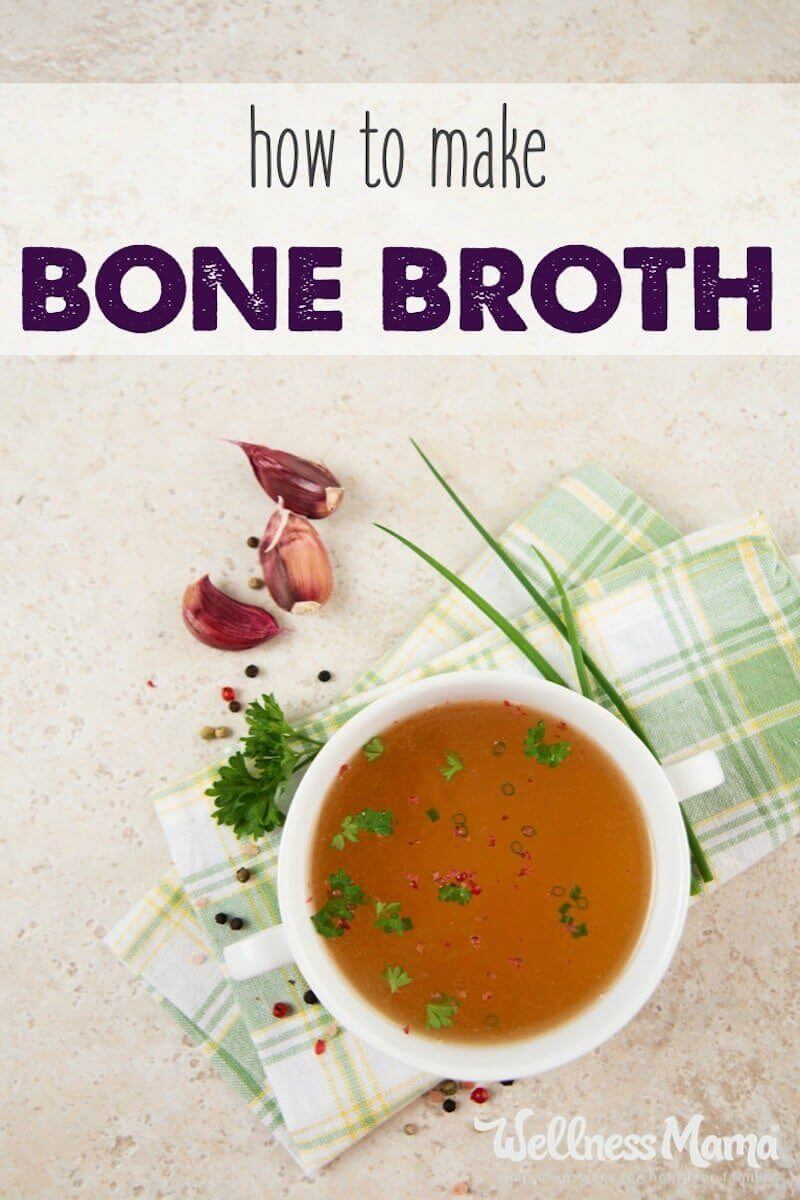
Bone broth is an incredibly nutritious and health-boosting food that is very easy to make. This step by step tutorial shows you how.

Sources

Become a VIP member!

Get access to my VIP newsletter with health tips, special deals, my free ebook on Seven Small Easy Habits and so much more!

Easy Habits ebook on ipad
Katie Wells Avatar

About Katie Wells

Katie Wells, CTNC, MCHC, Founder of Wellness Mama and Co-founder of Wellnesse, has a background in research, journalism, and nutrition. As a mom of six, she turned to research and took health into her own hands to find answers to her health problems. WellnessMama.com is the culmination of her thousands of hours of research and all posts are medically reviewed and verified by the Wellness Mama research team. Katie is also the author of the bestselling books The Wellness Mama Cookbook and The Wellness Mama 5-Step Lifestyle Detox.

Comments

1,512 responses to “How to Make Bone Broth (Recipe, with Instant Pot Option)”

  1. Jessi Avatar

    How much do you need to drink to repair leaky gut? I am just starting to read about leaky gut as my daughter (age 6) was just diagnosed with Intestinal metaplasia.

    Thanks!

      1. Jessi Avatar

        Thanks so much for the reply and link. I know there is way more that goes into repairing the gut, but saw bone broth was an item that keep coming up when reading about Leaky Gut. I recalled seeing it on your website so came here and thought I would ask you. I just got a few books from the library last night and will start reading more on LGS. I also started to follow Dr. Josh Axe.

        1. Wellness Mama Avatar

          @Jessi, Josh Axe’s course is a VERY watered down version of Christa Orecchio’s (which I linked to above) and SCD Lifestyle, so I would not recommend his work, as the recommendations he makes are not as effective.

          1. Jessi Avatar

            Wow good to know. Glad I didn’t waste to much time on him. I will check her out right away! Thanks for your help!

    1. Kim Avatar

      5 stars
      I will share what I’ve done for leaky gut. Mine is due to long term NSAID use.

      I will preface this by saying that you should discuss with your physician before giving ANY supplements to your child as I cannot comment what is or is not safe for a child. I’m only sharing what works for me.

      Since I’ve had leaky gut in the past, I recognized the symptoms. Aside from digestive issues, stomach gurgling and the likes, I began having an autoimmune reaction after eating, almost flu like symptoms – aches all over and seemed like my lymph nodes were acting up under my feet, on the inside of my knees, aches in my arms and in my armpits, etc. except I didn’t have the flu. It happened particularly after taking a probiotic(a common symptom when taking L acidophilus if you have leaky gut). So, that’s how I knew.

      I went to the health food store and purchased the following supplements:

      Mastic Gum (expensive, and I only used it until the bottle was gone) 2 x daily
      L-Glutamine (helps heal the gut lining) 1-2 daily or more
      Digestive Enzymes (helps break down fats and proteins making it easier for your stomach to digest) – with each meal
      DGL licorice root extract – very soothing to the gut, I take 1 before each meal

      After 3 days my digestive symptoms, especially the gurgling that I had nonstop for over a month, improved considerably. I’d say 98% improvement. This is not to say that I was cured, it’s only to say that these supplements are working to improve my symptoms. Leaky gut, at least for me in the past has taken up to a year to heal I completely to where I could go back to eating anything without incident. I did not take ANY medication for a year.

      Probiotic – 1 x daily – after the intial phase where my stomach stopped gurgling, I then included probiotics in my regimen.

      Of course, I also include bone broth in my diet. I read that it helps plug the holes in your gut.

      AVOID:

      If feasible, avoid all NSAIDs at all costs – aspirin, naproxen sodium, ibuprofen – these are the WORST offenders for the gut. Even acetaminophen can disrupt your stomach lining. I avoided all medications with the exception of an allergy pill.

      Avoid alcohol, chocolate, spicy and inflammatory foods like peanuts and tomatoes and hot peppers (you can add these back into your diet later as you begin to heal), soda and any carbonated beverages, citrusy drinks like orange juice, avoid black tea and coffee (caffeinated or otherwise) – coffee destroys beneficial bacteria in the gut. Avoid anything gluten, wheat, and eggs as well. I was still able to include cheese and milk in my diet, it depends on how your body reacts, but for me eggs and butter are a no-no. Some people avoid all diary for the 1st 30 days. Avoid refined sugars. Gluten is the worst offender for me, though I could eat it liberally before my symptoms began. Be aware that Soy has gluten. Avoid rice, beans, peas, lentils, corn, oats. Cut back on salt.

      What you should include in your diet:

      Drink lots of water. Lemon water every morning is good too.

      Pears and apples are good though you may want to avoid fruits the first 30 days, avocados, lightly cooked vegetables, oily fish like sardines, herring, tuna etc., onions and garlic (-also antimicrobial properties), and chicken (easy on the gut) is healthy for the digestive system.

      Increase your intake of vitamin C and B vitamins and magnesium, zinc and vitamin D. Your body is being depleted of nutrients as you probably aren’t absorbing what you need.

      Coconut anything is great for the gut, including unsweetened coconut flakes. Coconut has antimicrobial properties. Coconut oil – I add this to tea and also take it by the spoonful. The unrefined oil is much sweeter and I purchase the organic version, and it has a pleasant taste. Coconut milk and coconut water are great. Unsweetened is better.

      Aloe vera juice (inner leaf only) – I buy this by the gallon at my local Walmart. It’s usually by the vitamin / pharmacy area. Warning though, it tastes like band aids. I drink a glass a day usually before I go to bed.

      Cabbage / Kimchi / Fermented foods – cabbage anything is GREAT for the gut. This is my snack throughout the day. I attribute much of my healing to eating lots of Kimchi (which is fermented cabbage). I don’t buy the American version at my local grocery store – it tastes nothing like the real Korean version and doesn’t even seem like it has been fermented long enough. If you have an Asian store nearby, that’s your best bet, you can get huge jars of Korean Kimchi. Otherwise, you can also juice cabbage or eat it slightly cooked.

      Anything fermented is great for healing the gut. Kefir is great too but it made me pee a lot for whatever reason.

      Broccoli is also excellent for healing your gut, but slightly cooked is supposed to be better.

      Ginger Root is also beneficial. I grate this and put this in my tea.

      herbal Ginger tea is excellent for your gut. I drink this daily with a spoonful of coconut oil added in.

      Turmeric root (I also find this, along with chicken feet at the Asian store), and like Ginger Root, I grate this and add it to my food, or I just put a chunk into my bone broth the last 4 hours that it is simmering). You can also just use the turmeric spice in a jar.

      Mustard is great for your stomach.

      Cinnamon is another spice beneficial to your health.

      Hope this helps & Good luck!

  2. Denise Avatar

    4 stars
    I just made 3 quarts of turkey broth from several necks. What do I do with all the meat that simmered for 24 hours? Is it usable/edible? Can another batch of broth be made from the same bones? Thanks so much!

    1. Linda Hendrex Avatar
      Linda Hendrex

      5 stars
      Yes, the meat from making stock is edible and I usually feed it to my dogs. And Yes! You can make another batch of stock from the same bones. When I make a first batch, I freeze the stock into small useable quantities for human consumption. Then, I make a second batch from the same bones and by the time they are done the bones are soft and mushy. I take this mixture of stock and soft bones, and pulverize it into a “bone mush” in my VitaMix. When the bones are completely absorbed into the second stock, I freeze it into ice trays and make small bone “popsicles” which I give my dogs for treats, or thawing this and adding to their food. My vet says to do this moderately because having this every day has been known to cause a mineral imbalance. But it is good for them every few days of so. They LOVE their “bonesicles”!

  3. Jim Avatar

    Hi Paolina, I cannot comment on the 6qt crock pot as it is too small for me to bother with. I use a 30 quart stainless stock pot, I routinely end up with about 18 quarts of broth. On the last day of cooking, I end up with about 27 quarts in the pot, leaving room so the darn thing won’t overflow, got tired of cleaning the stovetop.
    After it is all strained out I decide how strong the broth is and may add a few quarts of water. It is all cooled off then I freeze it in one or two quart stacking stainless containers, to be defrosted as needed. I invested in a number of large stock pots and that has made the whole process so much easier, the old six-eight quart pots look so tiny. The 20 quart one is great for making stews and soups for freezing. The only downside is manhandling the large pots!

  4. Jamie Avatar

    I’ve made this twice now using chicken bones, crockpot, and using scraps of vegetables (awesome idea from some of the people who posted here, love it and cuts down on waste and saves money. Thank you! ). The first time was a small batch and the second was large enough for me to freeze most of it. I froze it in cubes so i can easily use the amount I want for cooking , etc. Adds great flavor to scrambled eggs and other dishes! I am enjoying this nutrition and it’s easier than I had expected! Thank you so much !!

  5. paolina Avatar

    5 stars
    I’ve been reading for 2 days straight all comments since 2012 and I can’t find the answer to my ONE question! Can anyone comment on how many quarts of broth you obtain if you use a 6 quart crock pot? Do you end up with 6 quarts of broth? I don’t want to spend all that time to end up with 4-5 days worth of broth. Should I buy a 22qt Oven Roaster instead? just not sure what to do… I APPRECIATE YOUR COMMENTS PEOPLE! Thanks!

    1. Kim Avatar

      5 stars
      I highly recommend getting a 22 quart roaster (I decided on the Hamilton Beach Stainless and I’m happy with my purchase – according to the reviews Nesco quality has gone downhill – I’m not affiliated with either of these brands, these are just my personal opinions of course).

      I made my first batch of bone broth in a stock pot on my stove on the lowest heat setting, and though I filled the pot it didn’t give me as much broth as I’d have liked after cooking for two full days.

      Pack as much as you can in the 22 quart roaster and add enough water to cover everything. I think I even added a little water a couple of times just to make up for evaporation, and I also kept the heat setting a little higher than the lowest setting – just enough to keep a low simmer going the way I had cooked it in the stock pot on the stove. Everything gelled nicely and I was able to fit numerous packages of chicken feet and neck and other cartilage bones in there.

      My roaster wasn’t as full as I could have filled it, I probably filled it halfway, and out of that I got maybe 4-5 gallon size baggies of bone broth that I stored in my freezer. You could probably get a lot more than that if you use the full capacity.

      I added my veggies the last 4 hours of cooking and got some fantastic tasting bone broth. Season liberally! Yummy.

      Good luck!

      1. WI Kim Avatar

        5 stars
        p.s. I roasted everything in the oven first. Of course, don’t forget the apple cider vinegar.

    2. Linda Avatar

      5 stars
      Hi Paolina,

      I don’t think there are any set “rules” for this. If you want to make small batches, you should probably fill your pot with about 25% bones and add enough water to fill to 75%. That will leave about 25% of empty room at the top of your pot to prevent boil overs. Add your ACV and bring to a boil. Turn it all down and let simmer for a day or two. If you want, you can add stuff for flavor like veggie scraps, onion skins, garlic, etc. It’s actually pretty simple. Personally, I don’t do huge batches like some because I don’t have the freezer space or the containers to handle it. Plus, lifting those heavy pots of hot stock gets pretty difficult.

  6. Melissa Avatar

    Im making this with beef marrow, chicken bones, and turkey necks for my dog. It stinks and is fatty. Can this batch be saved?

  7. Ameeta Avatar

    Hello,Welness,Mama. I can’t enough how much I love your blog. I am going to try making your gelatin gummies but I tried bone broth this weekend from organic grass fed bones. I trimmed some of the fat but after I made it and put it in the refrigerator, almost half of it congealed into a white fat cake…There was very little fat on top when it was liquid. Did I do something wrong. I cooked it for about 6 hours

    I am sure that fat is not healthy

    1. paolina Avatar

      5 stars
      II’m pretty sure the fat is VERY healthy and if you don’t want to use it in the broth you can just take it out and freeze it spearate to use for frying, sauteeing anything (instead of oil or butter) BASICALLY, to answer your question, anything resulting from boiling your grass-fed beef bones is going to be just wonderful. Why wouldn’t it be?

    1. Brian Avatar

      I would make sure that I use a stainless steel, rather than an aluminum, pressure cooker. Vinegar may cause some aluminum to dissolve into the soup. The same may occur with some other foods like tomatoes.

      1. Linda Hendrex Avatar
        Linda Hendrex

        4 stars
        Yes, I agree. I should have said that in my comment. My pressure cookers are all stainless steel and I forget that there are many aluminum ones on the market. Avoid aluminum pressure cookers like the plague!

  8. Alex Avatar

    4 stars
    Is there a way to make this quicker? Even under the best of circumstances I don’t have 8 hours to cook anything and I can’t leave the stove on unsupervised :/ The max I could do is 2-3 hours, would that work?

  9. Carolyn Avatar
    Carolyn

    Recently received an email about cooking bones too long (Fearless Eating “When Bone Broth is Bad for You); and, thereby causing high levels of glutamates in the broth. Please comment as I have been cooking my beef bones 48 hours, poultry bones 24 hours. He recommends 1-3 hours for poultry; 2-4 hours for beef; one hour for fish.

  10. Christine D. Avatar
    Christine D.

    4 stars
    I’ve been making bone broth for my dogs, lol. I use marrow bones and chicken feet, has always jelled for me. I smash up the marrow and leave it in the broth for extra goodness for them. Guess I should be taking to too.

  11. Janet Avatar

    I cooked turkey bone broth for 15 hours. It didn’t gel, or have a topping of solid fat when cooled, but it tastes great. The problem is that I found the hard plastic “hanger” that allows you to pick the bird up, among the cooked bones when I strained the broth. My question is, might this plastic hanger have leached into the broth to the point that I shouldn’t use it?

    1. Christa Avatar

      Absolutely that plastic hanger would leach into hot broth so I count that batch out and dispose of it.

  12. Lynnsy Logue Avatar
    Lynnsy Logue

    5 stars
    I have just discovered Bone Broth! I had a challenge with tongue cancer and went through chemotherapy, radiation and surgery. The radiation never stops of course and I am learning about what I can do to help my teeth and bones, tissues in head and neck, primarily remineralization, strengthening everything; arteries, muscles, mucous membranes, okay everything and started making a broth that I can use with won tons because I have serious problems swallowing. Reading more, I discovered bone broth and have been making every week and using every day. I find my energy greatly improved. I keep referring to this website and thank you. I am spreading the word to others. I even got the chicken feet at my farmer’s market and am getting necks and backs as well. I am 77 and very active, always have been and will continue with this great helpmate. Thank you!

  13. Gail Avatar

    4 stars
    the vinegar helps dissolve the minerals, you can also crack or crush the bones, especially the ends with the cartilage caps to help get the goodness from inside where the marrow lives, literally the live part of the bone. And for the cooking times think back.My gran cooked on a woodstove which also served to heat water all day and night from the banked coals and the thermal mass of the cast iron. It was only “fired up” twice a day,at dawn and mid-afternoon. The soup / broth pot was always “on the back burner” just at the simmer or below, perhaps next to a pot of porridge oats or kashi. My tinker traveler ancestors took the lidded pot off the fire and put it in a straw filled box with a lid or wrapped it in blankets where it cooked away until the dinner stop where they set up camp for the night. Your favorite cooler will do the same. using no power or fuel, as long as it stays hotter than 140 degree safe zone, you should be able to heat her up again. The crockpot works, after all, by cycling up and down. If you doubt, try it with just a pot full of water and check the temps over 24 hours.

  14. Jim Boulder Avatar
    Jim Boulder

    I am curious about some comments that indicate that the bones from their broths become soft. I have made four batches of broth from beef and lamb bones (simmering for three to four days) and in this latest batch some of the lamb bones were saved from my prior batch. I do not notice any softening of the bones. Might this indicate that the minerals in the bone is not dissolving? (and therefore not providing some of the wanted benefit?) Perhaps too little vinegar?

    Does anyone have experience using a much higher ratio of vinegar?

    In case of any interest, I use bones from a main meal such as a lamb braise, then purchase additional “parts” to augment the broth. On an electric stove it is easy to maintain a slow simmer for days on end in a big stock pot. I strain the bone broth after 3 or 4 days, and use an Oxo fat separator to discard the fats and oils. I then simmer the broth for several hours more with veggie bits and aromatics. I generally freeze the bulk of the broth, and I have frozen some in an ice cube tray which has turned out to be a way to have a small amount of broth handy to augment certain kinds of dinner dishes such as stir-fried vegetables.

  15. Kim Avatar

    5 stars
    I’m planning on making a soup recipe today and it calls for 32 ounces of beef broth. Am I using the full 32 ounces of bone broth in its place or am I supposed to be diluting it with 2/3 beef broth and 1/3 bone broth? Or ???

  16. costas Avatar

    5 stars
    when we do beef bone broth (2 pounds bones in a gallon of water)and we simmer it for 24-48 hours,
    do we add more water during the process since some water will evaporating? or we collect what will be left?

    1. Kim Avatar

      5 stars
      I’ve simmered mine on the stovetop and in a roaster successfully. I do add water to keep the bones so they’re just covered, and my bone broth has always gelled for me (except for my first attempt when I used only beef bones and no chicken feet – however, you can still use this broth even though it doesn’t gel). I add all my veggies and seasonings in the last few hours. I do like the broth taste better when beef bones are added. I cook the beef bones for the first 24 hours and I add the chicken bones the last 24 hours – as my understanding is that beef bones should be cooked a minimum of 48 hours and chicken a minimum of 24 hours. My husband’s grandmother was so excited when she heard I was cooking chicken feet … She went on and on about how they’d always make bone broth in their younger days. She’s in her 90’s and is excited that we’re bringing her some chicken feet! Too funny.

  17. April Avatar

    I am getting ready to start my 6 month old on solid foods and found your article on bone broth as a first food. I have a concern about that. What about the apple cider vinager when you make it. Won’t that affect the baby? Also if I do choose to buy some online they put other seasoning in it like onions. How does that affect the baby?

  18. Lynn Camacho Avatar
    Lynn Camacho

    I bought beef bones from organic, grass fed cows and covered them with filtered water in my crock pot. I added carrots and celery. I cooked it for 48 hours, and strained the broth through a wire mesh. It is currently cooling in the refrigerator. The problem is, it doesn’t smell very appetizing. I’m surprised, because beef broth usually smells good. Any explanation/advice?

    1. Eva Geiringer Avatar
      Eva Geiringer

      Lynn, can I ask you which crockpot you used to cook this? Do you have a make and model number? Everything I read seems to say that the new crockpots run very hot, which I’m afraid would just boil the bone broth soup.

  19. Kim Avatar

    5 stars
    P.s. I simmered the chicken broth for about 27 hours, and I did add 2T apple cider vinegar.

    So for anyone else reading this my understanding is for beef bones you cook at least 48 hours and for chicken bones you cook at least 24 hours.

4.64 from 188 votes (93 ratings without comment)

Leave a Reply

Your email address will not be published. Required fields are marked *

Recipe Rating