


, , ,

How to Make Bone Broth (Recipe, with Instant Pot Option)

Katie Wells Avatar

Reading Time: 8 minutes

This post contains affiliate links.

Read my affiliate policy.

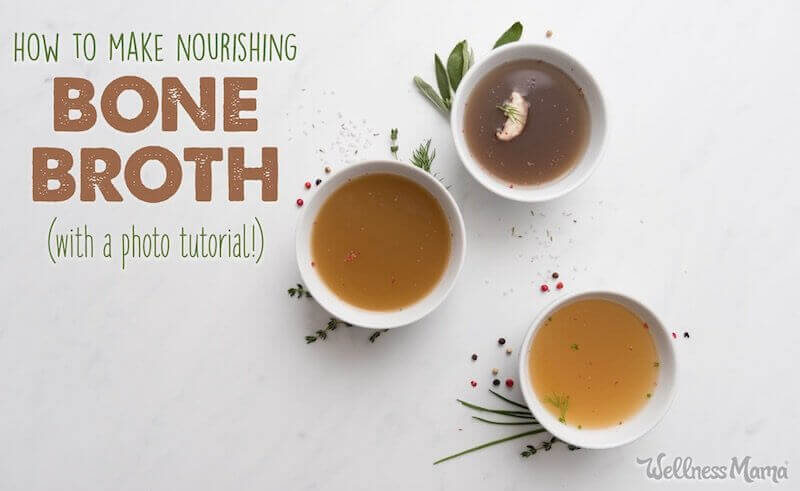
Bone Broth Recipe with Tutorial
Wellness Mama » Blog » Recipes » Beef Recipes » How to Make Bone Broth (Recipe, with Instant Pot Option)

If you aren’t already making bone broth regularly, I’d encourage you to start today! It is an incredibly healthy and very inexpensive addition to any diet, and the homemade versions beat store-bought broth in both taste and nutrition (although there is some amazing homemade organic broth you can buy pre-made now).

This is the one nutrient rich food that anyone can afford to add!

What is Broth?

Broth (or technically, stock) is a mineral-rich infusion made by boiling bones of healthy animals with vegetables, herbs. and spices. You’ll find a large stock pot of broth/stock simmering in the kitchen of almost every 5-star restaurant. It is used for its great culinary uses and unparalleled flavor, but it is also a powerful health tonic that you can easily add to your family’s diet.

Broth is a traditional food that your grandmother likely made often (and if not, your great-grandmother definitely did). Many societies around the world still consume broth regularly as it is a cheap and highly nutrient dense food.

Besides it’s amazing taste and culinary uses, broth is an excellent source of minerals and is known to boost the immune system (chicken soup when you are sick anyone?) and improve digestion. Its high calcium, magnesium, and phosphorus content make it great for bone and tooth health. Bone broth also supports joints, hair, skin, and nails due to its high collagen content. In fact, some even suggest that it helps eliminate cellulite as it supports smooth connective tissue.

It can be made from the bones of beef, bison, lamb, poultry, or fish. Vegetables and spices are often added both for flavor and added nutrients.
Delicious Homemade Bone Broth Tutorial- How to make perfect bone broth

Why Drink Bone Broth?

Anyone who has read Gut and Psychology Syndrome knows the many benefits of bone broth and how it can improve digestion, allergies, immune health, brain health, and much more.

What isn’t as well known is that broth can help reduce cellulite by improving connective tissue, increase hair growth/strength, improve digestive issues, and remineralize teeth.

Broth is also helpful to have on hand when anyone in the family gets sick as it can be a soothing and immune boosting drink during illness, even if the person doesn’t feel like eating.

Broth is very high in the amino acids proline and glycine which are vital for healthy connective tissue (ligaments, joints, around organs, etc). The Paleo Mom has a great explanation of the importance of these two amino acids:

In addition, glycine is required for synthesis of DNA, RNA and many proteins in the body. As such, it plays extensive roles in digestive health, proper functioning of the nervous system and in wound healing. Glycine aids digestion by helping to regulate the synthesis and of bile salts and secretion of gastric acid. It is involved in detoxification and is required for production of glutathione, an important antioxidant. Glycine helps regulate blood sugar levels by controlling gluconeogenesis (the manufacture of glucose from proteins in the liver). Glycine also enhances muscle repair/growth by increasing levels of creatine and regulating Human Growth Hormone secretion from the pituitary gland. This wonderful amino acid is also critical for healthy functioning of the central nervous system. In the brain, it inhibits excitatory neurotransmitters, thus producing a calming effect. Glycine is also converted into the neurotransmitter serine, which promotes mental alertness, improves memory, boosts mood, and reduces stress.

Proline has an additional role in reversing atherosclerotic deposits. It enables the blood vessel walls to release cholesterol buildups into your blood stream, decreasing the size of potential blockages in your heart and the surrounding blood vessels. Proline also helps your body break down proteins for use in creating new, healthy muscle cells.

What Kind of Broth?

Homemade, nutrient-dense bone broth is incredibly easy and inexpensive to make. There is no comparison to the store-bought versions which often contain MSG or other chemicals and which lack gelatin and some of the other health-boosting properties of homemade broth. However, if you’re short on time, I recommend Kettle & Fire’s grass-fed bone broth because it’s pretty gelatinous and made with organic ingredients.

In selecting the bones for broth, look for high quality bones from grass fed cattle or bison, pastured poultry, or wild caught fish. Since you’ll be extracting the minerals and drinking them in concentrated form, you want to make sure that the animal was as healthy as possible.

There are several places to find good bones for stock:

  • Save leftovers from when you roast a chicken, duck, turkey, or goose (pastured)
  • From a local butcher, especially one who butchers the whole animal
  • From local farmers who raise grass fed animals (ask around at your local farmers market)
  • Online from companies like US Wellness Meats (also where I get grass fed tallow in bulk- they sell pre-made high quality broth), Butcher Box, or Healthy Traditions (I order high quality beef, bison, lamb, and chicken bones from them at good prices)

This recipe for broth is my favorite and is an adaption of the recipe in Nourishing Traditions.
 

Delicious Homemade Bone Broth Tutorial- How to make perfect bone broth

Bone Broth Recipe (Stove Top or Instant Pot)

Make nourishing bone broth at home simmered on the stove top or in the Instant Pot in a fraction of the time.
Prep Time 10 minutes
Cook Time 8 hours
Total Time 8 hours 10 minutes
Calories 16kcal
Author Katie Wells

Servings

16 cups

Ingredients

  • 2 lbs bones from a healthy source
  • 2 chicken feet (optional)
  • 1 gal water
  • 2 TBSP apple cider vinegar
  • 1 onion
  • 2 carrots
  • 2 stalks of celery
  • 1 TBSP salt (optional)
  • 1 tsp peppercorns (optional)
  • herbs and spices (to taste, optional)
  • 2 cloves garlic (optional)
  • 1 bunch parsley (optional)

Instructions

  • If you are using raw bones, especially beef bones, it improves flavor to roast them in the oven first. I place them in a roasting pan and roast for 30 minutes at 350°F.
  • Place the bones in a large stock pot or the Instant Pot.
  • Pour cool filtered water and the vinegar over the bones. Let sit for 20-30 minutes in the cool water. The acid helps make the nutrients in the bones more available.
  • Rough chop and add the onion, carrots, and celery to the pot.
  • Add any salt, pepper, spices, or herbs, if using.

Stove Top

  • Bring the broth to a boil. Once it has reached a vigorous boil, reduce to a simmer and simmer until done.
  • During the first few hours of simmering, you’ll need to remove the impurities that float to the surface. A frothy/foamy layer will form and it can be easily scooped off with a big spoon. Throw this part away. I typically check it every 20 minutes for the first 2 hours to remove this. Grass-fed and healthy animals will produce much less of this than conventional animals.
  • Simmer for 8 hours for fish broth, 24 hours for chicken, or 48 hours for beef.
  • During the last 30 minutes, add the garlic and parsley, if using.
  • Remove from heat and let cool slightly. Strain using a fine metal strainer to remove all the bits of bone and vegetable. When cool enough, store in a gallon size glass jar in the fridge for up to 5 days, or freeze for later use.

Instant Pot

  • Add the garlic and parsley to the pot if using, place the lid on the pot, and set valve to seal.
  • Cook at high pressure for 2 hours, followed by either a quick release or natural pressure release. Either is fine.
  • Let cool slightly, strain, and store in a gallon size glass jar in the fridge for up to 5 days, or freeze for later use.

Nutrition

Nutrition Facts
Bone Broth Recipe (Stove Top or Instant Pot)
Amount Per Serving (1 cup)
Calories 16
% Daily Value*
Cholesterol 2mg1%
Sodium 458mg20%
Potassium 57mg2%
Carbohydrates 1g0%
Vitamin A 1575IU32%
Vitamin C 5.8mg7%
Calcium 21mg2%
Iron 0.3mg2%
* Percent Daily Values are based on a 2000 calorie diet.

Notes

Detailed stove-top timing instructions below.

Like this recipe? Check out my new cookbook, or get all my recipes (over 500!) in a personalized weekly meal planner here!

Bone Broth Instructions

The first step in preparing to make broth is to gather high quality bones. As I said, you can find them from sources listed above or save them when you cook. Since we roast chicken at least once a week, I save the carcass for making broth/stock.
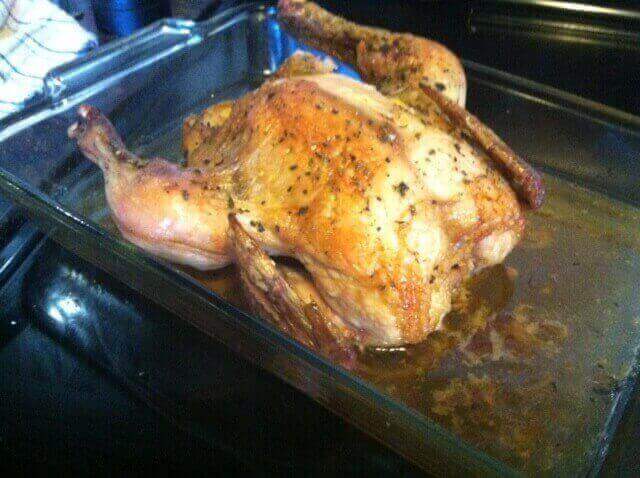
Chicken for Bone Broth

I usually aim for 2 pounds of bones per gallon of water I’m using to make broth. This usually works out to 2-3 full chicken carcasses. If possible I’ll also add 2 chicken feet per gallon of water (completely optional!).

You’ll also need some organic vegetables for flavor. These are actually optional but add extra flavor and nutrition. Typically, I add (per gallon of water and 2 pounds of bones):

  • 1 onion
  • 2 large carrots (if from an organic source, you can rough chop and don’t need to peel)
  • 2 celery stalks, rough chopped
  • 1 bunch of parsley

bone broth vegetables

Since I make in bulk, I usually use about 4 times the amount of each of these. You can make in any amount, just multiply or divide the recipe up or down.

If you are using raw bones, especially beef bones, it improves flavor to roast them in the oven first. I place them in a roasting pan and roast for 30 minutes at 350°F.

Then, place the bones in a large stock pot (I use a 5 gallon pot). Pour cool filtered water over the bones and add the vinegar. Let sit for 20-30 minutes in the cool water. The acid helps make the nutrients in the bones more available.

Rough chop and add the vegetables (except the parsley and garlic, if using) to the pot. Add any salt, pepper, spices, or herbs, if using.
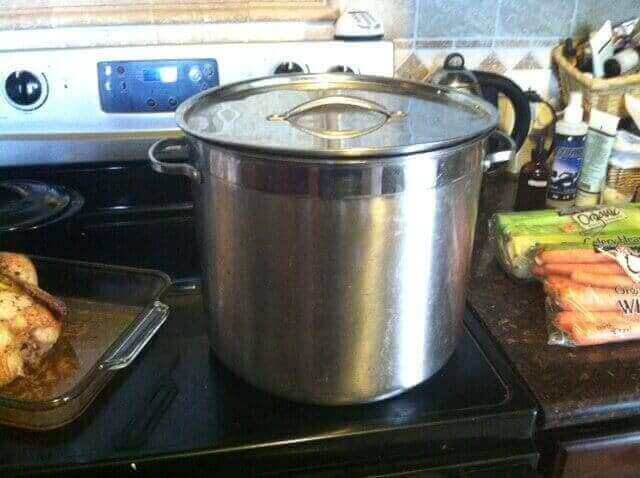
Making Homemade Bone Broth

Now, bring the broth to a boil. Once it has reached a vigorous boil, reduce to a simmer and simmer until done. These are the times I simmer for:

  • Beef broth/stock: 48 hours
  • Chicken or poultry broth/stock: 24 hours
  • Fish broth: 8 hours

During the first few hours of simmering, you’ll need to remove the impurities that float to the surface. A frothy/foamy layer will form and it can be easily scooped off with a big spoon. Throw this part away. I typically check it every 20 minutes for the first 2 hours to remove this. Grass-fed and healthy animals will produce much less of this than conventional animals.

During the last 30 minutes, add the garlic and parsley, if using.

Remove from heat and let cool slightly. Strain using a fine metal strainer to remove all the bits of bone and vegetable. When cool enough, store in a gallon size glass jar in the fridge for up to 5 days, or freeze for later use.

How to Use Bone Broth

Homemade Broth/Stock can be used as the liquid in making soups, stews, gravies, sauces, and reductions. It can also be used to saute or roast vegetables.

We try to drink at least 1 cup per person per day as a health boost, especially in the winter. My favorite way is to heat 8-16 ounces with a little salt and sometimes whisk in an egg until cooked (makes a soup like egg drop soup).

In times of illness (which doesn’t happen often) we will usually just drink bone broth until we start feeling better as it supports the body but is very easy to digest so the body’s energy can go to healing. In cases of stomach bugs or vomiting, bone broth often calms the stomach very quickly and helps shorten the duration of the illness.

If you don’t want to DIY, this is a great pre-made bone broth option shipped straight to your door!

If you aren’t already, make bone broth a regular part of your kitchen routine. It’s health boosting, inexpensive, and easy… you can’t afford not to!

This article was medically reviewed by Dr. Lauren Jefferis, board certified in Internal Medicine and Pediatrics. As always, this is not personal medical advice and we recommend that you talk with your doctor or work with a doctor at SteadyMD.

Do you already make bone broth? Will you try it now? Share your tips or questions below!
Bone broth is an incredibly nutritious and health-boosting food that is very easy to make. This step by step tutorial shows you how.

Sources

Become a VIP member!

Get access to my VIP newsletter with health tips, special deals, my free ebook on Seven Small Easy Habits and so much more!

Easy Habits ebook on ipad
Katie Wells Avatar

About Katie Wells

Katie Wells, CTNC, MCHC, Founder of Wellness Mama and Co-founder of Wellnesse, has a background in research, journalism, and nutrition. As a mom of seven, she turned to research and took health into her own hands to find answers to her health problems. WellnessMama.com is the culmination of her thousands of hours of research and all posts are medically reviewed and verified by the Wellness Mama research team. Katie is also the author of the bestselling books The Wellness Mama Cookbook and The Wellness Mama 5-Step Lifestyle Detox.

Comments

1,512 responses to “How to Make Bone Broth (Recipe, with Instant Pot Option)”

  1. Lori Avatar

    Those are truly “free range” chickens and are probably 100% healthier than any CAFO chicken in the U.S.

  2. Tina Avatar

    My situation is kind of unique…my family just moved to Indonesia 6 weeks ago. I never got around to trying a bone broth back in the US, and am looking into it now. However, finding meat known to be “healthy” is kind of a joke here. I mean…the chickens are walking around all around town, and I’m positive those are the same ones ending up on my table. My question is–would this still be beneficial? Or too questionable to make with the meat sources we have available?

  3. Lori Avatar

    Hi Jennifer,

    I read that it’s better to not add the veggies and herbs in until the last 8 hours of simmering because they can get bitter or burnt tasting, especially the herbs and spices. Ive also read that 2 batches is about all you’ll get from chicken bones but you’ll get several more from beef bones.

  4. Jennifer Avatar
    Jennifer

    Loving your blog!
    I started a batch of chicken broth with one lb of bones, five feet and some veggies in my crock pot. I strained it yesterday, got almost four quarts bones were still hard so added more water but they’re still hard. How long is too long to be cooking my bones? Is this the best way to do it or should I just be adding more water? It has been 48 hours already! Thanks so much for your help in advance,
    Jennifer

  5. Evan Avatar

    Hi,
    For the fish broth what type of fish carcases do you use and do you ever get gelatin from it? Because with the fish there are many big joint bones (or chicken feet 🙂 ) to increase the gelatin. Any hints/tips? Thank you very much, I love your work and please keep going to inspire and educate us all!

  6. Annie Avatar

    James,
    But wouldn’t the old bones be deplete of any nutrition?
    Annie

    1. Christina Avatar
      Christina

      If your “old bones” were cooked for only a couple of hours, they should still have plenty of nutrition. Of course you wouldn’t want to re-use old bones that have been cooking for 24 hours.

  7. James Gordon Avatar
    James Gordon

    Annie,
    You can use beef bones a few times, I always use a percentage of new bones so the broth is stronger.
    I always use the chicken bones from whatever chicken we have. The bag-o-bonz in the freezer gets everything, even buffalo wing bones. When we have enough saved up, a new batch of chicken broth is born.

  8. Lori Avatar

    Thanks Katie for the instructions. I just wanted to let people know about the Cornucopia Institute. They rate organic meat suppliers on their website. According to their investigations, many so called pasture raised, grass fed animals are really not humanely raised at all. They have pictures of many of the “offending” farms and everything. Check out their website and see how the brand you buy at the grocery store is rated. I think you will be disappointed.

    Much better to find a local farmer and buy organically raised, pastured meats from them. If you can’t afford to buy in bulk, ask friends, neighbors, etc. or ask around at the local health food store and find people to share a side of beef with you.

    If you can’t afford to eat 100% organic all the time, be selective about what you splurge on. It’s far more important for your health to eat clean, humanely raised meat as opposed to the CAFO meat. The damage CAFO meats can do to your health is far worse than eating non-organic vegetables from EWG’s “clean 15” list.

  9. Annie Avatar

    Thanks, James.
    I use my crock pot on low. It seems to be boiling/bubbling the whole 48 hours, but with the cover on, I rarely have to add any water. What do you mean “used bones”? Previously cooked for 48 hours? I have not used joint bones or cartilage or heads or feet Can I use a Rotisserie chicken carcass from the regular supermarket? It won’t be clean, but is it better than nothing?

    Thanks, Annie

  10. James Gordon Avatar
    James Gordon

    To Annie and Sonja,
    We routinely make large batches of broth and do not end up with gelling. The broth is thick and actually quite delicious with all the veg and spice add-ins. I use about 10# of new bones and 10# of used bones to 18 quarts of water which is adequate for our use.
    I would suspect Annie may be using too much water. My understanding of the general rule of thumb for gel is 1# bones per quart for chicken and 7# bones per 4 quarts for beef.
    Sonja, I understand that the collagen fibers will break down due to excessive heat. It is best to start the broth cold and warm on medium heat until just below a boil. The broth should never boil, notice the statements on this blog about too much water loss, the broth must be boiling to lose that much water. I use a thermometer and keep my broth around 200-205 degrees. I can see the fluid circulating in the pot but no bubbles are apparent. The stove setting changes according to season when the house is cooler or warmer. You may also need a burner separator (metal plate) that goes between the stovetop and pot to reduce the heat level a bit. My gas stove is notoriously too hot and I need a separator.
    Another issue with no gel can be the bones, with beef you need some knuckles and chicken don’t forget the skin and heads if you have it, there is a lot of collagen. Beef and chicken feet would help as well.
    Good luck!

  11. Annie Avatar

    I’ve never seen gelling of my beef bone broth. Am I doing something wrong?

    1. Sonja Avatar

      I just read that cooking broth for more than 10 hours can destroy the collagen. Maybe it’s that?
      I am unsure now, because here you recommend a much longer cooking time?

  12. Sharon Avatar

    I am planning on trying this recipe and want to know if I can use whey for the presoak rather than vinegar. I’ve been making my own kefir and kefir cheese and have a lot of whey. I’ve heard it’s good to add whey into the soaking water for beans or grains. Thank you.

  13. Adoley Avatar

    Second time of asking this question.

    I like to eat the bones. Is that good/bad for me?

    And how do I make a new post?

      1. Shawn O'Reilly Avatar
        Shawn O’Reilly

        Katie and Adoley,
        While the bones are edible, they may not taste all that great! The whole point of doing bone broth is to leach as much of the minerals and other usable products out of the bones. What you are left with is a mushy form of bone that is mostly now just collagen fibers (a connective tissue) calcium and phosphorus (which is non-digestible). And while it is true, that there may be some left over stuff that is digestible, most of what is left is non-digestible, and if eaten in a large enough portion can cause diarrhea.
        I am a strong advocate for putting it in pet food – most commercial pet food also has the bones put into it – the biggest reason that they use it is as a stool softener and filler. Kibble is usually supper heated which both preserves the kibble (so it won’t degrade over a short period of time), as well as void of a lot of the nutrition because it has been supper heated. This includes all those supper expensive organic brands as well – they are better, and I use them as well, but the nutritional value verse making your own is far less superior!
        So, I use the bones in my raw pet foot, usually about a half table spoon per 25-30 lbs of animal – but that is really not a tested amount and I would start on a smaller dose and work up from there. again, there is not a lot of digestible material left in the bone, so mostly it is working as both a filler, as well as bulking agent to help clean out the gut. This is really good for aging cats as their digestions slows down with age, their stool can become really hard and cause backups as well as polyps and early forms of cancers – this will help preserve both moisture content, as well as a bulking agent to help with normal movements.
        Hope that helps and answers your questions.

  14. misty Avatar

    my daughter has asked me to make bone broth with her. i regularly cook 3 split chicken breasts in water on the stove..but i just cover the chicken in water, bring to a boil and then cook for about 18 minutes. then i take the chicken off the bone and save the broth (freeze it) for when i need to use it in other recipes discarding the bones. So..would this broth be different from “bone broth”? if it is, how can i modify what i do to make it the genuine “bone broth” that she is looking for?

    1. Wellness Mama Avatar

      It’s not quite there… You are making simple broth, which is tasty but missing most of the nutrition. You would probably want to uncover the bones a bit before cooking so that the minerals can break down better (For bone broth, the bones are more important than the meat, so exposing the bones will help with this). Also, maybe add a little vinegar to the water before boiling to help get those minerals out, and consider adding veggies for added nutrients. They are optional, but quite helpful. Lastly, after you bring to a boil, cook 18-24 *hours*. You can do this in a crock pot if you are concerned about leaving a pot on the stove that long.

  15. Vanessa Avatar
    Vanessa

    Hi, I love your bone broth recipe I’ve used it a few times and it’s wonderful. I use mine as a base for a soup with fresh veggies in it. Anyway I’ve got a question, I started cooking my broth and realised I’m going away and can’t leave it going for 48 hours, can I stop the cooking and refrigerate the whole lot, bones and stock together, for 2 days, then resume cooking? Thanks so much for your help. ?

    1. Wellness Mama Avatar

      In an pinch like yours, that might be ok, but definitely check it to make sure it is not smelling odd or growing anything when you get back 😉

  16. Pamela Avatar

    Hi, I made 3 and half jars of broth (first time) but when I put it in the fridge, after I took the fat off the top, it was totally gel. No fluid at all. Silly question, but should I add anything to it before heating, or just heat the gel? Thanks Pamela

    1. Wellness Mama Avatar

      It’s down to taste at this point, but basically, yes! Just heat and eat. If you think it needs anything (a little water, some salt, etc.) you can also add as needed.

  17. Sandy Avatar

    I use my pressure cooker to make my broth. Leave it in there for about an hour and it is just as good as cooking it all day on the stove! If you don’t have a pressure cooker, make the investment, if you can…you won’t be disappointed. I have the Fagor 5 piece set (10 years and still going strong!)- includes the stainless steel pot and dutch oven, pressure lid and regular glass lid, so the pans double as regular pans without the pressure lid. I could be a spokesmodel for this set, I Love it!

  18. Annie Avatar

    I have made 5 batches of beef bone broth so far – 3 times with clean bones, twice with not so clean bones. I follow your recipe, but do not roast the bones. I’ve never had anything remotely resembling gelling. Am I missing something? Thanks, Mama!

  19. Adoley Avatar

    Great site and information. I’ve been making bone broth and love it. Here’s my question – I like to eat the bones as well! I strain the broth sometimes but the bones are so soft that I enjoy eating them. Any negatives with that?

  20. Jim Avatar

    I recently read about converting egg shells into powder to use as a calcium supplement. Have you ever thrown egg shells in the broth to dissolve along with the bones? I would think it would be find but am unsure if they would impart any objectionable taste, hate to ruin a batch! Thank you.

4.64 from 188 votes (93 ratings without comment)

Leave a Reply

Your email address will not be published. Required fields are marked *

Recipe Rating