Read Transcript
Child: Welcome to my Mommy’s podcast.
Katie: This podcast is brought to you by Just Thrive. And you guys know I don’t share products that I don’t personally believe in and take, and Just Thrive Probiotic is one of my absolute go-to. I’ve been taking it consistently for years, and I have noticed a huge difference in digestion, energy, and really how I feel day to day.
It wasn’t an overnight dramatic change, but it’s one I notice when I don’t have. And I really respect this company and the products they make and their values, so when I had a chance to negotiate something special for you guys, I jumped at the chance. And here is the very special offer that I was able to lock in that’s not available anywhere else, which is if you buy a ninety-day supply of Just Thrive Probiotic, you get three full months of their digestive bitters completely free, and these are awesome.
I use them occasionally with meals. They help digestion. I notice a difference in my digestion with them. And this is a ninety-dollar value added at no cost just for being a Wellness Mama listener. It’s a tremendously good deal. You save a lot, and here’s why I love this pair. The probiotic works by surviving the journey to your gut.
Most probiotics don’t. They die before they get there. But their spore based formula is clinically proven to arrive a hundred percent alive, so it can actually do something, and the digestive bitters are the perfect complement. I take them before meals to help my body break down food more efficiently, and I notice that I don’t have that sluggish feeling post meals, and they help your body’s enzyme production.
So together, they cover the full picture of gut health, and ninety days is the sweet spot where a lot of people really say they start to see the difference really tangibly. So that’s why I am encouraging you to try this for the full ninety days and made this offer where you are able to get both for ninety days.
Give it the time it needs. They back every order with their money back guarantee. There’s genuinely no risk. And you can use this link to get this personalized deal that’s not available on their main website, which is get.justthrivehealth.com/pages/wellnessmama. I know that’s long. This will be linked in the show notes as well.
Today’s episode is brought to you by LMNT, which is my go-to electrolyte drink for staying hydrated and feeling my best every day. I have used this for years, and unlike many sports drinks which are loaded with sugar, LMNT delivers a science-backed blend of electrolytes with the sodium your body actually needs, especially if, like me, you live in a hot climate, sauna regularly, or work out regularly. Whether you are working out, walking the dog, traveling, or simply trying to keep your minerals and your energy levels up, LMNT makes this simple and delicious. I keep their canned ones in my fridge all the time now, and their convenient salt packets are perfect for tossing in your purse, your gym bag, or your carry-on, so you are never without electrolytes when you need them.
My kids are also a huge fan, especially of their new pink lemonade. What I especially love about LMNT that they have so many flavors now, so it’s easier to drink throughout the day. If mixing isn’t your thing, they also now have what I love, their new sparkling canned beverages that give you the same electrolyte benefits but in a ready-to-drink format. And those are a favorite among people who visit my wellness center as well. Adding LMNT to your daily routine is one of the easiest ways to support hydration and help your body perform at its best. I also find very helpful if you’re a breastfeeding mom.
So if you’re looking for a simple upgrade to your wellness routine, give LMNT a try and experience it for yourself. They have some delicious new flavors like lemonade iced tea and pink lemonade, and they always have their happiness guarantee. Go to drinklmnt.com/wellnessmama for a special offer.
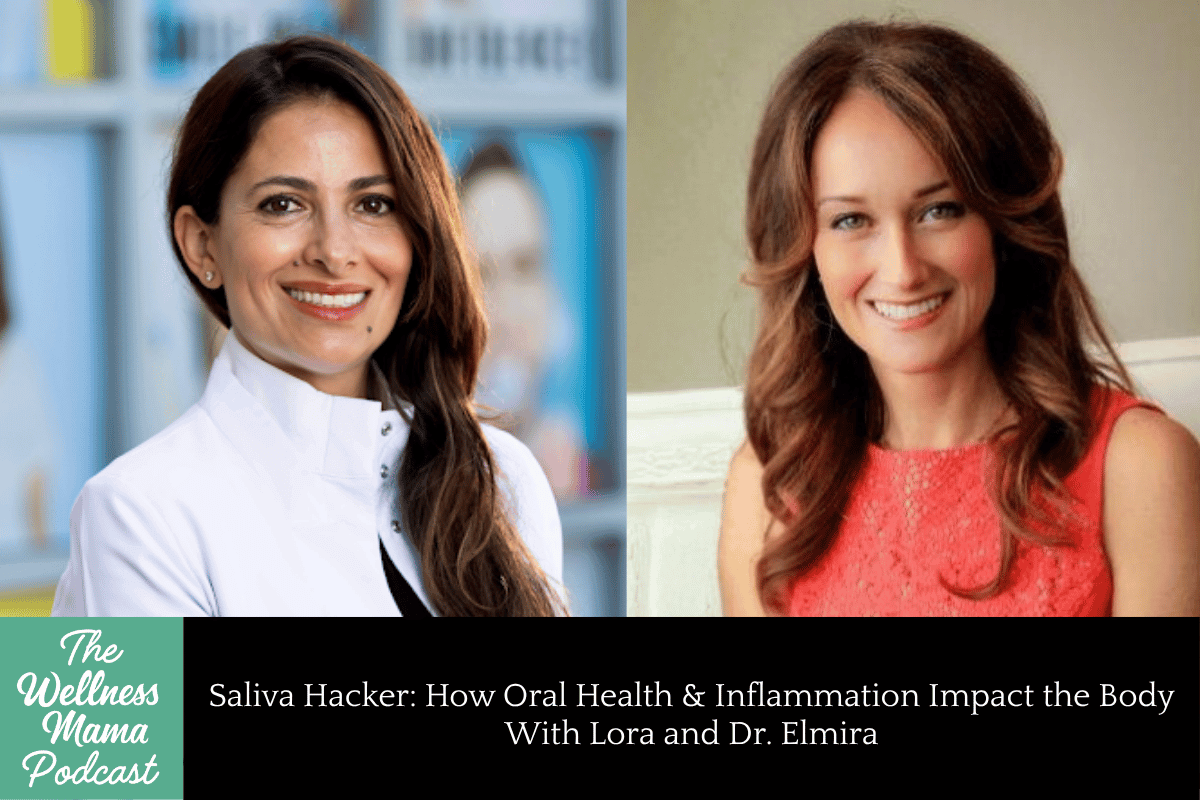
Katie: ?Laura, Dr. Elmira, welcome. Thank you both so much for being here.
Elmira: Thank you for having us.
Katie: I’m really excited for this conversation because longtime listeners know that I have been fascinated by oral health for years after several small cavities when I was pregnant led me down a whole research pathway of what actually contributes to oral health and the, like, micronutrient status of our body and so many other factors.
And one of the things that I came across years ago with very limited information was how we have a whole oral microbiome, which I found so fascinating. And I feel like we talk so much about the gut microbiome, and I wish we heard more about the oral microbiome. So to start broad, I know we’re gonna get to get into some really fun deep dive topics, but I would love to hear kind of what got you both into not just the topic of oral health, but the connection to the body in a deeper way, and especially the oral microbiome.
Elmira: I think for me, the connection started actually doing dentistry and seeing the patient that would come in and they were doing everything right by the book, and they would come back in six months later and we had a lot more problems, cavities, bleeding gums. And there was always something else that was definitely there ’cause I was doing my part, the patient was doing their part, and we wouldn’t be able to get rid of the root cause of it.
It had to be something else that we were always overlooking, and it made me led to actually looking into oral microbiome and the effects of it.
Lora: Yeah. And, and for me, I just feel like, as a dental hygienist of 31 years, about 10 years into my career, I was what I call in dental hygiene insanity. In fact, I’ll tell you that I feel like I, I call myself a recovering brushing and flossing hygienist, because those first couple years as we just keep blaming everybody like, “You need to brush and floss better.”
And it really came to a point where I felt like I’m not helping my patients. I actually wanted to leave the industry. I was like, “I’ve gotta get out,” like, “I just can’t be on this treadmill.” And this really took me to salivary diagnostics when I was like, “I’ve got to leave. I- I’ve gotta do something different. I wanna make a difference.”
I think when we truly wanna be healthcare providers, we want to know and feel like we’re making a difference, and when we’re not, we get just as frustrated. And that frustration really took me down the scientific path to find out what is causing these diseases. Like you said, why, why are people getting cavities when they’re brushing and flossing?
Why are people coming back bleeding and having these issues? And that’s when I found salivary diagnostics. It was like this whole story started to come together where I could look at somebody and they could look absolutely healthy one moment, but there was this whole microbial story underneath going on telling us something very, very different.
And that just is really where my passion grew and started to really wanna test people and get them the help they needed.
Katie: This is so fascinating to me ’cause it, it reminds me of I’ve heard from so many women and, and experienced parts of this myself who have kind of weird health symptoms and they go into a doctor and they’re either told like, “Your labs are normal,” or if like especially if there’s weight loss connected to it, they’re often told like, “Well, you just need to eat less and move more.”
And the doctors don’t always at first look at the deeper picture of like is their thyroid okay? Are their hormones okay? Are there other things going on besides just calories in, calories out? And I think that conversation has entered the mainstream in a much bigger way. But this is so fascinating to me because I feel like we haven’t yet widely talked about this in the context of oral health.
So I love how you guys intro that if someone is brushing and flossing regularly and they’re doing the things they know they’re supposed to do, why might there still be an underlying issue worth looking into or investigating more deeply? Like what, what’s going on in that case?
Elmira: I think for me is for people to understand and all the listeners to understand that the oral health component is a missing puzzle that nobody really looked into.
We always talking about gut, we always talking about weight loss, we talking about nutrition, but nobody actually correlated and put everything together. And there’s just a missing piece that we didn’t look at. There’s a lot of data that we can look at, and it just, nobody got used to treating the mouth separate from the rest of the body.
And what our goal is to actually put everything together and stop separating your oral health from the rest of your body. And with diagnostics, testing, we can actually see all the raw data and you don’t have to guess anymore.
Lora: Yeah, I think it’s exactly what you’re talking about, Katie. I always say there’s, like, two sides to the story, right?
Somebody can look at us and be like, “Wow, you look great.” And I’m gonna be kinda dramatic here, and that person could actually have cancer. I mean, that’s pretty dramatic, and yet they’re walking around and somebody’s complimenting them, yet inside, like, their world is crushed. And I said because we can’t see what’s going on, we can’t see the biology.
So I always say it’s the same way in dentistry. We’ve been missing the other half of the story, like the actual data, the biology of what’s going on with the patient. In fact, the microbiology or the microbiome that’s happening in the oral cavity. And so we can look at somebody and be like, “You look just fine.”
Like, we- we’re not seeing the damage yet. The damage takes time, and so somebody could come in and absolutely look okay, and yet I say they light up a test just like they would light up blood work, that we have an inflammatory process going on. We actually have these pathogens causing disease. And so I always say we’re just missing the other half of the story.
Just like we … I say when my kids fight, you know, we talk about it’s like there’s always two sides to the story. So as a hygienist, I look at it, well, what’s the other half of the story? If I’m gonna tell them they need to brush and floss better, is there actually biology working against them that I need to look at?
Because no matter how much brushing and flossing they do, that biology is not gonna change. I always say it’s like wiping my counter. You know, we say, “Ew, throw the sponge away. It’s full of bacteria.” Well, I kinda think about that as brushing. I’m telling somebody to brush. It’s like smearing that bacteria around.
We’re not really removing these very aggressive species, and so we wanna know if they’re there so we can help the patient.
Katie: Yeah, like I said, this is so fascinating to me, and I feel like people are now in today’s world with so many more options familiar with, of course, like blood test for labs, like many people have experienced that.
Or even like gut testing has become a little bit more popular lately, and I feel like the, even the concept of oral health testing or salivary diagnostics I think you called it, is maybe a new concept for a lot of people. So when you say like oral health testing or oral testing, what are you testing for and what can those tests help reveal, as well as how are they done?
Like, how does someone go through one of those tests?
Elmira: It’s one of the least invasive tests that you can think of. It’s just in a bottle. It has a little saline solution. You spit in it, we send it to the lab. That’s how easy it is. There’s nothing to it. But the beauty of it is that the saliva is such a huge tool, and it shows so much, and it’s always been overlooked at.
We actually test specific pathogens. So we don’t, we’re not going for a sterile environment. We don’t wanna just wipe everything out. We wanna make sure what’s there, what are the good guys, what are the bad guys, what are the amount of each one, so how we can get rid of this dysbiosis that’s been happening in someone’s microbiome and actually create health.
And how do you create health? You do need to have the good bacteria present in the, in the right amount of, amount of it, and that’s when the salivary testing actually shows us the exact detail of it. So there’s no point to guess anymore.
Lora: Yeah, and I would just add to that, that we’re actually, you know, people hear this term DNA.
We’re actually not testing the person’s DNA, so I always want listeners to know that. It can be kind of scary. Like, no, we’re not trying to find, you know, baby daddy over here. We’re not testing the patients, like when they think we’re collecting their saliva. We’re actually looking for the bacterial DNA, or we can look at the virus.
We’re looking for viruses, funguses. So a lot of us talk about yeast. Yeast, you know, from the gut can be in the mouth, and so we’re actually looking at that structural DNA, and I think that’s important to know about salivary testing. And then the world on the medical side is really using salivary diagnostics more and more.
We’re gonna see this in cancer care, right? There’s a lot of protein, enzymes, and these bacteria, so these byproducts too, and that’s being used more and more in medicine. So I think just seeing how easy we can use saliva, especially kind of replacing blood, I think that’s gonna be the future of medicine.
What I wanna say specifically about salivary testing is, kinda going back, you said like blood tests. We do have a lot of correlations or connections, so we’re not only looking at the saliva test for what’s going on in the mouth, but we can start to understand as our patients are swallowing these bacteria, giving a little insight what’s going on in the gut.
And then my life’s work is really understanding what’s going on in the bloodstream because these bacteria, specific ones, can pass and enter the bloodstream, and that takes us into this whole like inflammatory or systemic risk. We can look at somebody’s saliva and kinda start to understand that they could have an inflammatory risk or a raised risk, right, to inflammatory diseases, and that’s so insightful, and that’s really where the future of salivary testing’s going.
Katie: And I would guess that much like with a lot of health problems, there’s probably things going on that are identifiable long before a person may have extreme symptoms. Like I’ve heard that from other guests on this podcast, like these more extreme health conditions don’t develop overnight. When I used to have Hashimoto’s, that didn’t develop overnight.
There was probably, things that pointed to that many years before I ever felt extreme symptoms or certainly before I got diagnosed, and I’m guessing that’s also the case here. So I’m so curious, like what kind of things get flagged on an oral health test, and then how do you guys know, is this one worth actively doing something about, or are these normal?
Or is it the, the ratio’s off? Like how do you guys know which ones to flag, and what are the kind of common ones that you see most often?
Elmira: I think we are living in an era that actually salivary diagnostic is very interesting and it’s exciting to look at, because we actually know there’s a lot of correlation between specific bacteria. They’re not causation, there’s a huge difference, but they’re actually correlation between the two. Like let’s say cardiovascular disease, dementia, Alzheimer’s, any of those inf- a lot of the chronic inflammation that you keep seeing that people are dealing with and it just, you keep doing everything, but you always overlook the mouth.
Nobody looked at the mouth and kind of put the whole picture together. But what we look at is the actual specific bacteria, the red complexes, that there are disease-causing pathogens that actually, Well, actually, maybe I edit not disease causing pathogens. They’re actually making it, the inflammation a lot worse that actually exists in the body.
And imagine this, you’re swallowing all this bacteria, so they’re traveling down to your gut, coming back and going back into your circulation and into your blood. That’s where you get your saliva, it’s coming from. And it’s not just staying inside of your mouth. It’s traveling through your body, and that’s what we look for.
Are those pathogens there? And how much of it is there? And how can we treat the patient based on the pathogens that are there? That way we’re not just throwing different, generic solutions to a person and really customizing it for a person based on their actual saliva results.
Lora: I just wanna share, you know, being a hygienist of 31 years, but for 20 years I’ve been saliva testing, one of the longest testers here in the United States. And what, what has happened for me is over doing over 100,000 tests, I’ve been able to kinda observe what’s really going on in these microbiomes and kinda distill that down and, and I’m gonna put that into, like, three categories.
So we have these bacteria that are on the teeth, and this we call green complex or, like, healthy. Think about green, good bacteria. Then these guys can maturate and grow, and then we have these orange complex bacteria. Now they’re going from your tooth into your tissue. So we call these, like, moderate risk.
And then those can continue to grow, and then we start to develop, I say, this third level of these high risk bacteria, and we call them red or purple complex. There’s, like, two in this category, but I want you to think red, like danger. And these guys are not going only into the tissue, but into the bone and into the bloodstream.
So we can look at a saliva test like you’re asking, and we can say, “Hey, we have somebody who has these very high risk pathogens.” They’re not only causing oral infections, right? So we’re talking about whether it’s recession, maybe some pink in the sink, some bleeding, maybe some bone loss. But these can actually get into the bone, cause some bone infections around the teeth, right?
Reasons why people lose implants, but then get into the bloodstream, and that’s what Dr. Elmira is talking about. Now we have this inflammatory risk going on, whether they’re swallowing them and going in the gut, or there’s this tract, what we call microbial translocation into the bloodstream. And that’s where the conversation can get deeper, where we can then go look for personalized medicine.
“Hey, is this a heart patient? Do I need to worry about that risk?” Right? Understanding that half of heart attacks can be triggered by an oral pathogen. Now we can see, like you’re saying, “Hey, this is a high risk,” not only for an oral infection, but also looking at their personal risk, right? This is putting them at a greater risk.
And that’s why, like, patients say it’s like you have all these risk factors going on. Do you also have a bacterial risk? Because now we can help you as a dental team. We can help lower that bacterial risk for oral infections, but also increasing that inflammatory load in the body.
Katie: That makes sense, and I know we’re gonna, gonna get to, like, practical solutions and also how people can access the testing, so I’ll make sure we put a pin in that.
That will happen at, later in this episode. But this makes sense to me. I’ve never experienced this firsthand, but I’ve heard that, for instance, if someone has a known congenital heart condition, for instance, they undergo special treatment when it comes to any kind of oral health procedure. Sometimes I think they take antibiotics, from what I’ve read, because that’s a known connection, and they know there’s a risk there.
And to me, this makes so much sense, Dr. Elmira, what you said, of, like, we have medications that are put under the tongue that are highly effective and actually get in the body very quickly. Or people now are into all these nicotine pouches that are put in the mouth, and that gets into the body super quickly.
So to me, it makes sense that anything going on in the mouth is then, like, transferring to the body all the time. And one thing I’ve talked about for years, for instance, with the importance of kind of detoxing our homes and choosing safer products, I was like, if you… You might think laundry detergent, for instance, is no big deal, but you’re actually getting multiple low-level exposures because it’s touching your skin, so there’s potential for skin absorption.
But you’re also, like, inhaling the VOCs that come off of that at a low level all day. And while maybe, like, a short exposure to that would be no problem for the body, when you’re talking about low-level chronic exposure, that is a, just a demand on the body. So now some of the body’s resources are having to go to mitigate that all the time.
So even if we don’t feel stressed, the body’s kind of registering the stress from that all the time. So it makes sense to me that if the oral microbiome was out of whack, the body could be experiencing that stress chronically, since we’re obviously connected to our mouth all day. We’re swallowing saliva all day.
And I’m curious, does this test for, like, specific pathogens? So in my armchair research, career, I just have seen, like, for instance, like, strep mutans is often talked about with cavities. Or there’s other bacteria that I’m blanking on the name that are connected to things like gingivitis. And I’ve heard at least that often it’s gonna be, like, one pathogenic group that is more often out of balance.
Like, they kind of one bad one sort of wins. It’s not like you might have, like, all these competing things. It’s often one bad one that’s kind of primary at that moment. But I don’t even know if that’s accurate, so I’m curious, are those the kind of things you guys test for? Like, could someone come back and have a flagged result for, like, “Oh, you have a ton of bacteria that’s linked to cavities,” or, “You have a bacteria that’s linked to gingivitis”?
Or, also, what kind of symptoms might someone be noticing if they did have an extreme version of one of those?
Elmira: That’s actually my favorite part of testing because when we meet with a patient, our part is and our goal is to put their story all together and because of the bacteria that is present, remember, we’re not looking at their X-rays at the time we do the testing.
When the test results come back, I haven’t seen any X-rays, I haven’t seen any, 3D scans or anything. I don’t know this person. It’s the first time Lora and I are meeting them or Lora and the dental team is meeting them, but we have the test results in hand. Just looking at the test results, the bacteria that is present, we’ll know, hey, this person has sleep issues.
There is airway issues. There is a silent abscess somewhere, that’s why this particular bacteria showed up. Hey, this person might have some cardiovascular issues, that’s why this bacteria particularly showed up. So it’s actually is so fascinating how each bacteria, for example TF or TD, then we show it and we know, hey, if someone has the TD, then I know there’s a dental treatment somewhere that maybe someone was watching for years but then everybody said, “Okay, that’s fine.
We can just keep letting it go,” but there is a bacteria over there. That crown, that cavity, that something, that margin that you’d not… didn’t go and fix it with your dentist, guess what? The actual bacteria is showing up as a red complex. We need to address it. If someone has another one, then I know there’s more going on with their sleep, there’s more going on with their airway, and it’s not just inside of their mouth where it’s something else going on with their sinuses. Then we need a really good 3D scan just to see what’s going on with their sleep because they have sleep issues.
We’re trying to put the pieces together. The bacteria and the saliva testing is actually helping us putting the puzzle together knowing that it’s not just the cavity and the decay that showed up on a X-ray. That doesn’t tell me the or your sleep physician that, hey, you had airway issues and your nitric oxide level is low because you’re mouth breathing.
But the salivary testing and the bacteria that shows up on the test, it tells us that we need to look for more clues and see what’s going on.
Lora: I was just gonna add here, since we talk about specific bacteria, right, we know the strep mutans are probably responsible somewhere for a percent of, like 80% of the reason why we get a cavity. And I think that’s really important. And so what you’re talking about is we can look at these complexes of bacteria, and so these very aggressive complexes that we color code, so those purple and the red.
Here’s a big myth buster. People say all the time and you can go on every podcast and listen for this. People say all the time you need this balance, that you can have good and bala- bad, and we’re trying to balance that out. Well, we have specific bacteria that they don’t play by the rules. These I call 0.1 percenters.
So like when something says it’s gonna kill 99.9% of the bacteria, one, I want you to be asking, “Well, whose is it not killing? Who’s the 0.1% surviving?” And it is these red complex, this porphyromonas gingivalis, this treptanema denticola, this Tannerella forsythia. And even some of these purple really aggressive we call AA or FL losis, they can really survive in these harsh chemicals like Dr. Elmira was saying.
We don’t wanna sterilize and kill, kill, kill. In fact, we can create some of these species. But here’s the interesting fact about them scientifically. Just having that PG that I named, that TD or that TF at a very low amount, they are gonna control the entire rest of that oral microbiome.
They actually will exchange their DNA. So think of it, about it as like our kids, right? I have five kids, and I have a 16-year-old that if you listen to what he’s gaming when he comes home from school, you know, what are the 16-year-old boys like, “Hey, let’s get on the golf cart. Hey, you farted,” right? They’re burping.
They’re 16, right? But I will tell you, my older boys will get on with him to later that same night, and they’re 24 and 26. And now all of a sudden, how is the 16-year-old acting? Yeah, I don’t even wanna admit it, right? I hear swearing and words that I don’t want coming out of my 16-year-old mouth. But in that environment, he’s behaving very badly.
This is what those red complex, these very aggressive that you’re talking about, this P. gingivalis, this Treptanema, this Tannerella, they then are controlling these lower level species making them act very aggressive. So testing and knowing if they’re there is so important because you are in dysbiosis, but they are controlling how those other species are acting and responding, and that can drive disease, what we’re talking about just in the mouth itself at a very, very high rate.
Katie: What really stood out to me that I find so interesting is this connection to other things.
Like, I would guess most people have never considered that, like, sleep issues, for instance, could be connected to what’s going on in their mouth. Or I have heard from many people who have had, like, wisdom teeth removed or had root canals in the past and are concerned about the potential of bacteria there, and they often will just go through these, like, very extensive surgeries.
But this is really encouraging to know maybe there’s a way to test to find out is there something wrong, is there something going on, before they just jump straight into a surgery. And I would guess if, if there is something going on and you’re gonna have surgery, that would also be very important to be aware of so that you’re being proactive before and after to make sure that, like, healing is effective and that the infection is not still there.
But I would love to kind of dive deeper into this specifically because I would guess, of course, like, there’s always a hammer and nail, tendency. Like, we can assume everything is then caused by this. And I know you guys take a very holistic approach and make it this is a part of a bigger picture.
It doesn’t mean, like, this alone fixes everything or this alone causes everything, but maybe this is the missing piece when people have looked at so much. So I’d love to hear kind of like what in practice, I know you guys can’t share specific patients, but what in practice this looks like for people.
Because I know that we’ve… I’ve heard at least some of, like, it’s not perhaps ideal to use, like, really strong alcohol-based mouthwash that just kills all that bacteria, and I hadn’t thought about, like, that .1%, like you said, maybe is the one you really wanna kill that you’re making worse by doing that.
So I’m guessing it’s not a just, like, nuke all the bacteria at once kind of approach. But I’m curious what this looks like in specific practice if someone does have one of these, like, more dangerous red and purple ones going on. What does identifying it look like? What does the treatment plan, plan look like? And what kind of changes can people see when they start addressing the whole picture, including the mouth?
Elmira: The, the whole treatment actually starts knowing the specific bacteria that are present. So let’s say we did the testing, so now we need to come up and start the progress, of patient’s treatment. But we need to know more of the testing. Yes, the oral microbiome is gonna help us, but we also test their gut just because there is a direct correlation between the oral microbiome and the gut.
I wanna know what’s going on in their gut. What kind of bacteria do they have? Has the bacteria byproducts and itself translocated already into the gut? We need to get the gut ready if we need to have any antimicrobial, treatment happen for the specific bacteria, like the red complexes in the mouth.
We’re not here to diagnose people exactly. I’m not here to diagnose someone with heart disease or anything like that, but we’re trying to see how we can connect all the practitioners at the same time. So we said the main part of it that I feel like it’s missing in someone’s treatment planning is all the providers doing their own thing and nobody connects them together.
But we’re trying to treat someone as a whole, so we need their physicians, we need their dental team, everybody all come together and speak the same language and look at the same tests and post-tests, which is… I’m gonna go over, which is one of the most important part of it, is the post-testing that we do.
Because we wanna know if, for example, if the red complex is there, the dental team gets in, the gut health team gets in, we gotta make sure we get this patient’s gut ready for the dental treatment and the antimicrobial treatment that they’re gonna go through. Then we pass it through to the gut. But in the meanwhile, we have to post-test.
By post-testing, we know was this treatment brought down the load of the red complexes that’s harming the rest of the oral microbiome or do we need to change the course of the treatment plan two weeks later? That way we’re not just guessing things. We know actually with the post-test if the treatment plan was successful, and it’s and they will lower it, so then we need to change the course of our treatment.
Lora: Yeah, and, you know, we have so many great patient cases.
One that’s just coming to mind is just recently, you know, we had an individual where we tested his oral microbiome. He does have these high reds. And then we had the opportunity to test, so we always test their GI. And here’s the key thing that I find so fascinating as a dental hygienist. H. pylori actually is the cause of oral dysbiosis in the mouth.
It actually causes periodontal disease. So these red complex that we’re testing for, many of my dental colleagues are completely unaware. We just haven’t been educated that what’s going on in the gut actually could be causing the dysbiosis in the mouth, and that is a primary cue. And that was really important in this patient’s case because then when we went and we looked at his GI test, we could see all of the bacteria, almost every single one that was on his saliva test in the gut, on the gut test.
And not just that they were there, but they were high. So we can actually see the Fuso nucleatium can see the Prevotella intermedia, we can, see every… The campylo rectus bacteria. Like, they are literally listed on the GI. So we know this patient is swallowing those, and now they have dysbiosis in their GI that’s just coming back to the mouth.
So I like my patients to hear that really the strategy we’re using is we are, on the dental side, we’re gonna test you. Yes, we’re gonna treat you, and we’re going to rebuild you. That is really important that they understand that. And we can get into probiotics, so that is… I’m gonna reveal the secret sauce.
That’s really what we’re doing, is rebuilding and creating health. We’re gonna put health back in. But when we work together and we’re collaborating, is that we’re gonna prep the system. We’re gonna prep the GI. We’re gonna prep the mouth so that when we go in there with these treatments, we’re treating this bidirectional relationship.
We’re treating both the mouth and the gut at the same time, and then we’re going to rebuild them at the same time. This patient that I’m talking about was so important because their, dental team didn’t realize how much was going on in the gut. They were trying to tell him, “Oh, we need to bypass the gut.
We don’t wanna actually treat the gut,” right? “We don’t wanna damage the gut.” In the meantime, you look at then his GI test, and he is highly, highly infected. We actually need to treat the gut. And so I want people to hear that. It’s like, you know, we don’t cut our heads off and put it to the side, you know, and then reattach it every morning.
In fact, all of us mamas out there, we would love that, right, Dr. Elmira? We are busy working, Katie, right? Women, if we could just leave our head, go do the laundry, and the dishes, and pack the lunches, life would be so much easier, and just put my head to sleep. But we are swallowing, we are impacting these systems.
And so when you talk about treatment, I think really looking at these two tests, looking at the whole person is so important. And then where you’re going is products becomes key. If you don’t actually have a saliva test, I would argue you don’t know what personalized product to give the patient. So we could go back to caries, like strep mutans, right?
We know there’s specific bacteria that will fight them down. But in this patient’s case, these RED Complex was very aggressive, that even low-level antimicrobials like tea tree oil, cinnamon, clove, silver, they actually grow in that. That’s the last thing I wanna go tell my patient to use. So I need that test, I need that data so that I can make the best decision for them and give them the best recommendation.
And so having RED Complex, we know we could go look at things like from xylitol products to even very specific probiotics like strep oralis, uverus, radius. We are looking for specific now species that are going to fight these bacteria, and that’s really the strategy we’re looking for. Can we take a bacteria and fight bacteria?
And we know that. They either work together or work against each other, and that’s one of our huge strategies Dr. Elmira is talking about. We’re gonna do that in the mouth, but we’re gonna do it in the gut so that, right, this is now in synchronicity. We’re working together. We’re not ignoring that there, this bidirectional relationship going on.
Katie: And like you said, it seems, like, important to understand that maybe some of the things, like, if we’re aware we maybe had cavities or we have bad breath or whatever’s going on, some of the things we might think to do for that, like, could be making it worse.
I would guess a lot of people don’t realize that. Like, if there’s a big bacterial problem, like, some of those things, like you said, might actually make the problem worse. And I also feel like this is very encouraging and hope-filled for people who this might be their missing piece because, like, there might be people listening who have chronic gut issues, for instance, and who have worked with a functional medicine doctor and tried all the gut-specific things, but it sounds like if they’re, like, reinfecting from their oral microbiome all the time, it’s gonna be really difficult to ever overcome that without taking in the whole picture.
And I would guess this is also maybe a really helpful tool and encouraging to people who are very vigilant about brushing and flossing and do all the things they’re told to do and still aren’t having good results. That realizing it might not be a willpower problem, it might not be that you’re not brushing and flossing.
It might be that there’s a bigger picture that you’re not getting the full picture of, and so you’re not even being able to access the tools that might actually resolve the kind of root cause of what’s going on. So I love that this brings all of it together, and I love that you guys also test the gut, to really see what’s going on and, what the connection is and what the communication is.
And another part from researching for this episode that I’m really excited to dive into, especially for parents listening, I feel like this could be really important, is not just the oral and gut connection, but seemingly, like you guys have said in your research, there’s also an airway connection. And I hear some moms starting to understand that, like, if, especially if a baby is having trouble with mouth breathing or there seems to be an airway thing, like, that’s an important thing to be aware of and get looked at really early.
But I feel like this is still kind of fringe, and a lot of people don’t understand the connection here. So I would love if you could kind of deep dive us into the airway connection as well and how that comes into play, what needs to be done in that situation, and how we can even know if that might be what’s going on.
Elmira: The, one of the things that actually shows up on the test, and I think that would be help, a lot of help, more helpful as a mom for me to know the connection between how my kids would be able to function the next day at school and what kind of sleep quality they had. Now, I’m not suggesting for all kids to go, all kids to run and get a sleep test done, but there’s little signs that I think as a mom you can pick up on.
Is your kid waking up with really bad breath in the morning? Because if you have a really good oral microbiome, the bacteria that causes the bad breath that lives mostly on your tongue, it wouldn’t be there if your kid wasn’t mouth breathing. So now there’s this whole cycle that you wanna actually look into and see, are those red complexes present?
Is that what’s causing the dysbiosis? And then here comes the mouth breathing and the behavioral issue at school because they’re not sleeping good, and the bad breath. It’s all connected. When the salivary testing actually shows us the specific bacteria that shows up that is related to the airway. And some of it, I don’t want you to look at, airway is not just teeth and your mouth.
It’s also what’s going on in your sinus cavity. It’s also what’s going on beyond your mouth inside of your throat. So the saliva testing will actually show us what are these bacteria present, so then how we can treat everything else. And another one of the more conservative way you can approach this is by mouth taping, but you wanna make sure they can breathe and they, you do the allergy testing.
So there’s so much more. The one saliva test opens up so many more questions, and it kind of guides you on what are the right questions and what are the right pathways for me to look into, instead of just guessing and going to so many different things and not actually getting the right answer.
Lora: Yeah. So I’m just, you know, say number one for all listeners is notice, right?
Just start to notice. I think, I even go back and I think about, you know, one out of my five kids, like, just couldn’t latch properly. And that was all about the tongue and the position of the tongue in relation to the roof of their mouth, and that has to do with airway, the actual space in there. So I want you to think about that.
Like, latching is, are they tongue-tied? These are some of the things we’re looking at. Then they start to get their baby teeth, and we’re like, “Oh, they’re so pretty,” but they’re not supposed to be touching. They’re not supposed to look so pretty. We’re supposed to have spaces between our baby teeth for our adult teeth to come in.
And so then you start to notice as they get older, like, there’s this whole crowding. They might even have some speech issues, right? Lisping, slurring, not being able to pronunciate things, and all this is going on in the airway. And then I want you to notice, like, yeah, the bad breath like Dr. Elmira was saying, but their sleep.
I would say go in. I’ve had parents come to me and say, “Oh my God, I can hear my kid down the room when they’re sleeping.” What do they mean? They’re clenching. They’re grinding. ell, I call that CPR. Your child is moving their jaw to position their jaw forward to get in air. And then I’ll have patients say, “Oh, yeah, they snore.
I hear them snoring down the hallway.” Well, they’re a child or a baby. Why are they snoring? They’re opening their mouth trying to breathe, and our breathing is supposed to be through our nose, nice and slow. So I think just observing our children is really important. These are all signs and symptoms of airway issues.
Tonsils, so a lot of times that bad breath, people blame their tonsils. Are their tonsils enlarged? That’s a sign they’re breathing through their mouth and not their nose, and so their tonsils are trying to work so hard, right? Purifying, cleaning, all that. These are all airway issues. What does this have to do with dentistry and the test?
Everything. I would say this is as upstream as we can get. This to me is root cause dentistry. You can have a family and the same child, and one is having an airway issue, and guess what? When they’re breathing through their mouth, drying that mouth out at night, it’s becoming dry, and it’s becoming acidic, and guess what’s gonna happen.
They’re gonna get cavities And their sibling is right next door with their mouth closed. The other one could be eating candy. The other one could not be brushing their teeth. But that child who’s struggling to breathe at night, or clenching and grinding, moving, waking, not able to actually utilize their nose, and a lot of it could be because they’re not in the right jaw position, so that’s where orthodontics and all these expansion conversations come in, right?
It’s so important. Instead, we’re yelling at this child to brush, brush their teeth better. That, no brushing can do. This is biology, right? And this is something that they’re not able to do. So this is where, you know, I think just noticing our kids, maybe taking a moment to look. I’ve literally put my phone in there and recorded, one of my children just because I didn’t wanna stay up, or like, why are they waking at night?
Some of us think, oh, it’s a normal thing, our kids are waking. It’s not. We should be getting into rest and repair, and that may just be a sign. We even talk about these nightmares because they’re not getting into deep sleep. So I feel like I could go on and on about this topic, because like you said, it’s now starting to emerge that we’re talking about it.
I think more moms are aware as we see these behavior disorders, right? We talk about ADD, ADHD, somebody trying to give our child a, a pill. In the meantime, it’s because they’re not sleeping at night. They’re not getting oxygen to the brain, right? And these are all these side effects we see. I even wanna point out for some of our younger kids, bedwetting.
When we don’t get into rest and repair, our body doesn’t tell its bladder to turn off. And so they’re still making urine because they’re actually not in that frame or state. We talk about that parasympathetic state. And so it’s not the child’s fault that they’re bedwetting. It’s just like, I would say, picking on an 80-year-old who’s waking up at night not getting enough oxygen, he has to go to the bathroom three times a night.
We’re seeing the same problem, yet we’re not identifying it as an airway issue. Where the power of that saliva test is, is I can do a simple saliva test. I can take all those clinical signs and symptoms, right? And then I can take the saliva test, and we can identify this tanrella forsythia is the first red complex to grow when we’re having a desaturation.
They’re not stopping breathing. It’s this oxygen level that’s dropping in the bloodstream, and this tanrella will grow in the mouth. And we’re asking, how could a child have that? It’s right, ’cause it’s not because they’re not brushing their teeth. It’s not because they did all the crazy things we’ve been doing as adults, right?
It’s actually this connection to airway, and I love that you bring it up, Katie, ’cause I think more of us, especially as moms, we need to be noticing that. All these, you know, the list goes on, but really notice some of those top signs and symptoms. And some of the just sleeping at night is one of the biggest triggers.
I’ll always ask, like, “How is their sleep?” You know, looking at the dark circles. Are they able to sleep through the night? And then start looking at their mouth, looking at the tonsils, looking at their tongue, looking at their speech, right? We can see if they’re crowding. Is their jaw pushed back, you know?
Do they have that full face? And so just getting them screened, many times orthodontics, and now I say all these retainers. Some of our kids don’t even need braces. It’s amazing just opening up the oral cavity, bringing it forward, getting them the oxygen they need. All these signs and symptoms start to go away.
So I just say the sign and symptom is like biology screaming at us, and for us just to pay attention, just to notice. We’re busy, and sometimes we’re just not… We notice, but we’re not connecting the dots or putting that story together. And so I say this child then who had cavities because of their airway then becomes that teenager or that college kid who comes back to me who now has gingivitis, and now we wanna blame hormones.
And we could get into the whole hormone topic, but now they’re growing all these red complex. Then they’re having recession. Then they’re having bone loss. Then I tell them they have periodontal disease, and you can just see this vicious cycle. Then they’re gonna grow Prevotella that you’re asking about, and now they need a root canal.
And I wanna know if they need a root canal. Well, we can go in there, clean that out, but if they have all this Prevotella and in their bloodstream, it’s like this vicious cycle. And so really what saliva testing’s helping us do is what we call root cause dentistry. Like, what is the root cause? We’re still gonna treat that, right?
We’re not throwing the baby out with the bathwater. We have all these clinical signs and symptoms, but we need to take this test, get the data, get the biology so we can start asking why. Why, and what is there that’s kinda giving us the clues to start asking better questions?
Katie: And that makes so much sense to me that the airway could have such a big impact because, of course, we hear so much about diet and nutrition, and we eat several times per day. And I’ve… And we hear about water, which we hopefully drink more water than just three times a day, and we’re so concerned with filtering our water.
And I’ve had guests just talking about air quality saying, you know, like we breathe so much more than we eat or drink, so we need to also be aware of our air quality. But to me, this is even more fundamental than that. If you’re not even able to structurally breathe correctly, doesn’t matter how clean the air is, if you’re not getting enough oxygen to the body and to the brain, it makes complete sense.
That would be very logical, like big problems can occur, especially in our kids who are rapidly growing if they aren’t breathing optimally. So I love that that is entering the conversation. And I’m also curious, are there any other, things people commonly get wrong? Like if they were trying to like self-treat this or they were gonna like try to fix their oral microbiome without doing the testing or without knowing or even just things in daily life that we might be doing that are negatively contributing to oral microbiome based on what you guys know from the data.
Elmira: I think one of the biggest thing that, which is a good thing, people are more aware of what ingredients are in their toothpaste. People are more aware of what’s in their mouthwash, so they’re not using the alcohol-based mouthwashes as much anymore just because now they know that they’ve heard so much in, in, media that you’re not supposed to use that.
You’re not supposed to put alcohol in there and kill everything. But there are other things that actually are in healthy toothpaste, toothbrush, and other products that it would might be good for me to use, depending on my oral microbiome, but when someone has a red complex, it won’t be good for them to use because it’s gonna kill all the orange ones, all the things that we actually need to create the balance, the green guy that actually needs to be there, you’re gonna kill it, and then guess what?
The red complexes are gonna become more powerful. They’re gonna be able to grow a lot more. So just because one product is good for you doesn’t mean it’s good for me, and the only way for you to know is by testing. And some products actually do more harm than they do good
Lora: Yeah, I like to just tell all my listeners, stop treating your mouth like a toilet bowl. Stop trying to sterilize it. I know, like, we’ve grown up kind of in this culture of that. We really have, and we’re seeing now this next generation come in with all these microbiome-friendly products. So I want you to think about putting minerals back in, to put minerals back on your teeth, right?
Put healthy bacteria with oral probiotics back in to put healthy back in. But I’m gonna pick on me. At my age, like, I was taught, like, “Kill, kill, burn, burn,” right? Everything should be kinda like sterilizing it like we wanna sterilize, I say, the toilet bowl. But we actually need beneficial bacteria. In fact, well, this whole airway concept, right, we need nitric oxide.
Our body has to be bathed in nitric oxide. Well, we nee- make nitric oxide from healthy bacteria. So the food we’re eating, that’s where we talk about why fruits and vegetables are so beneficial. All those leafy greens have these nitrates to turn into nitrate to turn into nitric oxide. Well, if you don’t have the healthy bacteria, I can tell you, you can, you know, eat broccoli and chard and everything else till the cows come home and you’re not actually converting.
And that’s really important because this is the first level of digestion. So that’s my big message. Like, just stop sterilizing the mouth. Let’s create health. Let’s put health back in. Let’s look for prebiotics. Let’s look for the probiotics. Let’s look for, like, hydroxyapatite, actually minerals, our potassium our calcium.
Remember, our teeth are like bone. They’re stronger than bone. They have so many minerals, so we wanna get those back on the teeth, and I think that’s important. And then we can talk about fun strategies. Like, I love with kids, like, the whole theory of xylitol. You know, it’s actually a sugar alcohol. You know, each one of my kids, I pack the lunch, I’d be putting in a gum or a candy so when they’re done eating, hopefully, they didn’t swap their vegetable for a candy, somebody else’s candy.
We always have to be worried about that, right? But hopefully they ate that lunch that we packed them. But they can put in these xylitols, right, that literally neutralize the mouth, and that’s what we wanna happen. We wanna get back to pH because the healthy survive in this neutral environment, and xylitol does that within 30 seconds.
Like I tell my older kids who aren’t allowed to have a gum or a candy, like, “Do it when you’re walking in the hall after lunch. You know, put it in your mouth. By the time you get there, spit it in the trash can before you go to, you know, whatever practice, soccer practice, lacrosse, football,” right? These are easy strategies that our kids can do.
And then at night where we have some more, you know, power observation, I always say, you know… I’m a busy mama of five, and so you can give me the most ideal home care routine, but if I can’t do it- It doesn’t work. And so I’m very, very cognizant of that. It’s like it has to be able to work in my lifestyle.
And so really a microbiome-friendly toothpaste that’s putting in these prebiotics and probiotics, putting in K2, D3 into my, children’s mouth and tissue are really important, and then actually giving them an oral probiotic. So they don’t swallow this, they melt it in the mouth. They even make drops for infants.
This is probably the biggest strategy that I really want this whole new culture to understand is, hey, let’s put the good stuff back in, and we have amazing oral probiotics out there to be used. And I think that’s just really the biggest takeaway of, like, how simple can we make it for our kids to be successful?
We can make it so simple. We can be giving them these candies or gums. They think they’re getting a treat, and really we’re killing these bad guys and we’re neutralizing and allowing the good guys to go. And then we literally can, you know, “Hey, brush your teeth,” and I can’t go around brushing five mouths and flossing five mouths, so but I can guarantee they’re gonna get the good back in there while they’re sleeping at night and their mouth is closed, right?
I can get those good, healthy guys growing. And then there’s all kinds of stuff that we talked about with airway, right? We could have a lot of fun with that. I mean, I know a mama right now, she’s putting the mouth tape on her little girl, you know? It does have the slits, so she feels like she can still breathe.
But even, like, you know, there’s all this myofunctional therapy and things going on with exercises and straws. We’ll give our kids the right straws so they’re forming their mouth right. I mean, it’s almost endless. But I really want people to hear good products from Dr. Elmira. That was the biggest thing, right?
Not killing, killing, and then let’s put the good in and help out and start growing towards health.
Katie: And I’m gonna put a lot of follow-up links in the show notes. Like I said, I love this topic. I find oral health so fascinating. But I know people may be wondering how they can access and do this testing, since it doesn’t seem like it’s very common in every dentist office.
And also, I’d love to hear a little bit about once someone does the testing, like, how do you guys pull all of this together in a treatment plan that is not overwhelming? ‘Cause we’ve talked about so many different things. And there’s a lot of hope. You just said it can be very fun and simple. But I would love to just highlight that, especially for the moms with multiples that are listening.
Elmira: I think our goal was to actually make things simple so people feel comfortable asking for the test. You can ask your dentist for the test or you can go on gatewaytohealth.com and you can look for the link for the oral biome test and order it, and that’s all you need to do. We will ship the test, we will have a consultation with you, we will actually sometimes we can call to the dental office, get on the phone, get on the Zoom call with the dentist, and really open up the path for the dentist to actually look at the test and learn how, what to do with the result of a test.
We’re there to basically correlate with the dental team, help the patient, help the hygienist what to do, and really teach them and do the movement and realizing it’s not that hard, just ask for the test. Let’s not make it so hard and we’re not trying to climb a mountain. We already are trying to provide so much information for you, but we’re there to support you so you can make it a lot more simpler that you think.
Lora: Yeah.You know, I think that’s just a s- we don’t need to guess. We don’t ha- you know, of course we’re gonna look and see what’s happening, but I just wanna say just the simple fact that, you know, we keep getting cavities, we should be asking, “Okay, this brushing and flossing thing isn’t working, so let’s actually find out what’s going on with the biology.
Let’s find out what’s going on in this oral microbiome.” And then we get that data back, and it helps us choose then the products. Of course, we have a whole list of microbiome-friendly toothpaste, mouthwashes, but, you know, we’re big fans of, like, these sprays too with kids. I think it’s just so much easier now.
We can get them on a microbiome-friendly toothpaste. We have, like, our top 10 that we let them choose, ’cause maybe your kids like citrus or orange, and mine likes chocolate. And so, right, we can keep it very easy for patient friendly so they’re actually using it. And then we’re gonna look at what’s on that test because if they have a red complex, here in the United States there is a patent on these ingredients for red complex.
It is oralis, ubers and radius, and so I am gonna divulge a product name. It’s called ProBioraPro. It is the only one here in the United States. When that’s given up, then we may get some others. So again, if I see that red complex, it’s almost like my decision’s made for me for that child, makes it very easy.
Hey, this is for them. This is going to go attack them. If they don’t have those, then we have a plethora of products. We have these whole orange complex bacteria, and we have tons and tons of great oral probiotics out there. It’s probably all the ones that you’ve heard from these, bursts to Bi Gaias to Hyperbiotics to Cell Life.
And, I, I mean, you could just go on Amazon and almost every oral probiotic on there is gonna be something for the orange complex that shuts down decay, and I think that’s really important. They’re gonna shut down these ones that cause tissue infections and cause cavities. You almost can’t go wrong, and that’s what I want the parents to hear out there.
Yes, we wanna get our kids to brush twice a day. Yes, for two minutes. Yes, we want them to floss or Waterpik or get in between. But here’s a bio hack, right? Are you ready? Get a microbiome-friendly toothpaste and have them melt an oral probiotic in their mouth. Almost don’t matter which one. All of them are gonna shut down decay, and all of them are gonna be beneficial.
The testing’s just letting us know exactly which one for you, and I think when you have an issue with yourself or a child, let’s find out what the root cause is so we can make those best decisions for you. It does not have to be that difficult. Ad I think children really get excited. I always tell children to go look up xylitol to do a science project on it, ’cause you can go to school and, you know, teach your friends that candy is actually good, a candy could prevent a cavity.
They’re kind of, like, fascinated. You know, I’m this crazy hygienist, and so telling them they have to brush their teeth, I’m like, “Let’s talk about candy.” You know? And they’re like, “What?” I’m like, “Did you know there’s good candy out there that could actually prevent you from getting a cavity?” They’re just…
You know, that’s a whole different conversation that we can be having with our kids, really get their attention, and keep it so simple and get them involved that they’re like, “Okay, I can do that,” right? And that’s what we want, right? To kinda create the autonomy for them to understand we’re creating health, and then we can start having all these conversations like are you eating those good foods?
Are you eating the vegetables? Are you having good digestion, right? Why we wanna eat those things. But I would say just wanna open the door, get their attention, and make it so simple that they’re like, “I can do that, and this is actually fun to do.”
Katie: Amazing. Well, like I said, I will make sure there are links in the show notes for this, and I am personally gonna be doing all of this testing, so I will report back with the results, and maybe we’ll do a follow-up Q&A, with…
We can use mine as an example. I don’t care about HIPAA, so we can, use mine as an example potentially in the future. But I feel like I’ve learned so much from you today, and I already loved this topic, so this is such a treat to get to dive deeper and learn so much from both of you. I am so deeply grateful to you both for being here.
Thank you for your time. And like I said, I hope we get to do it again in the future.
Elmira: Thank you for having us.
Lora: Absolutely. Such a pleasure. Thank you so much.
Katie: And thank you as always for listening and sharing your time with us. We’re so grateful that you did, and I hope that you will join me again on the next episode of the Wellness Mama podcast.




Leave a Reply