


How to Remineralize Teeth Naturally & Reverse Tooth Decay

Katie Wells Avatar

Reading Time: 8 minutes

This post contains affiliate links.

Read my affiliate policy.

remineralize teeth
Wellness Mama » Blog » Health » How to Remineralize Teeth Naturally & Reverse Tooth Decay

If you’re like me, you grew up thinking that improper brushing, sugar consumption, and genetics were the only causes of bad teeth. Cavities and tooth decay meant a person needed to brush better and eat less sugar. And it certainly wasn’t possible to heal or remineralize teeth. Instead, dental fillings or fluoride treatments were the only answer.

I believed all that stuff, too. But, despite all the oral care options we have access to, tooth demineralization is still shockingly high. Nearly 90% of adults and 23% of children have dental caries (or tooth decay) in the US, according to the National Institute of Dental and Craniofacial Research.

After experiencing decay myself, I thought the only way to reverse it was through dental interventions. However, after research and trial and error, I discovered the opposite is true. Diet plays a major role in the health of our mouth, and it’s possible to heal your teeth.

What Is Tooth Remineralization?

When a tooth is demineralized, the minerals have been stripped from it, causing dental caries or decay. Tooth remineralization is essentially its healing process. The body restores minerals in the tooth to help it heal. Calcium and phosphate are redeposited into the decayed tooth. This results in new hydroxyapatite crystals, which strengthen and heal teeth.

Although remineralization can occur, we need the right oral environment. This involves diet and good oral hygiene.

What Really Causes Tooth Decay?

Our bodies are made to heal (that’s their ultimate goal!). Broken bones and damaged tissues can regenerate when properly cared for. It makes sense that our teeth could also regenerate.
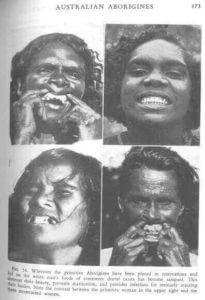
weston a price

Dr. Weston A. Price (a dentist) studied the diet and dental health of cultures with similar genetic backgrounds throughout the world. Some lived in primitive-type societies and ate primitive-type diets. Others ate a more modernized diet. 

The image on the left shows a stark example of this: the woman in the top right ate a primitive, whole-food, high-fat diet while the other women ate a more modernized diet.

In his book Nutrition and Physical Degeneration, he shared his findings that many societies have perfect tooth spacing and no evidence of cavities. This is despite having no access to dentists or modern toothpaste. He also found that others with different (more modern) diets had lots of decay.

Sir (Dr.) Edward Mellanby (who discovered vitamin D) and his wife, Dr. May Mellanby, were also influential in discovering the roles of nutrients in oral health. These two contributed much research in the areas of bone and tooth health and mineral absorption. They discovered that tooth structure is determined during a child’s growth and poorly formed teeth are more likely to decay (pretty logical).

Phytic Acid’s Effect on Bone and Tooth Health

Phytic acid is a phosphorous molecule tightly bound with other molecules to form a type of phosphorus. This molecule isn’t easily absorbed by humans. More simply, it’s a compound present in grains, nuts, seeds, and legumes.

The body naturally converts it into phytates, which, according to some research, remove calcium from the body.

People who consume large amounts have higher rates of tooth decay, mineral deficiencies, and osteoporosis. Sadly, most American diets are high in grains, sugars, and vegetable oils and low in animal fats and fat-soluble vitamins. This is the exact opposite of what Drs. Mellanby found to be helpful for optimal tooth health.

Vitamin D and Phytic Acid

Removing phytic acid from the diet and adding minerals and fat-soluble vitamins allows bones to remineralize. Drs. Mellanby wanted to study if this would also occur in decaying teeth. 

They studied children with cavities and put them into three groups:

  • Group 1 – Regular diet plus oatmeal (high in phytic acid)
  • Group 2 – Regular diet plus vitamin D
  • Group 3 – Diet low in phytic acid plus vitamin D

They found that the first group continued to get cavities with little to no healing. The second group who received supplemented vitamin D showed some healing, but also got some new cavities. The third group showed very few new cavities and even had many existing cavities heal!

The Doctors’ Conclusion: Diet Affects Oral Health

These doctors all reached the same conclusion after years of research. They found that tooth structure and decay are largely determined by diet, especially three main factors:

  1. The presence of enough minerals in the diet.
  2. The presence of enough fat-soluble vitamins (A, D, E, and K) in the diet.
  3. The bioavailability of these nutrients and how well the body absorbs them. This is largely related to the presence of phytic acid and sugar in the diet.

These doctors showed in their research that teeth can heal themselves through remineralization.

What Helps Remineralize Teeth?

We know teeth can remineralize, but what can you do to correct tooth demineralization? There are several easy steps to take if you want to improve your tooth enamel. Things like eating a balanced diet rich in good fats, vitamins, and minerals. It’s also important to pay special attention to oral hygiene, help heal the tooth surface, and avoid dental interventions.

5 Ways to Remineralize Your Teeth

Improving the health of your teeth is possible if you follow a few simple guidelines for diet and oral hygiene. Not only will these tips help strengthen your teeth but they’ll lead to better overall health in your mouth and body.

1. Foods to Avoid for Healthy Teeth

It’s not possible to fully eliminate phytic acid from the diet. But you can minimize the foods that contain the highest amounts. This includes things like nuts, seeds, grains, and legumes.

Some preparations of foods can reduce it. Soaking and fermenting is one method. For instance, nuts have a high phytic acid content, but soaking them overnight in salt or lemon water and then rinsing and dehydrating them in the oven can greatly reduce it. In addition, cooking legumes in a pressure cooker like an Instant Pot can also reduce it.

Another food to avoid is sugary foods. This includes even natural sugars and starches. Limiting fruit and starchy foods (carbohydrates) like sweet potatoes will help with remineralization. Studies show that the more sugar we eat, the higher the risk of cavities. But it’s not just the amount but also the frequency. So, avoid eating snacks and focus on meals. And stay clear of sugary drinks and fruit juices.

Dentists commonly teach that sugar sitting on the teeth causes cavities, but it’s not so simple. Even if you brush after every meal, you can still get cavities from a high sugar or starch diet. This is because sugar depletes the nutrients we need for healthy teeth, weakening enamel. 

2. Foods That Remineralize Teeth

To rebuild tooth enamel, focus on mineral-rich vegetables for their micronutrients. Vegetables with calcium and vitamin D will help the enamel surface.

Homemade bone broths and pasture-raised proteins provide added minerals and vitamins. If you’re short on time, I recommend buying your broth online.

Another excellent food to help with tooth decay is healthy fats. Seafood (including sardines), olive oil, coconut oil, avocados, and other healthy fats support your teeth. In addition, pasture-raised, cultured butter helps increase the presence of fat-soluble vitamins.

3. Supplements to Help Heal Cavities

Sometimes we need to boost our mineral levels with supplements. Unfortunately, many foods are nutrient deficient because the soils are stripped in our modern world. Supplements help fill in the gaps.

I recommend these supplements for dental healing:

  • Vitamin D – In the study by Drs. Mellanby, when vitamin D was optimized cavities healed even without diet changes.  
  • Vitamin K27 – This vitamin helps the body send calcium where it needs to go. It strengthens teeth and bones. I like this one from Just Thrive.
  • Probiotics – Our oral microbiome is more important for our oral health than we realize. Having a healthy microbiome promotes healing.
  • Collagen – This is the main protein in our bodies and is what our bones, joints, teeth, and skin are made of.

4. Best Toothpaste and Oral Care Products to Remineralize Teeth

Practicing good oral hygiene habits are important in healing your teeth. Brushing twice a day and flossing daily is key to good oral hygiene!

Hydroxyapatite – A hydroxyapatite toothpaste is also vital to the remineralization process. Hydroxyapatite is a mineral that helps strengthen teeth. It’s a key ingredient in my Wellnesse toothpaste. Want to make your own? This homemade remineralizing toothpaste is a great option.

Charcoal Toothpaste – A few times a week, use an activated charcoal toothpaste to pull toxins from the mouth. My Wellnesse Charcoal Toothpaste makes it easy to do! It also has xylitol in it, an alternative to sugar as a sweetener. There’s evidence xylitol helps fight cavities. Avoiding sugar is important in the remineralization process.

Flossing – Another important step to a clean mouth. It helps remove plaque and food particles to promote a clean mouth. Wellnesse’s silk floss also has peppermint oil for its antimicrobial properties.

Oral Rinses – When I was healing my teeth, I made a mouthwash with calcium and magnesium powders (75% calcium, 25% magnesium) dissolved in water daily to help provide minerals. Oil pulling is another great way to support tooth and gum health. I recommend doing it for 5 to 10 minutes a day.

5. Stay Hydrated

It’s important to stay hydrated including when it comes to saliva production. Saliva is important for neutralizing mouth pH levels. Having a neutral to slightly alkaline mouth pH in the mouth leads to stronger enamel and less bacteria, two important pieces in tooth remineralization. In addition, drinking water prevents dry mouth, which also impacts the pH level.

Aim to drink at least half your weight in ounces in water each day to help your mouth’s pH level. For example, if you weigh 150 pounds, that would be 75 ounces of water daily. I add minerals to my water (and salt) to make sure I’m staying hydrated. 

How Long Does It Take to Remineralize Teeth?

The remineralization process isn’t something that happens overnight. It can take several months or longer to strengthen your teeth. Following a plan to reduce phytic acid, eat a nutrient dense diet with minerals, and brush with remineralizing toothpaste with hydroxyapatite can help the process work faster.

My Experience With Remineralizing Teeth: Before and After

In early 2010, my regular dental check-up revealed I had some soft spots on my teeth. I also had one “official” cavity. The cavity wasn’t bad, and while they suggested getting it filled soon, it wasn’t a huge rush. They took X-rays, so I have picture evidence of my teeth at this time.

I had every intention of getting it filled quickly, but then life happened and I didn’t get back to the dentist for months. When I was finally ready, I’d read some interesting information about the ability of teeth to heal, so I decided to wait.

I did more research and read Cure Tooth Decay: Heal and Prevent Cavities with Nutrition by Rami Nagel. I also read accounts of people reversing dental damage, so I decided to give it a try. From the research, I created a diet and supplement regimen to try to heal my teeth.

After a couple of months, my teeth were whiter and my tooth sensitivity to cold was much better. This was big news to me as I used to have such sensitive teeth that drinking too cold of a drink could literally almost bring me to tears.

My Results

In the fall of 2011, I finally got around to going back to the dentist (I know, I know… every six months…). I didn’t mention the cavity and soft spots that needed to be fixed… and neither did the dentist!

The hygienist told me that my teeth and gums looked great and asked if I’d started using fluoride or fluoride toothpaste (my chart made it very clear I was anti-fluoride). I told her no but that I had been taking better care of my teeth lately (very true!). When the dentist checked my teeth, he didn’t mention any problem areas either. My teeth had remineralized, and the cavity was no longer there!

Tooth Remineralization Summary

While we’ve been made to think the only way to avoid cavities is to reduce sugar and brush our teeth, the research points to many more dietary causes. And dental interventions aren’t the only answer when it comes to trying to heal decay. Some time and patience, along with great oral hygiene habits and a specific diet, will help heal teeth without the need for fillings!

This article was medically reviewed by Dr. Lauren Jefferis, board certified in Internal Medicine and Pediatrics. As always, this is not personal medical advice and we recommend that you talk with your doctor or work with a doctor at SteadyMD.

This article was medically reviewed by Dr. Steven Lin, who is a Board accredited dentist trained at the University of Sydney. With a background in biomedical science, he is a passionate whole-health advocate, focusing on the link between nutrition and dental health. Listen to my podcast or read the transcript of my interview with him here.

As always, this is not personal medical advice and we recommend that you talk with your doctor or dentist.

Have you tried to remineralize your teeth? Would you try it with your teeth? If you did, what did you do and how did it go?
Did you know it's possible to remineralize teeth naturally? Teeth must be taken care of from the inside as well as the outside. This is how you do it.
Sources
  1. National Institute of Dental and Craniofacial Research. ( 2022, November). Dental Caries (Tooth Decay).
  2. Price, Weston. A.  (2009). Nutrition and Physical Degeneration (Price-Pottenger Nutrition Foundation, Ed.). Price Pottenger. 
  3. Guyenet, S. (2009, March 28). Preventing Tooth Decay. Whole Health Source: Nutrition and Health Science.
  4. Nagel, R. (2010, March 26). Living With Phytic Acid. Weston A. Price.
  5. Moynihan P. (2016). Sugars and Dental Caries: Evidence for Setting a Recommended Threshold for Intake. Advances in nutrition (Bethesda, Md.), 7(1), 149–156. 
  6. Alosaimi, N., & Bernabé, E. (2022). Amount and Frequency of Added Sugars Intake and Their Associations with Dental Caries in United States Adults. International journal of environmental research and public health, 19(8), 4511.
  7. Nagel, R. (2009, January 1). Cure Tooth Decay: Heal and Prevent Cavities With Nutrition. Golden Child Publishing.

Become a VIP member!

Get access to my VIP newsletter with health tips, special deals, my free ebook on Seven Small Easy Habits and so much more!

Easy Habits ebook on ipad
Katie Wells Avatar

About Katie Wells

Katie Wells, CTNC, MCHC, Founder of Wellness Mama and Co-founder of Wellnesse, has a background in research, journalism, and nutrition. As a mom of six, she turned to research and took health into her own hands to find answers to her health problems. WellnessMama.com is the culmination of her thousands of hours of research and all posts are medically reviewed and verified by the Wellness Mama research team. Katie is also the author of the bestselling books The Wellness Mama Cookbook and The Wellness Mama 5-Step Lifestyle Detox.

Comments

925 responses to “How to Remineralize Teeth Naturally & Reverse Tooth Decay”

  1. Vali klein Avatar
    Vali klein

    Hi, I was at the dentist 2 days ago for tooth pain. I have an abscess under an old root canal I had done about 6 years ago. They want to do another root canal. Do you know if the remineralizing would help with this advanced stage cavity? Thanks!

  2. Daiva Avatar

    I was wondering, if you heard something about using low electrical current stimulation on the teeth to stimulate remineralizing or even regrowth of the teeth. I read this book Body Electrical, where scientists in 70s and even earlier were experimenting with certain electrical currents to regrow limbs in mice, and then using that principle healed several people, who had bones, that refused to heal, and it was either try it or amputate. Bones did respond and healed. Unfortunately, those scientists also were researching army used currents, that were very dangerous and they were warning people about that, so their laboratory got closed.
    Anyway, that reminded me, that I read somewhere before about electrical current helping to regrow the teeth. That combined with a diet might be much faster and more effective, especially in deep cavities or missing teeth cases.

  3. Abby Avatar

    Hi,

    I have question that a few others asked, but haven’t got replies, yet. I am too wondering how the remineralizing process will affect my fillings. I have four, large, silver fillings (about 14 years old) & white fillings; can I remineralize those too, with or without having them removed (sort of hoping the healthy regrowth will push them out over time xD)? *claps hands together & prays there’s a chance* >.<

    I plan to follow these tips to help improve the condition of my teeth, as well as my overall oral health. Thanks for the facilitating and informative article. My Mom told me about it. ^^

  4. Kate Avatar

    Hi Welness Mama!

    Last week some enamel chipped off of one of my front teeth. I have an appointment to see the dentist in a week. In the mean time I’m going to give pulling and remineralization a try.
    Earlier this year I took a medicinal plants class. A friend from the class had the exact same experience outlined in your article. The cavity was visible on X-ray, she followed what sounded like a simar regime to yours, and voila! Next X-ray showed total healing. Thank you for putting this info. online 🙂

  5. Sean Avatar

    Hello Catherine, Thank you for this insightful article! For anyone reading this, besides monitoring our dietary intake, have you come across any quantifiable means of measuring the amount of phytic acid and vitamin d metabolized in our body? As Peter Drucker once said, “What gets measured, gets managed.”

    Best,
    Sean

  6. Lee Avatar

    Hi Wellness Mama,
    i am following your diet and routine recently. is there any bread that i can eat? thanks
    and how about tea? green tea and earl grey tea ok?

    thanks!

  7. Delaina Avatar

    How much FCLO/Butter Blend to heal cavities do I give my 8 year old? Do you give them vitamin D on top of this as well? Thanks!

  8. Mike Heseltine Avatar
    Mike Heseltine

    The answer is simple, I have posted this so many times.
    Read Walter Last’s “The Borax Conspiracy” or to hear it read aloud go to YouTube and find “The Borax Miracle”. You will discover that it is a a mineral, not a detergent. It was used in the laundry to soften water but in the body it hardens bones and teeth. It turns into Boron in the stomach from stomach acids. You can take a cup of it and it will not move the bowls, it will just pass through you, it is that safe and will not disturb anything, nor cause the trots.
    Sort version: Borax is not a soap, it is a mineral. A pinch a day, you can will have extremely srong bones and teeth (at least children will have the strong foundation laid down as nature expects. My dentist was amazed at my bone density from seeing my facial X-ray. He kept saying I had extremely strong bones. The dust on your fingers a day, is all you need. In a few years you will have the resources in your teeth and bones that will strengthen them against breaking and rotting. Feed your dog a TBSP and it will clean flukes, worms and other nasties out of its system, with no physical distress or illness. Try it on yourself and check your next bowl movement.
    Dust on your finer, a pinch in your cooking, and the deed is done.
    Fluoride, oil pulling, all the tricks of your dentist or naturopath will not do what this missing mineral will do for your bones, teeth and it will clean out bad things in your stomach and intestines.
    Do your studies. Check out the naysayers. And pass this message onto mums and dads so their children can have extremely strong teeth and bones (old age bone problem granny’s?—no more). Then we can look forwards to the day dentistry is only for emergency procedures (kick in the teeth and other aberrations).
    I am sixty-four, as the song goes, and my dentist told me I have the strongest bones he has seen at ‘any age’. It may not strengthen adult teeth (so he claimed), but it will strengthen bones, and possibly prevent further decay in adults; and definitely in growing children. I also brush and gargle with it after flossing.
    Another note on Borax: for young children and adults it may help with arthritis, the worst kind. So check it out at least.
    Namaste and care,

    1. kanta Avatar

      Mike Heseltine,
      Wow…I have been spending the better part of two days reading all of the comments. Yours is simply AMAZING.
      I have really been fretting as a committed vegan who LOVES animals. So much of the protocol is “essential” animal products and weighing their lives for my teeth is tough! Then I read your comment and think…just maybe I can have great teeth AND my compassion intact. I simply cannot thank you enough. If you could provide more detail re: the source of your Borax. I have some 20 Mule Team…is that okay? Is another source preferred?
      I also intend to weave in the rest of Katie’s great protocol that doesn’t relate to animals :-). There is a great K2/D3 vegan supplement on Amazon, btw. (For the rare vegan reading this :-).
      My best, truly.

  9. Corinne Avatar

    Hey Mama! 😀 I have been reading and referring to your blog for YEARS! Thank you for all of your hard work!! Been doing research on teeth remineralization for 2 years now and your piece on oil-pulling convinced me there is more to our mouth health than what my dentist knows! The dentist said I had the beginning stages of Gingivitus and had a lot of build-up on my teeth. On top of that, I hated going to the dentist because my mouth hurt for 2 days afterward. Just didn’t seem ‘right’.

    I started oil pulling, switched to flouride-free toothpaste and then switched to brushing with baking soda, peppermint oil, and hydrogen peroxide for two months. Also began taking Cod Liver Oil and Vitamin D3 supplements. Went back to the dentist and they were shocked. She barely had to scrape my teeth!

    Sad to say, I did not stick to those habits except for using flouride-free toothpaste and I now have a crack in my enamel (doctor says I’m deficient in Vitamin D) and they want to do a root canal…on a cracked enamel. -_-

    Going to go full throttle again + the diet change for teeth remineralization. Your blog has evolved and is making that process easier than it was 2 years ago. Also found your cookbook and just purchased it which will help with the diet change.

    Just wanted to say thank you so much! Your website helped 2 years ago and its evolution in ease to find connected articles (bone broth, homemade toothpaste, a friggin’ grain-free, teeth promoting, busy life cookbook) will be just as beneficial now as a one-stop infozone of remineralization information! (Had to research multiple sites 2 years ago and it made the changes difficult.)

    You are a GODSEND!! Thank you for experimenting and sharing the wealth of knowledge!!

  10. Eliza Avatar

    P.s. I’m also wondering if supplemental D3 is necessary if taking CLO, as doesn’t Cod Liver Oil contain D3? And do you know D3 requirements for kids (if deficient/to heal teeth) ? So many questions! Particularly keen on meal ideas! Thanks again 🙂

  11. Eliza Avatar

    Hi there, I’m very interested in this protocol and am planning to start as soon as my virgin cod liver oil arrives! I’m planning to follow it myself fand do my best to help my 3 yr old daughter to follow it too. She was born very premature and her outer layer of dentin is still now growing over her teeth, very slowly, and it leaves the exposed part very vulnerable to caries, so I’m keen to start asap.
    I wondered if you could please give me a general breakdown of what your meals were while following this protocol – what did you eat for breakfast, lunch and dinner, as well as snacks ?? I also need to ensure my girl gets enough calories, and I’m unsure how I’ll do this while cutting out grains and starches!
    Thanks so much for this information, super grateful for your article and your work xx

  12. Jennifer Avatar

    Hi. I was wondering what kind of time frame this requires. I am sure the severity of the dental carries males a difference, but can you give me a range. A few weeks? 6 months? Also, once the dental decay is healed, can you add some of the restricted foods back in, such as nuts and beans?

    1. Wellness Mama Avatar

      Mine took about a month to be noticeably better and two months to be remineralized completely and I am able to add in nuts and beans now

  13. Simone Avatar

    I loved this article and I would so love to remineralise my teeth. But I am a vegetarian and eat a lot of grains in my diet. I’d be happy to cut the grains but bone broth is not an option. Also this all sounds VERY time consuming. As a mother of 4 (one of whom is an infant) and running two businesses, I’m lucky to find time to shower every day let alone how time consuming this sounds. Are there any things I can do that would be more time effective?

  14. Christie smith Avatar
    Christie smith

    Was wanting to ask about traditionally prepared oats and nuts. Can these be consumed in small amounts if oaks are soaked overnight and nuts are soaked in sea salt?

  15. Brooke Avatar

    Hi katie I am seventeen and i want to do this but my family eats alot of beans if i cut out all of the other high phytic acid foods do you think thay would be okay to continue eating beans?

  16. Saape Avatar

    Why dosnt this work on wisdom teeth? Could it be an infection? my right down wisdom teeth is going and going and now it has become very sensitive , I can feel the roots. I have been using Fermented cod liver oil and brushing teeth regularly after every meal for about an year, but this wisdom teeth is now in this state.

    1. Corinna Avatar

      Saape,

      try to swish with coconut oil and turmeric daily. Turmeric heals infection.

  17. Kelley Avatar

    Hi Teela and Corinna! I think there is truth in what you said Corinna, about about our bodies recognizing the crowns as foreign objects that do not belong there. But as much as I wish I didn’t have mine, I’m afraid of what’s left beneath that crown though since they file down the natural tooth. I also feel overwhelmed by all the information available; it’s hard to figure out where to start! I think we just have to research very carefully to find the most pertinent remedies for our specific circumstances, and be sure our sources are credible. I became aware of a book this morning called Healthy Mouth, Healthy Body which offers info on natural dental treatment. It states that dandelion is excellent for adding minerals to teeth, and licorice root powder mixed with water and applied topically can reduce tooth decay. I will be looking into these as possibilities for myself, as well as the book itself. I believe proper diet is hugely important to healing, as are necessary supplements and KNOWING that our bodies ARE designed to heal themselves! I have also begun to use acupressure and visualization techniques. Hoping we can all help ourselves!

  18. Gaurav Avatar

    I have sustained a dental fracture on my front teeth. Can my teeth regrow? Also, i ‘m a vegetarian so what diet should i follow?

  19. Teela Avatar

    Hi Kelly and Corinna,

    My problem may be the same as both of you and I have some questions. I’m planning to remineralize my teeth but after reading both of your comments, I’m a bit worry. I have a crown on a tooth that has already been root canal and wonder if it would be a problem when I remineralize my teeth. Thus, I have some teeth that has already been filled and there is a permanent retainer on the my teeth. I hope you guys (and maybe Katie) can give me some advice. I really want to avoid going to the dentist and have my teeth fill again since I have three more teeth that has cavity (I don’t think it’s bad because I have no pain).

    1. Teela Avatar

      If I can’t do the toothpaste, can I just swish with calcium and magnesium powder? (how often and how long?)

      1. Teela Avatar

        Just thought of another question. Can I rinse calcium and magnesium after rinsing with mouthwash and what is the proportion of calcium and magnesium and water? Sorry for the trouble.

        1. Rico Avatar

          Hello Teela,

          The thing with the Root Canal ‘Treatments’ as they refer to it, is that they clear out the living part in your teeth (the root). Mineralizing the teeth doesn’t come from the outside, it’s a result from the inside out. But for the fluid that re-mineralizes and heals the teeth from the inside out to work, there must be a living connection to the teeth and that’s exactly what they remove when they do a Root Canal Treatment. Each teeth that received this ‘Treatment’ dies.

          All I can say is BEFORE you go get another Root Canal Treatment when your dentist tells you (this counts for everyone) ask yourself if you did everything to restore/heal/keep that tooth or to reduce possible pain with alternative means (because they are there). Also, get a second opinion and preferably from a holistic dentist (if you already have a holistic dentist, try a trusted western one) this will give you both perspectives.

          The most important thing to remineralize your teeth is to find out what causes your cavity’s in the first place. The story we’ve all been told is incomplete. In a human that is in harmony with a good diet, resistance of cavity’s is a natural process, the teeth become strong and re-mineralize because there is a healing and re-mineralization fluid pumped through the teeth. So there is an outward flow that protects the teeth against attacks from the outside. If the diet is poor however (and in most of our society it is), this flow reverses and bacteria’s and toxins are pulled inward, destroying the teeth in the process. This is because our current diet prevents the re-mineralization process to activate.

          I seriously suggest you to look into the different diets to start healing your teeth. Although I don’t see a lot of improvement yet, I have successfully halted decay with my method. But I recommend each person to find their own method, we’re all different after all.

          One thing to start you off, educate yourself by reading about the general, positive and negative effects of Phytic Acid, why it works like that and where Phytic Acid is contained in.

          For your other question:

          Although the teeth are mainly nourished from the inside out, I believe it’s still beneficial to use the toothpaste mentioned here and I suppose you can swish with it for the same time you would brush your teeth, the same amount of times you brush your teeth. By the way, if the mouth wash is a chemical one, I recommend you to look into a natural re-placer for that as well. I also recommend you to check what ‘Glycerin’ (in toothpaste) and ‘Fluor’ really does.

          On your last question, I would try to make it liquid with as little water possible. I can’t give you advice on the proportions as I have no experience with such a mouthwash so I recommend you to lookup ‘Magnesium Mouth Wash’ and ‘Calcium Mouth Wash’. Then simply find each separate proportion there.

          The above were just my findings and they may change over time. So if anyone has any tips then feel free to share them. All I can say is, do what feels good for you and educate yourself in this as it’s quite a broad subjects with MANY perspectives.

          I wish you good luck 🙂

          Sincerely,

          1. Kelley Avatar

            Thank you for your thoughtful comment, Rico! Some of the most valuable information I’ve seen in my quest for natural healing comes from people kind enough to share their own findings and experiences. I appreciate you addressing these questions! 🙂

Leave a Reply

Your email address will not be published. Required fields are marked *