


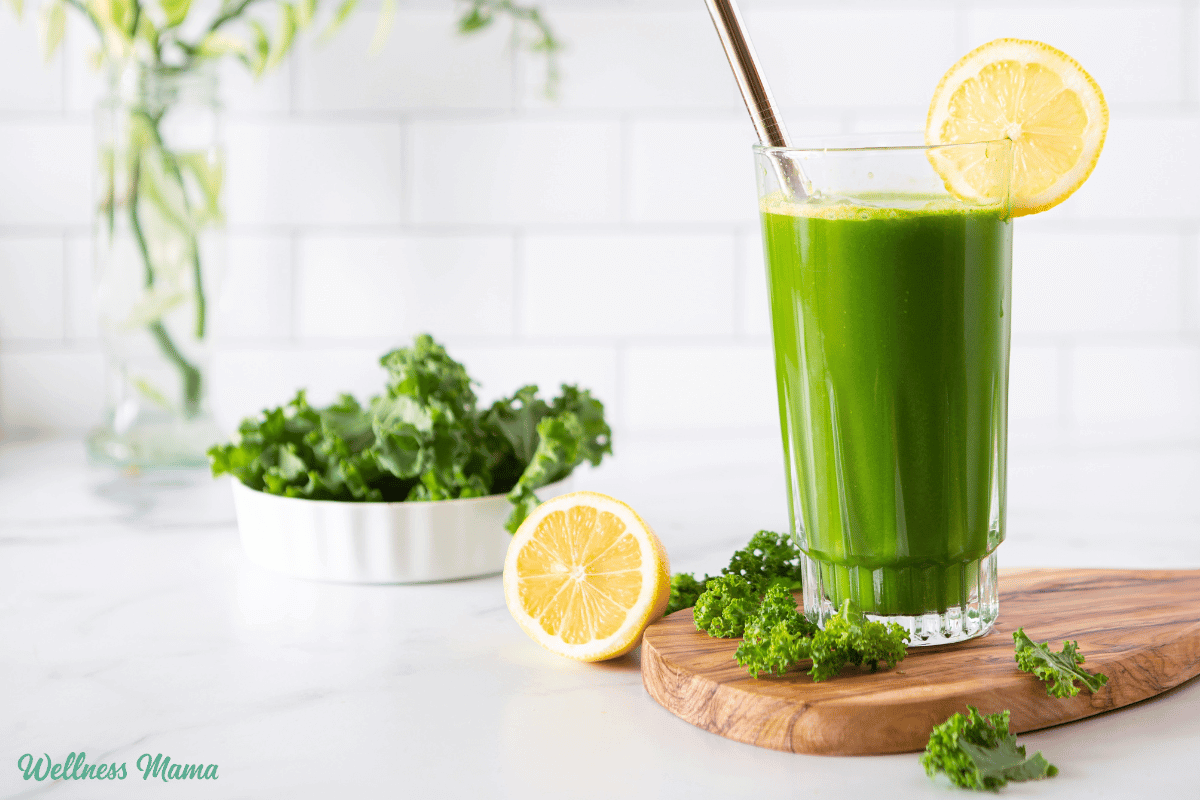

Green juice has become more popular in recent years, especially during fasting or detox. It’s one of those wellness trends people either swear by or completely write off. For some it’s a daily habit that brings energy, while others just notice blood sugar spikes and get hangry (hungry + angry).
I’ve experimented with green juice for years. And while they’re not a magical cure all, they can have some very real benefits. It depends on how you use it, what you put in it, and when you drink it.
Instead of framing it as simply a detox or a meal replacement, I look at green juice as a healthy addition. When used intentionally as a nutrient boost (not a nutritional crutch) it can be a really helpful addition to a whole-foods lifestyle.
Green Juice as a Meal Replacement
One of the most common ways people use green juice is as a breakfast replacement or as part of a juice fast. It sounds great: flood the body with vitamins and give your digestion a “break.” But in reality, that approach can backfire.
Juicing removes most of the insoluble fiber from fruits and vegetables. Fiber plays an important role in slowing down sugar absorption, feeding beneficial gut bacteria, and helping us feel full. Without it, juices, especially fruit juice, can quickly raise blood sugar. Sugary juice for breakfast means higher cortisol levels, energy crashes, sugar cravings later in the day, and disrupted hunger hormones.
This is why I’m not a huge fan of drinking only juice for breakfast. I like to front-load my hydration and protein early in the day to stabilize blood sugar and support hormones. Research consistently shows that higher-protein breakfasts keep us feeling fuller longer. They also help with insulin sensitivity and overall metabolic health compared to carbohydrate-heavy ones. Starting the day with juice alone doesn’t offer those benefits.
That said, a green juice doesn’t have to be sugary or metabolically disruptive.
Green Juice as a Nutrient Boost
I prefer to think of green juice as concentrated nourishment. A well-made green juice is naturally lower in sugar than most juicing recipes. Plus you get a large amount of vitamins, minerals, and phytonutrients that are easily absorbed.
According to the CDC, about 90% of Americans don’t eat enough veggies. Even with the best intentions, getting several cups of leafy greens, herbs, and hydrating vegetables into meals every single day is a challenge. Green juice is an easy way to get more veggie nutrition without all of that chewing.
Another benefit is hydration. Green juices contain potassium, magnesium, sodium, and trace minerals that help water actually move into cells. This is why many people find green juice more hydrating than plain water alone. Proper hydration isn’t just about fluid, it’s about electrolytes, and vegetables naturally provide them in balanced amounts.
Of course, eating whole fruits and veggies is still important!
Juicing vs. Smoothies: Why Both Have a Place
I love smoothies, especially ones that combine fruit, vegetables, protein, and healthy fats. They’re filling, support healthy blood sugar, and taste refreshing. Sometimes drinking a thick smoothie feels like too much though. It can be heavy, especially if digestion is sluggish or appetite is low. Juicing is a great alternative.
By removing most of the insoluble fiber, you’re able to get the nutrients without getting full so fast. Vitamins and antioxidants are absorbed quickly in liquid form since our body doesn’t have to work as hard to digest them. For someone recovering from illness, dealing with low appetite, or just looking for an easy nutrient boost, juicing can be incredibly helpful.
Juicing isn’t better than blending, it’s just different. Smoothies are more complete and filling. Juices are lighter and more concentrated. Having both tools gives you flexibility instead of forcing one approach to fit every situation.
Hydration at the Cellular Level
Hydration is about more than drinking enough water. Our cells need minerals for proper fluid balance, nerve signaling, and muscle function. When we don’t have enough minerals, water doesn’t hydrate as effectively.
Vegetables like celery and cucumber are naturally rich in electrolytes, especially potassium and sodium. Coconut water adds additional potassium and small amounts of magnesium. Together, these ingredients support cellular hydration.
Studies on electrolyte balance show that fluids with minerals are retained better than plain water, especially during physical activity or periods of stress. While green juice isn’t a replacement for water, it can be a meaningful complement to hydration. Especially for anyone struggling to drink enough fluids throughout the day.
The Benefits of Green Juice Ingredients
I’ll get to the actual recipe in just a second, but first I wanted to explain why I chose these ingredients. You’ll notice there’s a whole lot of veggies and not a lot of fruit here. And the fruits I do use are naturally very low in sugar. This combination offers hydration, micronutrients, antioxidants, and gentle digestive support.
Celery
I’m a big fan of celery juice even by itself. Celery is high in water, potassium, and sodium, which is great for hydration and electrolyte balance. Unlike conventional sports drinks, celery provides these minerals in a whole-food form our body recognizes and uses more efficiently. It’s great for anyone who feels dehydrated despite drinking water.
Celery also has antioxidant flavonoids like apigenin and luteolin, which have been studied for their anti-inflammatory effects. You’ll also get vitamins A, C, and K, calcium, and iron with celery.
Cucumber
Next to celery, cucumbers are one of the most hydrating vegetables, with over 95% water content. They also provide small but meaningful amounts of potassium and vitamin K to support fluid balance and normal blood clotting. Their high water content also helps dilute some of the stronger flavors in green juice.
Beyond hydration, cucumbers have antioxidants like cucurbitacins and flavonoids. Researchers have found that the compounds in cucumbers have anti-inflammatory, antimicrobial, anticancer, and antidiabetic effects. Plus, cucumber is just so refreshing.
Green Apple
Green apples add just enough natural sweetness to balance out the bitter greens without adding too much sugar. Compared to sweeter apple varieties, green apples are lower in fructose and have a more gradual impact on blood sugar when used in small amounts.
They also have polyphenols like quercetin, an antioxidant that helps support the immune system. Not only does quercetin show anti-cancer activity, but it’s also antiviral and supports healthy blood vessels. And with potassium, B vitamins, and vitamin K, it’s a delicious and healthy addition to green juice.
Kale
Most green juice recipes feature leafy greens like spinach, kale, or chard. Kale is really nutrient-dense, providing vitamins A, C, and K, along with folate and manganese. These nutrients support immune function, collagen production, and normal blood clotting, all of which are essential for overall health.
More importantly, kale is low in oxalates compared to greens like spinach and Swiss chard. It also has calcium, which can bind to oxalates in the digestive tract and reduce absorption. Not everyone has issues with high oxalate foods, but over time, especially in large amounts, they can cause problems.
Lemon Juice
Lemon adds brightness and some tang from vitamin C, a key nutrient for immune health and collagen synthesis. Vitamin C also enhances the absorption of certain minerals, including non-heme iron from plant foods. Lemon stimulates digestion and can help green juice feel lighter, especially when combined with mineral-rich vegetables.
Some recipes call for adding a peeled lemon to the juicer, but I don’t want to bother with peeling a lemon. Instead, I just cut it in half and squeeze the lemon juice in. It’s also great for grip strength!
Ginger
Ginger has been used for thousands of years to support digestion, circulation, and immune health. Modern researchers have looked at its active compounds for their anti-inflammatory and antioxidant effects. Ginger can help calm nausea and move food from the stomach into the intestines for better digestion.
It’s warming and I love the bit of a spicy kick it adds.
Parsley
When you think of parsley, garnishes on restaurant plates and hospital food may come to mind. In reality though, parsley is a nutritional powerhouse. It’s rich in vitamins C and K and chlorophyll to support immune function, detox, and blood health.
Parsley also has apigenin, a flavonoid known for its antioxidant and cell-protecting properties. Traditionally, parsley has been used to support kidney and urinary health.
Coconut Water
Optional, but I like adding this sometimes for more electrolytes. Coconut water naturally contains potassium, magnesium, and sodium to support electrolyte balance and hydration. These minerals are vital for regulating nerve signaling, muscle contraction, and fluid movement into cells.
When used in moderation, coconut water gives the green juice an extra hydration boost without overdoing it on the sugar. Be sure to look for coconut water without added sugar!
Oxalates, Greens, and Context
Oxalates are naturally occurring and found in many plant foods. They often get labeled as bad, but it’s not so simple. We only absorb about 2–5% of oxalates in our food. When we eat high-oxalate foods on an empty stomach or in large amounts (especially in liquid form) absorption can increase to around 10–12%.
Too many oxalates can irritate the kidneys and contribute to kidney stones for some people. It’s also important to note that only about 20% of our oxalates come from food. The rest are produced in our bodies naturally through metabolism and other factors.
This is one reason I prefer kale over spinach in green juice. Kale is low in oxalates and also contains calcium. Oxalates carry a negative charge and readily bind to positively charged minerals like calcium, magnesium, and iron. When we eat oxalate-rich foods alongside calcium, it reduces the absorption.
Who Should Drink Green Juice?
Green juice can be especially helpful for people who:
- Struggle to eat enough vegetables
- Have low appetite or difficulty digesting large meals
- Need extra hydration and electrolytes
- Want a light, nutrient-dense snack between meals
- Want a nutrition boost
Green juice that’s heavy on fruit isn’t ideal for anyone with unstable blood sugar or as a meal replacement. Like most wellness tools, it’s about using it intentionally.

Green Juice Recipe
Servings
Equipment
- Juicer (or blender)
Ingredients
- 4 stalks celery (leaves removed)
- 1 green apple (cut in quarters)
- 1 cucumber
- 6 leaves kale
- 2 inches fresh ginger
- ½ cup fresh parsley
- ½ lemon
- ¼ cup coconut water (optional)
Instructions
- Add all of the ingredients except lemon and coconut water to the juicer.
- Once the juice is pressed, squeeze in the lemon juice and add the coconut water if desired.
- Keep in the fridge for up to 72 hours.
Nutrition
Notes
- Opt for organic produce as much as possible.
- Add more or less of certain ingredients to suit your tastes.
- With my juicer, I found it worked best to add the leafy greens first before adding the other veggies.
How To Make Green Juice Without a Blender
If you don’t have a juicer, you can still make green juice. Add all of the ingredients to your blender and add just enough water or coconut water to get the mixture to blend. After you’ve blended it to a smooth consistency, use a fine mesh strainer to remove the fiber.
How Long Does Fresh Green Juice Last?
I’m a big fan of bulk meal prepping whenever I can for faster meals. Juicing doesn’t always work well with that strategy though. Low-acid green juices (like this recipe) will last for 24-72 hours in the fridge before they start to go bad. I like to drink it fresh as soon as I make it, but you can make a few days’ worth at a time if you prefer.
Final Thoughts on Green Juice
While green juice does help our bodies detox and function better, you don’t need to go on a full green juice cleanse. It is however a great way to pack in some extra nutrition from fruits and veggies. When used thoughtfully, it can support hydration, boost nutrition, and overall vitality without sabotaging blood sugar.
Using green juice alongside real food and prioritizing protein and healthy fats helps support the body rather than overwhelm it. Play with the ingredients and the amounts to suit your tastes!
Are you a fan of green juice? What are some of your favorite ways to use it? Leave a comment and let us know!


Leave a Reply