Read Transcript
Child: Welcome to my mommy’s podcast!
Katie: ?This episode is brought to you by Hiya Health, which I have a now extended and renewed interest in, especially with having a baby around who will be starting solid foods pretty soon. Because here’s something that’s kept me up at night as a parent, and I’ve talked about before. Our kids are the first generation growing up on not just ultra-processed foods, but foods that don’t have the same nutrient content that they used to due to soil changes and so many other factors.
In fact, we’re just beginning to understand the extent of this problem. And this is why Hiya exists and why I’m glad that they do, which is to give parents a real solution in a market that is flooded with kids’ vitamins that are actually contributing to the ultra-processed foods. They have candy-like appeal, but not actual nutrition.
In fact, some children’s vitamins on the market contain up to seven grams of sugar per serving and are stuffed with additives and petroleum-based dyes that I go to great lengths to avoid in my kids’ diet. So Hiya took the opposite approach with zero sugar, zero gummy additives, just clean nutrition. And the great part is kids actually love them.
My younger kids are a huge fan. I have tried them, and the flavor is actually great, although obviously I don’t take them daily. But what makes them different is how thoughtfully they are designed, formulated to meet very specific nutritional gaps that modern kids face. And they worked alongside pediatrician and nutrition specialists to make a chewable multivitamin that packs a blend of twelve organic fruits and vegetables and fills the common nutrient gaps that kids face.
They’re also non-GMO, vegan, dairy-free, allergy-free, gelatin-free, nut-free. They really have thought of everything to make these ideal for kids. And they are NSF certified and receive Clean Label Project’s Highest Purity Award. So when it comes to something I feel safe giving my kids, they are definitely on the list.
It’s designed for kids two and up. They ship straight to your door. And I love that they send you a reusable bottle and stickers with your first order. So this helps you keep up with the refills, and they send refills every month as well. I am a big fan of these as well. And Hiya just launched something new.
If your kids are active and growing, you can add a clean protein powder with minerals designed just for kids to be exactly what they need. Their new Kids Daily Growth Plus Protein is a game-changer. It’s more than a protein shake. It’s a purity awarded clean protein powder with added minerals and healthy fats that can mix right into water or smoothies and support muscle development and cognition and fuel everything else they’ve got going on.
So, we worked out a special deal with Hiya. You can receive 50% off your first order on any of their products. To claim this deal, you must go to hiyahealth.com/wellnessmama. This deal is not available on their regular website. So again, that’s H-I-Y-A-H-E-A-L-T-H.com/wellnessmama, and get your kids the full body support they deserve.
Today’s episode is brought to you by LMNT, which is my go-to electrolyte drink for staying hydrated and feeling my best every day. I have used this for years, and unlike many sports drinks which are loaded with sugar, LMNT delivers a science-backed blend of electrolytes with the sodium your body actually needs, especially if, like me, you live in a hot climate, sauna regularly, or work out regularly.
Whether you are working out, walking the dog, traveling, or simply trying to keep your minerals and your energy levels up, LMNT makes this simple and delicious. I keep their canned ones in my fridge all the time now, and their convenient salt packets are perfect for tossing in your purse, your gym bag, or your carry-on, so you are never without electrolytes when you need them.
My kids are also a huge fan, especially of their new pink lemonade. What I especially love about LMNT that they have so many flavors now, so it’s easier to drink throughout the day. If mixing isn’t your thing, they also now have what I love, their new sparkling canned beverages that give you the same electrolyte benefits but in a ready-to-drink format. And those are a favorite among people who visit my wellness center as well. Adding LMNT to your daily routine is one of the easiest ways to support hydration and help your body perform at its best. I also find very helpful if you’re a breastfeeding mom.
So if you’re looking for a simple upgrade to your wellness routine, give LMNT a try and experience it for yourself. They have some delicious new flavors like lemonade iced tea and pink lemonade, and they always have their happiness guarantee. Go to drinklmnt.com/wellnessmama for a special offer.
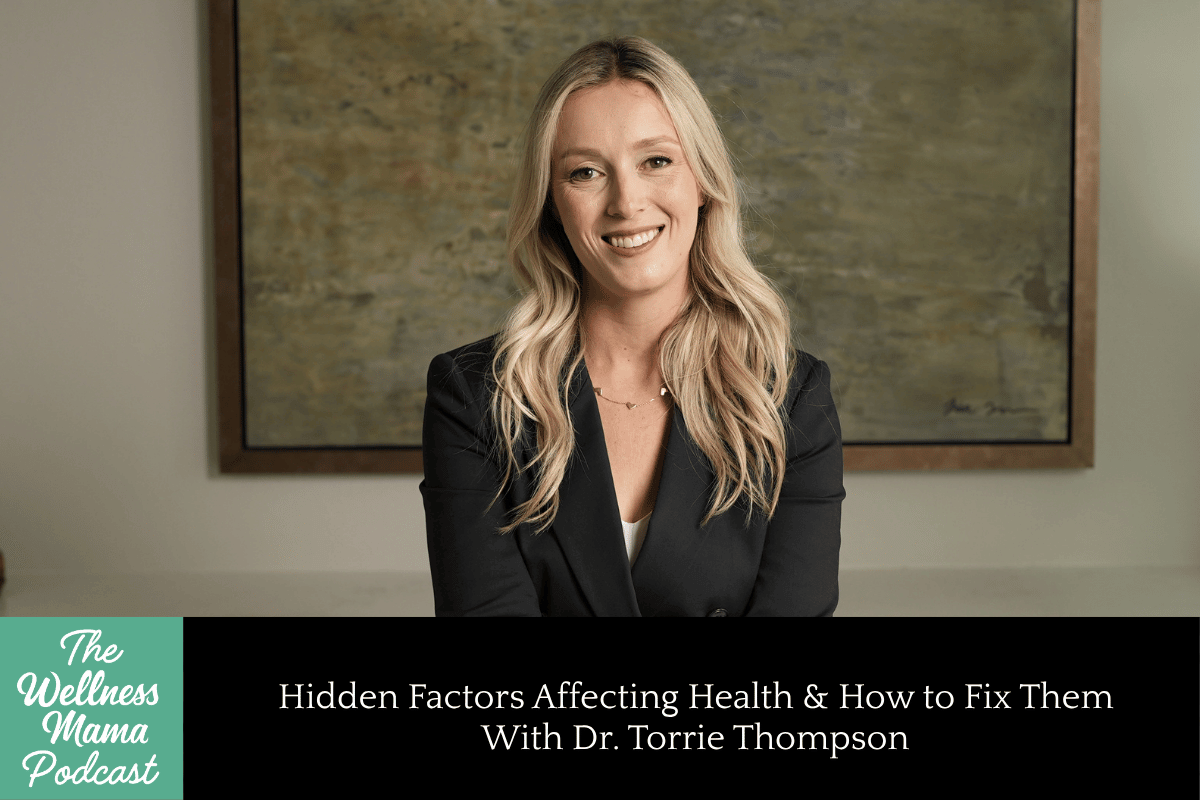
Katie: ?Dr. Torrie, welcome. Thank you so much for being here.
Torrie: Thank you so much for having me. I’m so excited.
Katie: Me too, and there’s so much we’re gonna talk about today. But I wanna lean in first to a note from your bio, which is that you lived in Thailand, and that’s how you originally got interested in Eastern medicine, and Thailand is very much on my bucket list. I would love to hear about that experience and what sparked your curiosity.
Torrie: Oh, Thailand is amazing. I, I cannot recommend it to anyone enough. But I… So I got sick really young, and, went from the time I was about 12, 13 all the way through undergrad sick, looking for answers, and really couldn’t find any.
And there really wasn’t much in terms of functional medicine that was easy to access, ’cause we were before the era of social media, and we were before, you know, what we had now. And so I was actually going the traditional medical route, and so I went over to Asia to get some hours doing, some time in a hospital over there, and thought it was gonna be, you know, surgical hours, and started talking to doctors and learning their approach over in Asia, and that’s that they look at lifestyle first. That they don’t just dive into drugs, and they look at herbs and food and lifestyle as a first line of defense.
And I’d started to kind of question our medical system here. At the time, I was really starting to learn about just food. And so I started learning about herbs, and I had a doctor pull me aside, and he said, “You’re really into this herbal Eastern medicine thing. If I could give you any advice, it would be to explore that before you go the traditional medical route.”
He said, “I really don’t think you will be happy there. I think it’s something that you should explore, really learning in- about herbs in the Eastern side because there’s amazing healing there. I just don’t think you’re really aligned with the traditional medical route.” And I am so thankful for him doing that because I was so gung ho, “I’m gonna go be a surgeon.”
And when I got home, I really started learning and mastering Chinese herbs, and that was really some of the first progress I started making in my own health. Started doing parasite cleansing and stuff, and so it was really a, a kind of the school of hard knocks on Eastern medicine and just how different it is there, and opening my eyes to there are different ways about going, you know, at, at health, and looking at it more from a preventative, what can we do lifestyle first before going drugs, surgery, that route.
Katie: I love that, and what a gift for a doctor to actually recommend that to you. I have my own version of that with thinking I was gonna be a lawyer, and I’m very glad that certain life experiences shifted that, and I much prefer the work I get to do now. But I think, like, we probably have a mirror a little bit in our story in that I’ve talked about this before, but it took me years to be given a diagnosis, and then I was told I had Hashimoto’s, which I no longer have.
But of course, the conventional medical model was that that was lifelong. I would take medication for the rest of my life. There was nothing I could do, and even if I asked questions about lifestyle or diet, they kind of dismissed those as not part of the equation as well. And so for me, it was very much a research journey, and then also a journey of learning to trust myself and my body and my intuition and what was working for me over what I was being told by doctors.
And I think there’s a whole lot wrapped up in th- that story as well. But to your point too with I love the idea of herbalism. I’d love to dive in a little bit more into that side because I think a lot of people maybe don’t realize the things we trust as pharmaceuticals, many of them came from or originated from that idea based on herbs and plants.
And if we’re going to assume that something like ibuprofen can have such a dramatic effect with such a small amount, I think it’s worth looking at that there are these incredible plants that often grow natively in the places where they’re needed that can have a profound impact as well. So I would love to just hear more of your herbalism experience ’cause I haven’t got to talk to very many herbalists.
Torrie: Yeah, I’m… And herbalism, I’d say, so I’m more now kind of functional, functional side, but herbalism is one of my passions of just learning about herbs. And for me, my health journey was Lyme disease. And so in the realm of Lyme, there are some fabulous doctors that have dove headfirst into herbs. And so that was really starting to learn using antimicrobial herbs, herbs that could work on infections and, you know, parasites and Lyme.
And so that was really what started it for me. And so really learning about things like artemisia and houttuynia and black walnut, and really starting to understand that there are herbs that could have the power to really rid the gut of these infections and, and do it in a gentle way. Of course, herbs can…
You know, people can overdo it with herbs. But it’s really, I really just started learning about that, and then it expanded into really I’ve always been fascinated with the medicinal mushrooms. Learn- learning about lion’s mane and cordyceps, and learning about how we can use those for inflammation. And so it just became this little side passion of mine of how can we use herbs, you know, paired with supplements to really get a lasting effect for people.
And in just my own health journey, they made a profound difference for me. It was really, the game-changing point of using herbs, because at… Lyme disease at a 15-year… You know, I’d had chronic Lyme for 15 years. The prognosis isn’t great if you go the antibiotic route. It, it was told by a doctor, she goes, “Yeah, you might feel better, but your immune system’s never really gonna be the same.
It’s gonna be something you battle.” And that wasn’t a good enough answer for me. So it was, okay, how do we use these herbs? Let’s see what we can do there. And I learned from some amazing doctors that really bring that into their practice, and feel so blessed to have had them on my journey.
Katie: I love that, and I feel like we’re seeing this kind of a little bit at scale now, where a lot of people are questioning the narrative that they’re given and stepping into more curiosity, which I think allows us to ask better questions.
And I see this a lot with women especially. I know men are questioning as well, but I think women are really kind of leading the charge in not accepting the, the first answer or not just relying on pharmaceuticals as a first approach. And, all that to say, I think that there’s a time and a place for pharmaceuticals as well.
I think just assuming those are the only or the right answer, we miss some other potential things that could be really life-shifting and positive. And on that note, I know you work with people with all kinds of different, chronic infections and different underlying things that are affecting their health.
I’m curious, what are some of the big ones that you see, or the things that you think often get missed that are just not part of the mainstream narrative at all?
Torrie: I would say the biggest one is mold, and mold toxicity is definitely gaining a lot of traction. We just saw that the CDC put out last week that they maybe are kind of under-classifying mold sickness.
But when you look at mold, it’s for me the… I always say it’s the root cause of all root causes. There’s never just one. It’s always usually a stacked effect. But most people, when I suggest mold, they’ll tell me, “I’ve never been exposed to mold. I’ve always lived in nice homes.” You know, they’ll, they’ll argue with me, and I…
There’s so much pushback. But mold produces a toxin called a mycotoxin, and that mycotoxin is such a big hit to our system. It can be immunosuppressive, really tank the immune system, highly inflammatory, so we can see lots of inflammation, which can trigger all sorts of other conditions, and then highly toxic.
It really stresses out the liver. And so when that happens, we s- we really struggle to detox not only those mold mycotoxins, but everything else that we’re exposed to. So often I see mold as the big driver. Then it’s usually some other infections, whether it’s bacterial overgrowth, fungal overgrowth, parasites, some sort of gut disruption, and then a huge environmental toxin load.
And when I started running toxin panels about a decade ago now, we would maybe see three or four toxins, right? You might get a little bit of plastic, a little bit of BPA, a pesticide here and there. Now we’re seeing the average person that I see has several types of mold mycotoxins, and usually 10 to 15 environmental toxins.
And so we’re just seeing this toxic load getting bigger and bigger and bigger. And so these environmental toxins can affect our gut. They’re hormone disruptors. They affect our immune system. They’re highly inflammatory. So for so many people, we just see this compiling effect of mold, some sort of gut disruption, high toxic load that has created this perfect storm, and it manifests different from person to person.
Sometimes that’s an autoimmune condition. Sometimes it’s they can’t lose weight. Sometimes it’s their hormones are crazy off. So it manifests so differently, but what’s, what we’re seeing is this huge toxic load in people.
Katie: And I know it’s, I’m sure, very multifactorial, but what do you think are some of the contributing reasons that we’re seemingly seeing an increase across the board in all of these conditions, but also in toxic load, like you mentioned, on tests?
I know certainly our modern lifestyle probably doesn’t set us up for success here, but are there, like, big contributors that you see often?
Torrie: I think the world has become more toxic, and I always feel like Debbie Downer saying that. But, you know, we’ve… We’re getting to an era where the g- the population has lived their entire lives with highly processed food, with high pesticides, with plastics.
And so we’re starting to see this, you know, generation that’s either, you know, our era of we were grown, we grew up in that, and then now the kids being born into that from moms that grew up that way, and- and things are just more toxic. We have way more convenience foods, so much plastic use. And it’s not until fairly recently that people have caught on, like, oh, maybe fragrance isn’t the greatest thing for me, or maybe all of the products at the store aren’t super safe, or we don’t know the long-term use.
And so I think it’s the world is more toxic. I think we live in a higher-stress environment than we’ve ever lived in before. It is a go, go, go world. and so I think when you add in a high-stress component or people’s nervous systems being so on edge, it sets us up for not being able to detox as well.
And so I think you’ve got that. And then I think from a nutritional standpoint, we aren’t eating as much real healthy food. It’s also sprayed with a ton of pesticides. The soil is, you know, more nutrient dead. So we get hit from so many angles. But I think it’s truly just our modern world, our modern society is not set us- setting us up for success.
Katie: And definitely we’re gonna reserve a lot of time for talking about solutions, ’cause I know that there’s a lot actually within our ability to affect change here. Before we get to that, though, how can someone know and find out if some of these underlying factors are what’s going on with their health?
Because I know I hear from so many people who are like, they get lab tests, for instance, and they’re told their labs are normal. Or they go to doctors seeking answers and feel like they’re not able to get answers from doctors or from whatever the, the protocol is. So if someone suspects maybe this might be what’s going on with their health, where- what’s a starting point, or how can someone begin to sort of, like, do the detective work to figure out what’s going on?
Torrie: So the first thing you’re gonna really have to do is find a functional practitioner, someone that’s gonna run some of these tests, ’cause they are not standard. You walk into your general practitioner’s office, they’re gonna look at you most likely like you’re crazy if you tell them you want an environmental toxin panel.
So you need to go to someone that’s running functional panels. And then there are, these are all urine tests, the o- well, the ones we run are urine tests, and you can get a toxin panel. So it’s looking for mold mycotoxins, it looks for heavy metals, it looks for these environmental toxins. So you just have to seek out someone that’s running it, and then the tests are pretty standard, within our world, and it’s just getting, a tiny urine sample and we are able to see all of the data of all of the things sitting in your system.
And I always tell people, there’s kind of two, two subsets of people. There’s people that have symptoms that don’t make sense. This is the person that’s gone to a million doctors. The doctors say your blood looks great, there’s nothing wrong with you, but you know something’s wrong. That’s a great place to really dive into toxins and looking at underlying root causes.
And then also you’ve got the people that feel okay, but really just wanna optimize. Some of the worst toxin panels I’ve ever seen are people that their lifestyle is really good now and they feel okay, but they grew up on a conventional diet, years of plastics and non-organic, and they have tons of toxins stored in their system.
So you can go- kinda have two categories of people, the people that feel good but wanna optimize, and the people that are like, “I know something’s wrong.” That’s a great avenue to explore.
Katie: And to your point, it seems like the testing is really important, as is working with someone who knows what they’re doing, ’cause I know from firsthand experience and from research that while the body is wonderful at detoxing, and in fact anything we do to, quote unquote, detox is actually just supporting our body in doing what it naturally does. That if we do it too quickly, we can kind of stress out the body further because it’s unable to handle everything we’re kind of throwing at it at one time.
So as a starting point, I would say I have a, a firm belief that the body is designed to thrive, it’s able to heal, and that when we give it the right inputs, remove the negative outputs, it does that brilliantly. But that said, there’s nuance there. So what are some cautions or some things people can be aware of when they realize maybe they’ve got a toxic load or they have some of these problems so that they don’t overload their body further in the de- detox process?
Torrie: The first thing is just going slow and steady. I, I am a test, don’t guess person because it is very helpful to know what you’re dealing with. If you’re dealing with 20 mycotoxins and 30 environmental toxins, that’s gonna be a very different detox and, and pace than someone that’s got one small exposure.
So I do love to test, and I do think that is worth every penny to know what you’re working with. The second thing is really doing the back work to support your body. People often will see on TikTok or some influencer that’s like, “Oh, I took this binder. I took this supplement that was a heavy metal cleanser, binds plastics,” but they don’t realize that either it’ll unload and kind of unleash the beast and overload the system, or that for them, that’s not the right move.
And so you really need to, again, work with someone that can guide you, but do the back work. There is a lot of prep work, and that is supporting your body’s natural detoxification system. And so you want that to be running smoothly. And so we wanna support the liver, the gallbladder, the lymphatic system, your kidneys, your gut.
Make sure that all those systems are very well-supported so that we’re able to go in and start to detox. And then, my rule of thumb is if you’re not pooping and you’re not sweating, don’t do a detox. That is a very good indication that your detox pathways are not as optimized as possible, especially for people not having a bowel movement every single day, is not the time to go do a detox.
And then, be patient. There’s no 60-day, 30-day, two-week cleanse that’s gonna be able to cleanse if you’ve got a bunch of toxins sitting in your system. So being very patient. Slow and steady wins the race 100% of the time when you’re going at, at pulling toxins out. And then just be mindful of the social media craze of the magic anything.
There is no magic anything. It’s really a protocol built, having a diet that supports it, being hydrated, having minerals, a solid foundation that supports detoxification, not the magic insert here from TikTok.
Katie: Yeah, I love that. I’ll make sure, I know you have a lot of resources available for people, so I’ll put all those in the show notes for you guys listening if you wanna go deeper on any of these topics.
And I also think it’s important to remember, this was a tough learned lesson for me. I used to have this story that my body was attacking itself, and I slowly learned our body’s always on our side. So even in the case of toxins, for instance, if the body is storing those, it’s doing that in our best interest in that moment to keep us safe, to protect our organs, whatever’s going on.
And so we don’t want to like, to your point, override the body’s natural mechanisms and what it’s doing. We wanna, like, learn what’s going on so we can work with the body gently. And I would guess those are drastically different experiences if someone detoxes gently working with their detox pathways versus tries to, like, do this thing to the body that it’s not ready for, both in how they feel and probably their long-term results as well.
And I’d love to kind of touch on those sort of point by point, ’cause I know you work with a wide range of people with various things going on. And like you said, some of these things are very much social media buzzwords right now. So I wanna address some of the, like, things to know and the pitfalls around parasites.
I feel like that one I see all the time right now on social media, and it seems like there’s maybe a lot of misconceptions floating around.
Torrie: There is. I, I always joke that if I had a dollar for every parasite magic cure video that got sent to me, I wouldn’t have to work, because there’s just so many of them right now.
But there is a lot of craze around parasites, just like there’s- we’re starting to see it in the mold space. And so parasites are absolutely a piece of the puzzle for a lot of people. They are a huge driver. They can really affect the gut, the microbiome, cause a lot of symptoms. But what we’re seeing right now is this cure-all, magic, you do a parasite cleanse, and it will solve every single one of your problems.
And I am a big believer in it’s never just one thing. It’s usually this perfect storm. It might be mold, parasites, candida, heavy metals, and it’s usually this perfect storm. And so what we’ve seen a lot of, unfortunately, is people will go, and they buy these parasite cleanses on social media from an influencer, from even practitioners, and these parasite cleanses are usually short-term. There’s very little support. So it’s usually just gonna have some killing herbs, in it. There’s very little liver support. There’s usually not a binder. There’s very little support for the body. And so for some people that maybe don’t have a ton going on, they do see positive results clearing out their gut.
But unfortunately, what we’ve seen a lot of is then they come to us, and it’s the story of, “I did a parasite cleanse. I wasn’t feeling well. I saw somebody talk about doing a parasite cleanse, and now I’m sicker than I’ve ever been before.” They add in a ton of these herbs that are gonna go at parasites, and it’s way too much on their system, and so all of a sudden they have this big detox reaction, and sometimes it’s what pushes them over.
We’ve seen a few people that all of a sudden now they have autoimmune conditions that were most likely there under the surface, but this is what amplified it. We’ve seen people that all of a sudden now they are, you know, back to square one. They had made some headway, and now they’re back to square one feeling sicker than before.
And so if you’re doing a parasite cleanse, I am, I am a believer in still work with a practitioner. I do not like people blindly doing any sort of cleanse. But you have to have support in. There has to be that same thing that we do with, with mold and all of that. We have to build a foundation. We need to make sure that your body feels safe, it feels supported, and it has what it needs to then be able to clear out any of the parasites that you cleanse or mold or whatever it is.
So you have to have that prep work, and that support has to stay there throughout. So usually a lot of times when I ask, “Okay, well, this parasite cleanse that you did, what was it?” It’s usually, “Oh, it was, you know, some sort of herbal tincture.” I go, “Okay, was there support?” “No.” “Was there a binder?” “No.” “How long was it?”
“You know, it was two weeks heavy duty and they said push past the symptoms.” So it’s usually the perfect storm of way too much, way too aggressive, very little support, and not listening to your body. We hear often in the detox space that you can have Herxheimer detox reactions, which is very true. However, I look at it and I want, you know, the maximum I’m okay with somebody having a little bit of a reaction, I say is 5 to 10%, no longer than a day or two.
When people get stuck in these massive flares for a week, that is way too aggressive, way too strong for your system. You need to stop, support the body, and backpedal. So there are so many nuances to doing any sort of detox that a lot of people and a lot of influencers don’t give you the full story, and it can go very sideways.
And then the other thing is, is parasites, are mostly microscopic, meaning you would never see them. About 85% of them are microscopic. There’s about, you know, 15-ish percent that you can see with the naked eye. And there’s a lot of marketing that is pushed around biofilm, which is the slimy layer that microbes secrete around themselves.
And biofilm, it is basically what covers microbes from the immune system. So it’s basically they can live in this, like, apartment complex. The immune system can’t find them. It’s how they’re able to thrive. It’s beau- a brilliant survival mechanism. And when we do parasite cleanses, oftentimes we either use something called Mimosa pudica, which is long and snotty and can look like a worm, or you clear out biofilm.
And people will use this biofilm, which is… can be very dark, very stringy looking, and they’ll make it seem like that is a parasite, and, “Look at all my clients, all these parasites that they’re detoxing.” And it looks very… It’s like, wow, you get the wow factor. But it’s very rarely parasites. Most of them you would never know you’re passing.
And so it’s very easy for people to get caught up in the sensationalism of, wow, look at that. That person passed all these worms. And then it… they’re, you know, sucked in and, you know, thinking that they’re having this massive parasite cleanse, and unfortunately it’s just biofilm. So there’s just a lot of nuance behind all detoxing that social media gives you just the tiniest little piece of, and it can go sideways unfortunately.
Katie: And I’ve always been curious too because certainly throughout history we haven’t had the same rates of all of these things going on, and you’ve already mentioned many of the factors that are making it harder for our bodies to exist optimally in today’s world. But if the body is in a state where it’s thriving, can it handle like normal exposures to things like parasites or even small mold exposures or that kind of thing without getting really sick?
Like, is there a cumulative aspect that’s happening in the modern world because of everything we’re encountering?
Torrie: Yeah, absolutely. I mean, the body, especially mold, parasites, bacteria, the body knows what to do with it. You do have certain, like certain parasites, they have very great, survival skills that, you know, can get by.
But a body that’s thriving is gonna have a much stronger immune response. It’s gonna have way less inflammation and be able to really take care of it. But when your body is stretched really thin, you’re, you know, maybe don’t have the greatest diet, your sleep’s terrible, your stress is high, your gut’s a mess, you’re highly inflamed, you don’t have all those great mechanisms in place for the body to be able to fend off and be able to handle these exposures.
So I really am not a person that loves to like make people afraid of everything. I think there’s certain things that, yes, you can make choices that are gonna lower your risk. Do I eat a ton of sushi? No, I don’t really love the, the parasite component there. But do I live in fear? Absolutely not. Because I really do believe if you can strengthen the body, lower the cumulative effect if you’ve had a big toxic exposure, and keep your body in a detox-forward state, it can handle a lot.
The body knows what to do. It’s just when you get an overload that it gets to where it can’t really keep up.
Katie: That makes sense and I think inspires a lot of hope because it means just like we can have this sort of negative flywheel when we have so many factors working against us, as we remove some of those, the body very quickly, I feel like, can shift into a positive flywheel and get better and create more resilience.
And you’ve also mentioned the liver a couple times. I know the liver is really prominent in Chinese medicine, for example. It’s one that I feel like doesn’t get as much talk in the Western world, but I know anecdotally, like I’ve seen changes in my visceral fat and my liver function over time as I’ve healed, and I also see a lot of people in my wellness center who get DEXA scans who have relatively high visceral fat and potentially fat around their liver.
So I think this one maybe doesn’t get enough talk time in the modern world, and I would love to hear some, some of the factors that are most tough on our liver, as well as what are some things we can do just generally to support the liver, understanding how important it is in any detox process?
Torrie: Yeah, the liver is, it’s not trendy, it’s not exciting. I- every video we always joke, if we do a video on social media about the liver, it will tank. It just does not do well because it’s not trendy. But it’s so, so, so important to have your liver optimized and working well because your liver is responsible for so many things. It’s responsible for breaking down every single toxin that comes into the body to be processed to go out.
So just take that by itself. Even if you have a perfect environment, your liver is responsible for breaking down all these toxins that from the air, from food. Then on top of that, you’ve got all of its other functions. You’ve got packaging cholesterol, and you’ve got all these other functions that it does on top of its detoxification.
And so for so many people, the liver is so overburdened, and it gets overburdened from a high toxic load, so the liver just can’t keep up with detox. It gets overburdened from not having the right nutrients to do all of its jobs. Oftentimes we look at the phase one and phase two of liver detoxification requires a lot of co-factors, and a lot of people, they don’t have those.
They’re not getting adequate vitamins and minerals. And so from a functionality standpoint, the liver is crucial. I mean, every one of our organs is, but the liver is crucial to be able to keep the body detoxing, to be able to keep our gut healthy. Your gut requires the liver to be healthy, to keep your, you know, cholesterol, and so many of our biological process have to have this be healthy.
And oftentimes you’ve got the perfect storm. People have a high toxic load, they drink a ton of alcohol, they’re super stressed, and their liver gets so overworked. So a few things that are really easy things to do is, one, make sure that you’re getting adequate micronutrients, your trace minerals, your B vitamins, your, all of your co-factors, but really trace minerals.
So do you have enough electrolytes and B vitamins? Very, very helpful. Then we’ve got an easy kind of old school, hack, warm water with lemon first thing in the morning. It sounds so simple, but it is a great way to kind of wake the gut up and really it does have some of these minerals in it- Great way to support the liver.
Another way is really keeping your detox system moving. And so I love indirectly using the sauna. The sauna can really help you sweat, and it can help expel these toxins. And then just staying hydrated. None of these things are fun, none of them are new, none of them are fancy, but they’re some of the easiest things that people let go.
You’ll be like, “Okay, well, are you drinking enough water?” “No, I, I really don’t like water.” Or, “Are you getting electrolytes?” “No, I don’t really like them.” So it’s getting these foundational things dialed in where that doesn’t waver in your day-to-day lifestyle at all. Every morning I wake up, I have my warm water with lemon.
I have my electrolytes through the day. I get a sauna in four times a week. All of these things are great ways to support the liver.
Katie: I’m so glad you mentioned micronutrients. I think one of the more beneficial things I ever made as a shift was I stopped thinking of food even in terms of calories, and looked at simply like, how can I get the most nutrients in whatever food choices I’m making?
Which also is a psychologically healthier standpoint to come from a positive factor versus a negative restrictive factor. But that just shifted how I looked at food and the variety of foods I included, like the bright colors, things with lots of minerals. And I would say that, and maxing out my minerals and getting enough sunlight, were the ones I felt immediately the biggest difference from, and then have like made strong habits that I don’t feel like I will ever shift from because I feel so much better when those things are really dialed in.
You’ve also mentioned gut health a couple of times. This one is also pretty trendy on social media, seemingly with also a lot of misinformation. So same thing. What are the biggest things we’re doing that are harming our gut, and what are some of the, like, most universal, simple ways we can support our gut health?
Torrie: Our guts are so imperative to our overall health, and so it’s one of those things, like, you need your gut to be optimized, and for so many people, it’s not. So the first is eat real food. That is the simplest thing. Eat real food, eat color, get in probiotics, get in tons of fiber. Eat to support your gut.
Highly processed foods, high-sugar diets, foods that you maybe have intolerances or allergies to, all these things can add to inflammation. And really work on supporting the normal microbiome. So if you’re someone that has a ton of bloating or gut discomfort, work with someone to help clean out the gut.
Again, don’t go blindly getting… You know, doing cleanses, but work with someone. And then, you know, be able to have a bowel movement every day. That’s always a great indicator of what is your gut really doing right now. If you can’t have a bowel movement every day, that is one of the biggest red flags that your gut is not super happy, and so you really need to dive in and figure out what is causing it.
Maybe it’s micronutrients, maybe it’s microbiome, maybe it’s leaky gut. But on that, there’s a ton of people that say, “Oh, just fix your leaky gut. That’s the, that’s the thing, right? You just have to fix your leaky gut and all your problems go away.” But encourage you to dive into why. Why is your gut leaky?
The gut doesn’t just decide, “You know what? Today, I’m gonna open up and I’m gonna be leaky.” The body’s always working for us, and sometimes it’s just that the inflammation is so high. There’s mold, there’s bacterial overgrowth, there’s parasites, there’s food that’s highly inflammatory. So figure out why the gut is leaky.
You’ll be doing a leaky gut protocol forever if you haven’t figured out the why. So things that I’m a huge, huge fan of is, like, eating a ton of probiotics and prebiotics. So lots of fiber, lots of fermented things. Again, it’s very old school. It’s not trendy, but it makes a world of a difference for your gut to help your probiotic flora, which are the guys that are gonna keep your gut nice and healthy.
And then really minimize your highly processed foods. Even healthy, highly processed foods, you really wanna minimize. Eat color, eat lots of protein, good fats, lots of vegetables. It doesn’t have to be any diet, just eat real food, and that sets your gut up for success. And then if that doesn’t, that’s where you go to the next phase of working with someone to be able to figure out, okay, is there something here that needs to be explored in terms of going in and doing a cleanse or a rebuild?
Katie: I love that. I think so many of us would benefit just from shifting as much of our diet as possible to single ingredient foods versus foods that are even made with ingredients, that include those things like ferments. And I think of with my third, he was my only C-section, and he had antibiotics in the NICU, and there was a whole host of things, and he was my only one who had food allergies or eczema or any of that.
And the approach that ended up working for him, he no longer has any of that, but we did a lot of exactly what you’re talking about, a lot of bone broth, a lot of fermented foods, very anti-inflammatory foods, and avoided all the processed stuff, anything that could’ve been remotely triggering to his gut, and his body knew how to heal.
And so that just further illustrated to me, like the body is so, so wise, and if we learn how to listen to it, we get amazing communication from it all the time. Another topic that I see a lot of people talking about right now is the lymphatic system, and I feel like this one also gets overlooked considering, at least from my understanding, we have more lymphatic fluid than blood in our body, but it doesn’t have an independent pump.
And so I suspect like movement is a huge piece here, but there’s a lot more to it as well. So what do we need to know about supporting the lymphatic system?
Torrie: Yep, the lymphatic system is the, another one that not trendy, no one wants to talk about it, but crucial. So the lymphatic system does not have a pump.
So if you look at your heart and your blood vessels, the heart contracts, which is what pushes the blood through your body, and they have a hard exterior. So they’re able to stay in there. The lymphatic system is very different. The lymphatic system I like to think of as fishnets. So it is basically kind of like a webbing, but there’s no hard exterior, and there’s nothing that is pumping this fluid through.
And the lymphatic system is crucial to our immune system and being able to move the immune, you know, guys through to be able to take down infections, and moving toxins, and moving things to be processed to get out of the our body. And so when we have a system that is not enclosed, we do require movement and hydration as the two biggest components of the lymphatic system.
And so where we go wrong is a lot of us sit for many hours during the day. We’re wearing very tight clothing, right? You have tight pants on. For women, we have a bra on that’s very tight. And so you have these restrictions within the body, and for most people we’re very sedentary. When you talk to a lot of people, you’ll hear, “Oh, yeah, maybe we, you know, I, I, I walk a little bit,” or it’s…
But overall it’s a very sedentary lifestyle. I work at a desk eight hours a day and I’m exhausted by the time I’m get, I get home. I don’t wanna do anything else. And so your lymphatic system requires movement, and oftentimes people will notice it. If you sit for too long, do your feet get kinda stiff and feel heavy?
That’s an indicator. The lymphatic system is, I like to think of it as very bogged down. Just not really moving as well as it could. So easy things for the lymphatic system is movement. It’s getting up. Even if you’re sitting at a desk, every hour getting up and walking around. It can just be doing some stretching.
Not wearing super tight clothing, is another easy way. And there’s a, a company that has these lymphatic leggings that I adore that have these little beads in it. And so on days where I’m sitting at my desk for hours and hours, I will wear it and these little beads will stimulate the lymphatic system in micro movements.
So for days that you can’t get up, something like that is great. Being hydrated with minerals. If your lymphatic system doesn’t have… You know, you don’t have hydration, your lymphatic system gets very thick and it can’t move adequately. And then adding in things like dry brushing. Dry brushing is one of those, those brushes, you can get them at any drugstore, that are like a natural fiber brush.
And you always wanna go from your extremities, so your hands or your feet, towards your heart really gently on the skin. And that movement is going to help stimulate the lymphatic system and encourage it to move. You can get lymphatic massage. Again, the sauna is another great way. Sweating is a great way to keep the lymphatic system moving.
But it’s really comes down to are you moving? Are you hydrated? And, can you keep that going? And dry brushing, not a super cool, definitely not new trick, is game changer for people, especially that struggle with really heavy legs, a lot of edema, and just, maybe people that sit for hours and hours.
Katie: Yeah, I feel like in the modern world, it’s, we– it’s harder to move just as part of life, and we have this, like, category called exercise. But, like, humans were designed to move constantly, not to just stick that in a one-hour block at the gym that involves, like, moving in the sagittal plane only. So I love that.
Just like any ways we can incorporate more movement. I feel like kids are a great example. If you have kids, just do what they do, and you’ll get plenty of movement. I have a about to walk baby, and I’m like, “Man, if I move like him for a whole day, it would be the best workout ever.” I feel like in the– also other factors that I love to talk about and I would love your take on but I feel like are hard to dial in in the modern world are the stress piece related to, like, nervous system regulation as well as the nature component.
Like I’ve said before, I think so many of our problems in the modern world could fit under the umbrella of nature deficit disorder, and we have extreme examples like the camping study that said, like, you can drastically improve your hormones, your immune system, and your sleep in, like, three to seven days of camping outside without artificial light or all of the things that are inside.
So obviously, these are potentially huge needle movers and also ones that, require a little bit more effort. So maybe they don’t get as much trendy time as things that are as simple as, like, a supplement to take. But I personally feel like these might be the missing pieces for a lot of people, are really getting the nervous system regulated, which doesn’t mean always calm, but regulated. And getting nature back incorporated in our life, even if that means making our home environment mimic nature a little bit more closely. But I would love to hear how you address those with people.
Torrie: Yeah, they’re both crucial. So when you look at the nervous system, many people, their baseline is, is high stress fight or flight, and if you ask them, they will tell you, “I’m calm. I, I am not that stressed.” But it can just be either a lot of stress, and that’s kids, work, finances, busy schedules.
It can just be going, going, going, going, going. Our nervous systems were not meant to have a schedule that you have zero time throughout the day. It’s, it was never meant to be this go, go, go lifestyle. So it doesn’t always have to be that you are dealing with a big stressor. While that can do it, it can just be lifestyle is very fast, very fast-paced.
So I always joke that if I told people they couldn’t have stress, they would just fire me, because it’s not realistic. We have to figure out ways to get our stress managed, figure out how we can manage it, and how can we hack the nervous system to add in tools every single day to down regulate. I, my, the therapist I work with always says, “Come home.”
How can we get ourselves to come home and, and really rebalance? And so little things, just, again, taking those walks, going outside and not having your phone. I don’t… It always amazes me when you ask people, “Okay, when was the last time you sat and did, had no agenda?” It could be for five minutes, but you didn’t have a phone, you didn’t have a computer, you weren’t listening to a podcast, we weren’t on our computer, or you weren’t…You know, there was nothing there. Very rarely people will say they do that.
Most of the time it’s, “Oh, yeah, I eat dinner watching a show” and we’re, “You know, I’m listening to a podcast in the car.” So just bringing in a few moments of silence, and it’s just checking in and kind of doing some breathing, and this can be literally for three minutes.
So doing box breathing. Breathing in for a count, holding the same count, out for a count. Some people love Wim Hof breathing, which is more of the hypoxic breath hold. But doing breathing exercises, it can take you two minutes, can really bring the nervous system down. Finding time to unwind, and it… I try to, every day my lunch is no phone, no computer, no meetings.
You don’t need me for 20 minutes, and I can, I can get away for 20 minutes. And it’s just- Having that time to kind of down regulate. Journaling, amazing way to get the nervous system to relax. PEMF, I’m a big fan of PEMF mats, and adding that into a nighttime routine. And then for people, I get, you know, a lot of people are moms, and they’re like, “my kids are with me.
I can’t.” I don’t ever have 20 minutes by yourself. It can be five minutes before you go to sleep. But finding ways to add these into your day to really just give yourself a few minutes to down regulate. And then on that is getting outside. And I live in the middle of a very big city, so I’m not very easy in nature.
I can drive to it, but I’ve made my backyard a little sanctuary. I have, you know, a water feature, so you get the sound of water running. We have bird feeders so that we can see birds, and we have grass. And so every morning I go out with my dogs as I’m letting them out and get my feet in the grass, and just kind of, you know, we’ll mosey around the yard, whether it’s working on something or, you know, watching the dogs.
But just getting outside and having your feet in grass to the best you can. If you live in a big city like New York, it’s getting… You know, trying to get to a park. But doing that every day, and then having little weekend escapes. It can be a day escape. It can be a weekend escape. But having that where you can go out and get into a little bit more of nature.
But it is so important to actually get out, get out of the cities, get to a place where you can just kind of check out, relax, and get back to nature, ’cause it is one of the best medicines is just getting out in nature and not having an agenda.
Katie: I love that. And I feel like we have definitely made a case for any of this work requires nuance and requires testing and the guidance of someone who knows what they’re doing. So for anyone who is maybe wanting to start that journey or find those answers for themselves, I know you do this work. Where can people find you, and how do they get started?
Torrie: So my website is drtorriethompson.com. I’m also there on social. And so we have the tests on my website as well as you can email us, and we can, you know, kind of point you in a direction, or you can schedule a visit with my team. But we, we love these tests just as a great starting point, so we’re happy to answer any questions if this is a right fit for you.
And, yeah, any of… Instagram, social, TikTok, and website.
Katie: Amazing. Well, all of those will be linked in the show notes. This has been so much fun. You have such wide ranging knowledge as well as personal experience, and I’ve really, really enjoyed this conversation. Thank you so, so much for being here today.
Torrie: Thank you so much.
Katie: And thank you for listening, and I hope you will join me again on the next episode of the Wellness Mama podcast.




Leave a Reply