

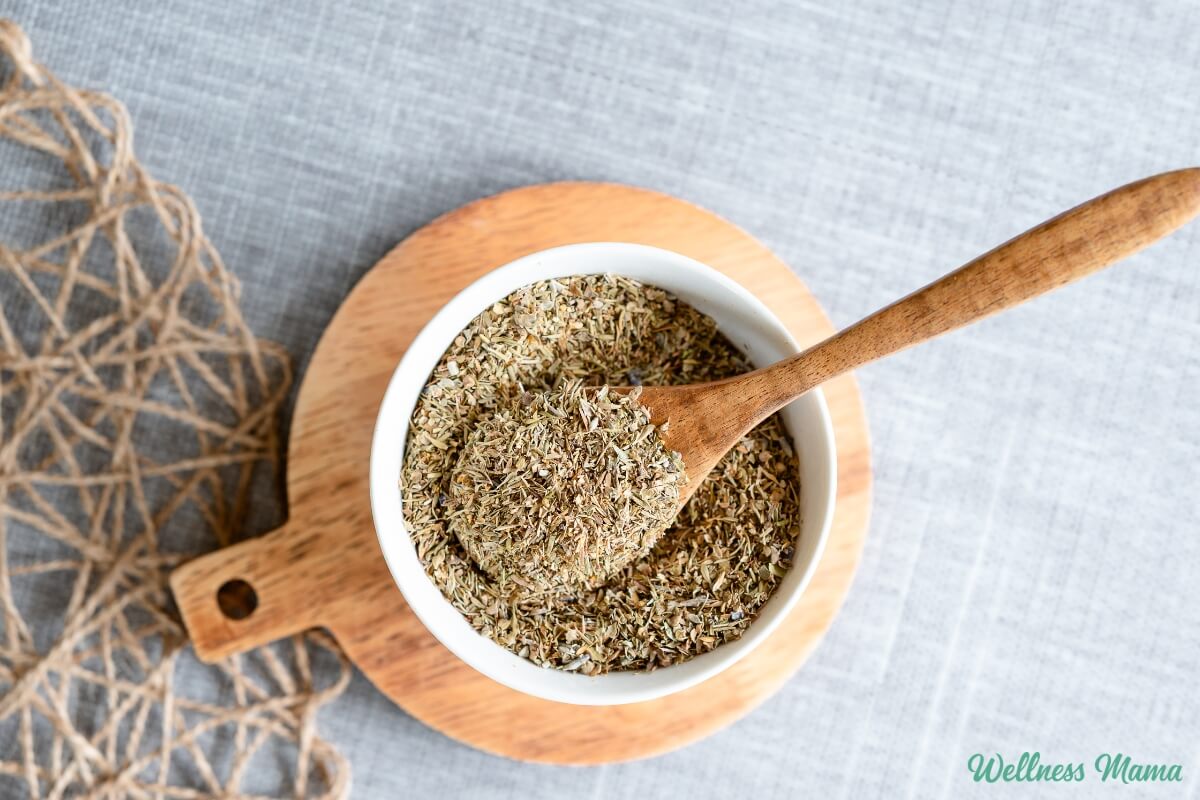

,

How to Make Herbes de Provence at Home (Recipe)

Katie Wells Avatar

Reading Time: 4 minutes

This post contains affiliate links.

Read my affiliate policy.

How to Make Herbes de Provence at Home
Wellness Mama » Blog » Recipes » How to Make Herbes de Provence at Home (Recipe)

I’m never without homemade herbes de Provence in our kitchen. Abundant in the south of France, this spice mix really speaks to my love of French cooking. I use it in just about anything I can!

My mom’s French heritage was a big influence growing up, and because of her, I will always have a soft spot for French dishes like boeuf bourguignon and pâté. I’m no Julia Child (or even Martha Stewart for that matter!), but I do try to incorporate French recipes in our meal plan whenever possible.

Many people think French cooking is fussy or difficult, but it doesn’t have to be. 

The French Cure for Picky Eaters

I’ve always been fascinated by French food culture and how even children in France typically like a wide variety of foods. We can learn a lot from the French, especially in how we teach our children to view food. I actually devoted a part of my Wellness Mama Cookbook to this topic!

A big part of raising non-picky eaters is exposing kids to well-rounded, varied flavors—like those in this seasoning blend. 

What is Herbs de Provence?

The blend originated in the south, or Provence region, of France, and is made up of herbs that naturally grow in that area. The original blend of herbs de Provence ingredients contained summer savory, thyme, marjoram, and rosemary. Later on, lavender, fennel, and even orange zest were added to certain versions. Many of the herbs de Provence spice blends at the grocery stores include lavender and other herbs. 

Not only do they taste good, but these herbs have strong antimicrobial properties to help the immune system do its job. Among many other things, rosemary helps with memory, thyme is great for the lungs, and marjoram helps relax nervous tension. Lavender is also good for stress relief, orange zest is uplifting, and fennel helps aid digestion. Together, they make for a powerful and tasty spice blend. 

Herbs de Provence vs Italian Seasoning

While I love both seasonings, they definitely have some differences. Italian seasoning also includes thyme and rosemary, but you’ll often find spicy oregano and basil in there too. And most versions of Italian seasoning don’t include marjoram or summer savory (and certainly not lavender)!

If you need an herbs de Provence substitute, the simplest recipe is summer savory, thyme, marjoram, and rosemary.

How to Make Herbs de Provence

It’s very simple, but it does require an extra step compared to many of my spice blend recipes. Usually I just add all of the herbs to a jar, shake, and voila… done. Since these herbs are often whole, like fennel seeds or lavender buds, I do a quick run through the food processor first. Not only does it make them easier to use in recipes, but freshly ground herbs are more fragrant and flavorful. Blending or chopping herbs releases more of their volatile oils so they taste fresher. 

So what is herbes de Provence for anyway, besides sounding fancy? The answer is a lot!

How to Use This Homemade Seasoning

Herbes de Provence is very versatile. It can be described as bold, woodsy, and a little bit floral. It pairs well with almost any cut of meat (especially pork and chicken recipes) and really complements most fish and seafood. I often add it to homemade soups and broths too.

We love to pre-mix a little into grass-fed butter and keep it at the ready for topping veggies, sourdough bread, or cauliflower rice. It also makes a great addition to breakfast dishes like my favorite sous vide egg bites or homemade breakfast sausage.

Try adding herbs de Provence compound butter to a roast chicken before putting it in the oven. Since the herbs are chunkier, not quite powdered, they work best when added to the beginning of recipes. This gives them a chance to infuse their flavors into the dish. It’s equally delicious on roasted vegetables or potatoes. 

A bonus… not only is it healthy and tastes good, but it fills the kitchen with amazing smells!

You can certainly buy it from the store, but this homemade herbes de Provence spice blend and other homemade spice blends are a great way to save time and money. And this way, you know exactly how long it’s been sitting on the shelf! It’s also a fun and easy kitchen project kids can help make.
How to Make Herbes de Provence at Home

Homemade Herbs de Provence Recipe

Homemade herbs de Provence combines herbs like thyme and marjoram with lavender, fennel, and orange zest for a savory and flavorful spice blend.
Prep Time 5 minutes
Total Time 5 minutes
Calories 9kcal
Author Katie Wells

Servings

26 teaspoons

Equipment

Ingredients

Instructions

  • Use a mortar and pestle or a food processor to lightly grind any herbs that are whole, such as the rosemary, lavender flowers, or fennel. The herbs should be coarse, not finely ground.
  • If you are zesting the orange yourself, remove the zest of one organic orange and dry it in an oven on lowest setting or a dehydrator until completely dry.
  • Combine all ingredients in a jar or bowl and mix.
  • Store in an airtight container away from heat and light.

Nutrition

Nutrition Facts
Homemade Herbs de Provence Recipe
Amount Per Serving (1 tsp)
Calories 9 Calories from Fat 2
% Daily Value*
Fat 0.2g0%
Saturated Fat 0.1g1%
Polyunsaturated Fat 0.04g
Monounsaturated Fat 0.01g
Sodium 2mg0%
Potassium 28mg1%
Carbohydrates 2g1%
Fiber 1g4%
Sugar 0.04g0%
Protein 0.3g1%
Vitamin A 131IU3%
Vitamin C 2mg2%
Calcium 60mg6%
Iron 3mg17%
* Percent Daily Values are based on a 2000 calorie diet.

Notes

  • Mix a teaspoon or two of this flavorful herb blend into softened butter for topping vegetables, season chicken or seafood, or use it to make your own breakfast sausage
  • The total yield for this recipe is about 1/2 cup plus 2 teaspoons of herbs de Provence. 

Like this recipe? Check out my new cookbook, or get all my recipes (over 500!) in a personalized weekly meal planner here!

Herbs de Provence Alternate Recipe

I’ll often buy my herbs in bulk online, but sometimes savory can be difficult to find at your local store. If you’re looking for a recipe without summer savory or just something new to try, I like this blend too. Simply process, mix, and store like the above recipe. All of the following herbs are dried:

  • 2 TBSP thyme
  • 2 TBSP rosemary
  • 1 TBSP basil
  • 1 TBSP oregano
  • 1 TBSP summer savory (optional but traditional)
  • 1 tsp marjoram (optional)
  • 1 tsp lavender buds (optional)

Have you ever used herbes de Provence? What French flavors do you love?
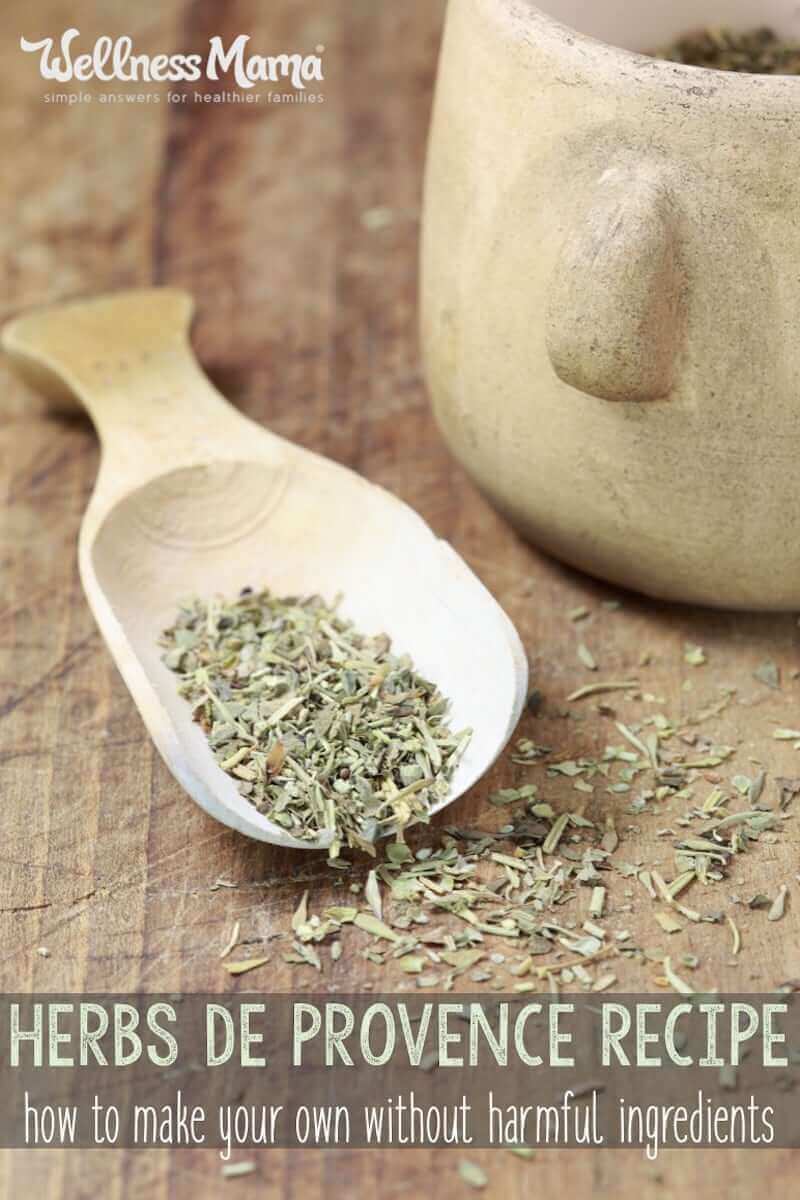
This homemade herbs de provence recipe combines herbs like thyme, savory, and marjoram with more unusual herbs like savory and lavender.

Sources
  1. Kovel, A. (2024, December 17). How to Cook With Herbs de Provence, a Dried Herb Blend That Will Transport You to the South of France. Martha Stewart.
  2. Britannica Editors (2025, November 17). Provence. Encyclopedia Britannica.

Become a VIP member!

Get access to my VIP newsletter with health tips, special deals, my free ebook on Seven Small Easy Habits and so much more!

Easy Habits ebook on ipad
Katie Wells Avatar

About Katie Wells

Katie Wells, CTNC, MCHC, Founder of Wellness Mama and Co-founder of Wellnesse, has a background in research, journalism, and nutrition. As a mom of six, she turned to research and took health into her own hands to find answers to her health problems. WellnessMama.com is the culmination of her thousands of hours of research and all posts are medically reviewed and verified by the Wellness Mama research team. Katie is also the author of the bestselling books The Wellness Mama Cookbook and The Wellness Mama 5-Step Lifestyle Detox.

Comments

12 responses to “How to Make Herbes de Provence at Home (Recipe)”

  1. Brenda Avatar

    Hi Katie

    Thank you for this insightful post. Is there an alternative for the “savory” perhaps? I cannot find it in my country.

    1. Victoria Avatar
      Victoria

      Savory isn’t an easy one to find here in the States either, but it is easy to grow, which is what I do. I would like to know however, if the savory referred too is the Summer savory or the Winter savory.

  2. Jelena Avatar

    Thanks for the recipe. Could you please clarify if fennel seeds should be crushed/ground? Thanks in advance and best regards!

  3. Sarah Avatar

    So when you want to use the herbs, are you supposed to crush them? I recently got a mortar and pestle that I have used with a lot of success to grind herbs, and it released the flavors nicely. I was wondering if this would also be the case for this?

  4. Cindy Horton Avatar
    Cindy Horton

    My 12-year-old loves Herbes de Provence. He will be thrilled to make some himself! Thanks for sharing your recipe.

  5. Victoria M Avatar
    Victoria M

    This is quite timely. I have been researching authentic Herbs De Provence lately, and it seems that many people have their own version. Yours come closer to any I have found. I think the addition of the orange zest is a lovely addition. I have all the herbs mentioned growing in my yard with the exception of lavender (so far). I do have a question about the lavender, however. There is the English Lavender (Lavendula angustifolia) and then is Lavandula x Intermedia, which has a much higher camphor content (making it more stimulating instead of sedating). Do you think using them interchanging in the recipe would be fine, since we are using it as food, instead of medicine (yes, same thing I know, but the intended purpose is different). Thanks for any input 🙂

  6. Lucy Page Avatar
    Lucy Page

    Hello Katie! I am a labor support doula and was reading your post about constant monitoring. You should ask your midwife about the possibility of a telemetry unit. That is a portable/waterproof monitor that many hospitals have as an option. It means you could walk and use the water if it’s available. If not, don’t lose heart. You can still do a lot of things in your bed, and at the bedside. If you haven’t used a doula before, you might consider hiring one. We can be very helpful, especially when you have limited options! Best of luck to you! ~Lucy

  7. Rose Avatar

    Wow, so much to say! We used to raise chickens (and ducks, guinea fowl, and quail) when we lived in Oregon, and they can be a great source of food if you can handle the predator problem. Make the coop houdini-grade. You are not only fighting coyotes but also small animals like raccoons and weasels, not to mention domesticated dogs and cats.

    We raised several different varieties, including Buff Orpington, Barred Rock, Plymouth Rock, and Leghorn. Look up online for a quick analysis of the benefits of different breeds. You might want to trade laying ability for hardiness, or something. Bantam hens lay smaller eggs, but they are smaller, and take up less space and food.

    Consider buying a few Cornish Cross chicks while you are at it. These are famous for putting on meat quickly (I think 8-12 weeks until slaughter-ready).

    You should buy a cheap timer and set up a light bulb to stimulate the birds’ pituitary glands. Otherwise they won’t lay for much of the year. By tricking them with extended light, you can control how often they molt. It’s not abusive – as long as they’re getting plenty of good food and room to roam, they’ll be healthy and as happy as dumb animals can be. =)

    You can buy a lot of equipment at feed supply stores, but if you want to start small, you can just improvise. The water is the hardest part since birds are really dumb and will keep kicking over containers. Just save all your kitchen scraps (but NOT eggshells!) and toss it out to them every day. You will probably have to supplement with boughten feed too. If chickens start to eat their own eggs, they are not getting enough of something (I forget what – maybe calcium). One time we had to buy some oyster shell powder to add to the feed. Once a chicken starts eating eggs, though, it tends to create a bad habit and you may just have to slaughter those hens and start over.

    What we found worked the best was to build smallish, light-weight, portable cages, and then move them around every few days. If you are building a permanent fixed shelter and pen, then it’s going to get scratched up quickly, so you’ll need to fence in a good area, and that makes it harder to secure. It has to be sealed off at all points, which is difficult in a free range pen. If you do keep them shut up, you can let them roam the pen during the day, but you should clip their wings (one side only) to keep them from flying away and have someone watch them while out to protect them from predators. Very tedious.

    What fun for you and your family! I wish our HOA allowed chickens.

    1. Wellness Mama Avatar
      Wellness Mama

      Great advice! Thanks for taking the time to type it all up. I especially like the idea of the movable cages. We are building a pretty big secure coop connected to a run, but that would be a great way to move them around the yard.

5 from 1 vote

Leave a Reply

Your email address will not be published. Required fields are marked *

Recipe Rating