


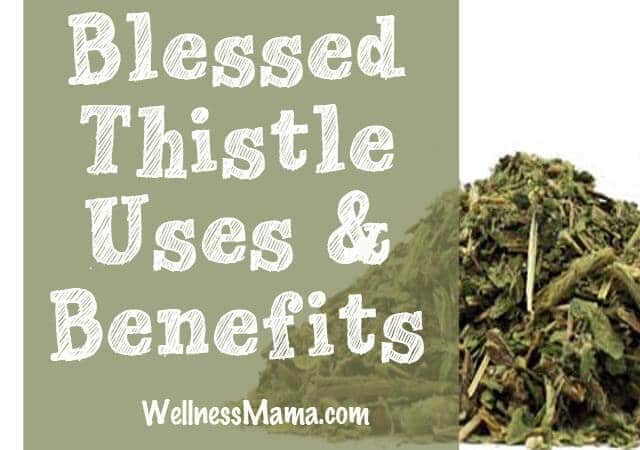
Blessed Thistle (also known as Holy Thistle or St. Benedict’s Thistle) was given this name due to its reputation as a cure-all. It’s Latin name, Cnicus Benedictus, was given because its ability to cure was considered a gift from God. It is perhaps most well known for its usage with female related problems, though it should not be used during pregnancy. It can be found and used in tinctures, capsules, or teas.
Blessed Thistle is often used in teas for nursing mothers to help increase milk supply. It is known to increase circulation and treat hormone imbalance. It enhances memory by delivering oxygen to the brain and is supportive of the heart and lungs.
Due to its ability to act on the endocrine system, it is important to check with a doctor or healthcare practitioner before using this herb.
According to the book Nutritional Herbology:
Herbalists use it as a female tonic to increase mother’s milk and treat painful menstruation.
Effects of Blessed Thistle
Large doses are said to have an emetic and expectorant effect. Thistle contains bitter glycosides that may help stimulate appetite and act as a tonic to the digestive tract. Historically, large doses were used as a diaphoretic and for general stimulant action.
In more recent times, thistle has received a reputation for its action on the internal organs such as the liver and kidneys. Homeopaths have touted it most highly in this regard and use a tincture for jaundice, hepatitis, and arthritis and it is often included in homeopathic formulas.
Historically, herbalists and healers believed that ingesting bitter herbs provided strength that could be used to combat illness. We now understand that physiologically, bitter herbs stimulate certain organs of the body into a reflex action that triggers the glands into action and this seems to be especially noticeable in the liver and female reproductive organs.
Nutrients in Blessed Thistle
This herb contains bitter compounds that decrease the thickness while increasing the production of mucosal fluids particularly in the digestive and respiratory systems, which may explain some of its beneficial effects for both digestion and the reproductive organs.
It also contains astringent compounds that are antiseptic, dilate peripheral blood vessels, and shrink inflamed tissue. Blessed thistle is an excellent herbal source of potassium and sodium and has been used for dysmenorrhea, amenorrhea, arthritis, dysura, jaundice, fevers and respiratory allergies.
How It is Used
Blessed thistle can be found in capsule form, in herbal tinctures or extracts and has also been recommended in herbal guidebooks for use in an external poultice for certain types of wounds.
History of Use
This herb has a long history of use in various types of traditional medicine. As this article explains:
Modern herbal applications of blessed thistle are based on a long history of use in Europe and in Indian Ayurvedic medicine. Blessed Thistle is used to treat digestive ailments fundamentally caused by insufficient secretion of stomach acid. The herb’s bitter taste triggers a reflex reaction that releases gastric juices into the stomach, especially those needed to digest fats. For this reason, modern herbalists agree that the plant is helpful for loss of appetite, upset stomach, and gas, although it may be better to take the herb before these symptoms occur (such as before eating a fatty meal), rather than after. The herb is also antibacterial.
Blessed Thistle Precautions
Blessed Thistle is generally not recommended during pregnancy, though it is often included in herbal formulas for nursing. People who are allergic to artichokes may react to blessed thistle and should avoid it. Due to its effect on the digestive system and reproductive organs, it is important to consult a qualified health practitioner before using this or any herb or remedy.
Have you ever used Blessed Thistle? What did you use it for?


Leave a Reply