
Homemade Remineralizing Toothpaste Recipe (Natural + Simple)

Katie Wells Avatar

Reading Time: 5 minutes

This post contains affiliate links.

Read my affiliate policy.

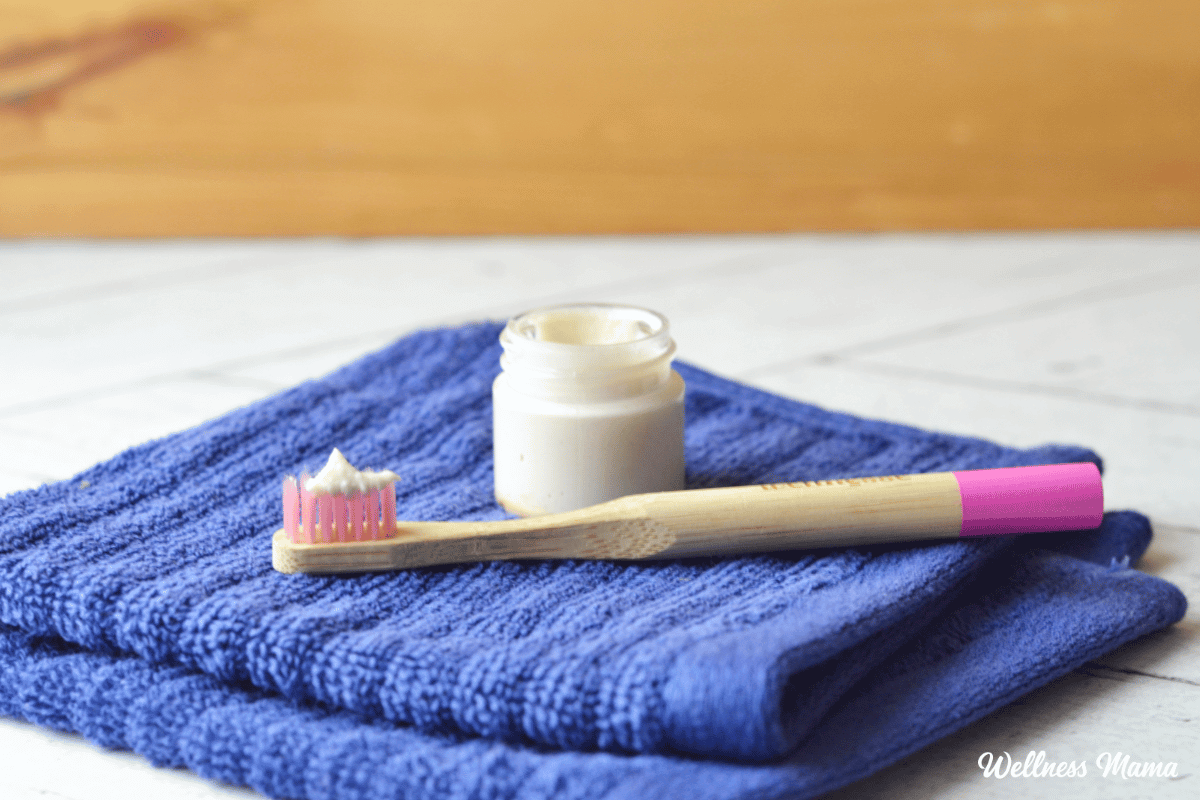
remineralizing toothpaste
Wellness Mama » Blog » Natural Home » Homemade Remineralizing Toothpaste Recipe (Natural + Simple)

I’ve mentioned before how I stopped tooth decay and helped remineralize teeth. For healthy tooth enamel, it’s important to focus on good nutrition and have a great oral care routine. If you’re dealing with sensitive teeth, this homemade remineralizing toothpaste helps reverse and prevent demineralization!

When I was actively working on my cavities I used a two-part approach. First, I addressed my mineral levels through what I ate and drank. I also used a natural remineralizing toothpaste for enamel repair. I’ve since noticed a huge improvement in tooth sensitivity and no new caries!

A Remineralizing Toothpaste

There’s a lot of information about tooth remineralization, a process many dental health professionals previously thought impossible. This article details the science behind tooth remineralization and which foods to eat (and avoid!) for success. You’ll also learn why most toothpaste ingredients, even those with natural ingredients, aren’t the best.

Conventional formulations like Sensodyne reduce tooth sensitivity with fluoride and potassium nitrate. While I’m not a fan of fluoride, there are other issues with some brands that claim they’re remineralizing.

Silica, especially in whitening toothpastes can sometimes be too harsh. The SLS added for foaming can cause mouth and gum sensitivity. Nano-hydroxyapatite toothpaste has recently gained popularity as an alternative to fluoridated toothpaste, but it presents problems too. You can read more about that here.

Over the years I’ve uncovered a lot about having a healthy mouth. What I’ve found mirrors my own experience with natural, fluoride-free toothpaste and a remineralizing diet.

Don’t want to make it? Try the remineralizing toothpastes at Wellnesse!

Natural Toothpaste

I’ve definitely noticed major changes in my teeth after using this toothpaste. It gets rid of buildup to help with teeth whitening and makes them feel really clean. Others who’ve tried it have told me the same thing.

The most surprising change in my teeth was that they’re no longer sensitive to cold! For as long as I can remember, biting into anything cold (or even thinking of it!) made me shudder and hurt my front teeth. After changing my dental care I noticed I could eat cold foods without my teeth hurting. I’ve never been able to do that before!

This toothpaste recipe is kid-approved, and since it has no fluoride, it’s safe for babies, toddlers, and those with thyroid problems.

Ingredients and Substitutions

I’ve made several toothpaste recipes over the years with varying ingredients. All of them have ingredients that help strengthen enamel (and improve sensitivity) to some degree. Here are the ingredients and what they do for a healthier mouth

  • Calcium – I used to use calcium carbonate in this recipe to help rebuild enamel. While it’s still a good option, calcium phosphate is even better. You can even use finely powdered, dried eggshells for calcium if preferred. A coffee grinder works well for this.
  • Baking Soda – A gentle abrasive that helps clean teeth and reduce plaque buildup.
  • Diatomaceous Earth – Mineral rich and full of silica for strong teeth and bones. It’s also slightly abrasive to clean teeth.
  • Xylitol – Adds some sweetness to balance out the mineral taste. Xylitol also has a lot of oral health benefits and helps prevent cavities. If you prefer not to add it though you could replace it with a little stevia to taste.
  • Coconut oil – This helps pull everything together and turns it from a powder into a toothpaste. Coconut oil also helps reduce plaque, prevent gingivitis, and balances mouth bacteria. If your house is colder you can replace half of the solid coconut oil with fractionated coconut oil or MCT oil.
  • Essential oils – These add antimicrobial properties for oral health and freshen breath. Some good options include cassia cinnamon, clove, peppermint, spearmint, myrrh, or sweet orange. Start with a little and increase as desired in the recipe to avoid any irritation.
  • Mouth oil – Instead of adding essential oils, try a premade healthy mouth oil. I like this one from Wellnesse that features ingredients like manuka, and organic cinnamon and mint essential oil.

A note on abrasiveness: There’s been some concern diatomaceous earth or baking soda can be too harsh on teeth. While we don’t want to wear away enamel, DE and baking soda can be gentle options. Baking soda rings in at a 2.5 on the MOHS hardness scale compared to silica at 6 or 7. DE is even gentler than that with a score of 1 to 1.5.
remineralizing toothpaste
Print
4.49 from 226 votes

Remineralizing Toothpaste Recipe

Make a remineralizing toothpaste to freshen bad breath and strengthen teeth with enamel healthy ingredients.
Prep Time10 minutes
Total Time10 minutes
Yield: 4 ounces
Author: Katie Wells

Equipment

Materials

Instructions

  • In a bowl, mix together the calcium, diatomaceous earth, baking soda, and xylitol.
  • Add the coconut oil a little at a time until you reach the desired consistency.
  • Add essential oils or Balanced Mouth Blend if using.
  • Store in small glass jar.
  • Use a clean popsicle stick or spoon to scoop some out and onto a toothbrush. Do not dip the toothbrush into the jar as this introduces bacteria and cause it to spoil faster.
  • Storage and Shelf Life: Store in a cool place away from direct sunlight for up to 2 years. Replace it if it starts to smell off or look discolored.

Notes

  • The amount of coconut oil can vary you need to form a paste consistency can vary from 1 and 1/2 TBSP to 2 and 1/2 TBSP coconut oil. You can also replace half of the solid coconut oil with fractionated or MCT oil if your house is cold. This keeps it from getting too hard!
  • If you don’t have a 1/2 Tablespoon measuring spoon, it’s the same as 1 and 1/2 teaspoons.

More Natural Oral Care Options

Oral hygiene involves more than just toothpaste! Here are some more healthy mouth products to make or buy. I’ve included my brand Wellnesse for those who are too busy or just want a premade option.

The Internal Side of Remineralization

Remineralization doesn’t only happen in the mouth. Simply using a toothpaste with a higher concentration of minerals likely won’t be enough to help teeth. Remineralization is a whole-body process. In order for it to happen we need enough of certain nutrients, especially minerals and fat-soluble vitamins.

When I was actively working on remineralizing my teeth, I focused on a specific nutrient-rich diet. I also avoided foods with sugar and phytic acid and added other lifestyle factors to boost nutrient levels. You can read my daily oral health routine in this post.

Getting enough minerals and fat-soluble vitamins are important not only because they support the body as a whole, but they create more mineral-rich saliva. Our bodies need healthy saliva to deliver the necessary nutrients to teeth.

I saw the best results with this two-pronged approach: eating for oral health and using this remineralizing toothpaste!

Ever made your own remineralizing toothpaste? Let us know how it worked!
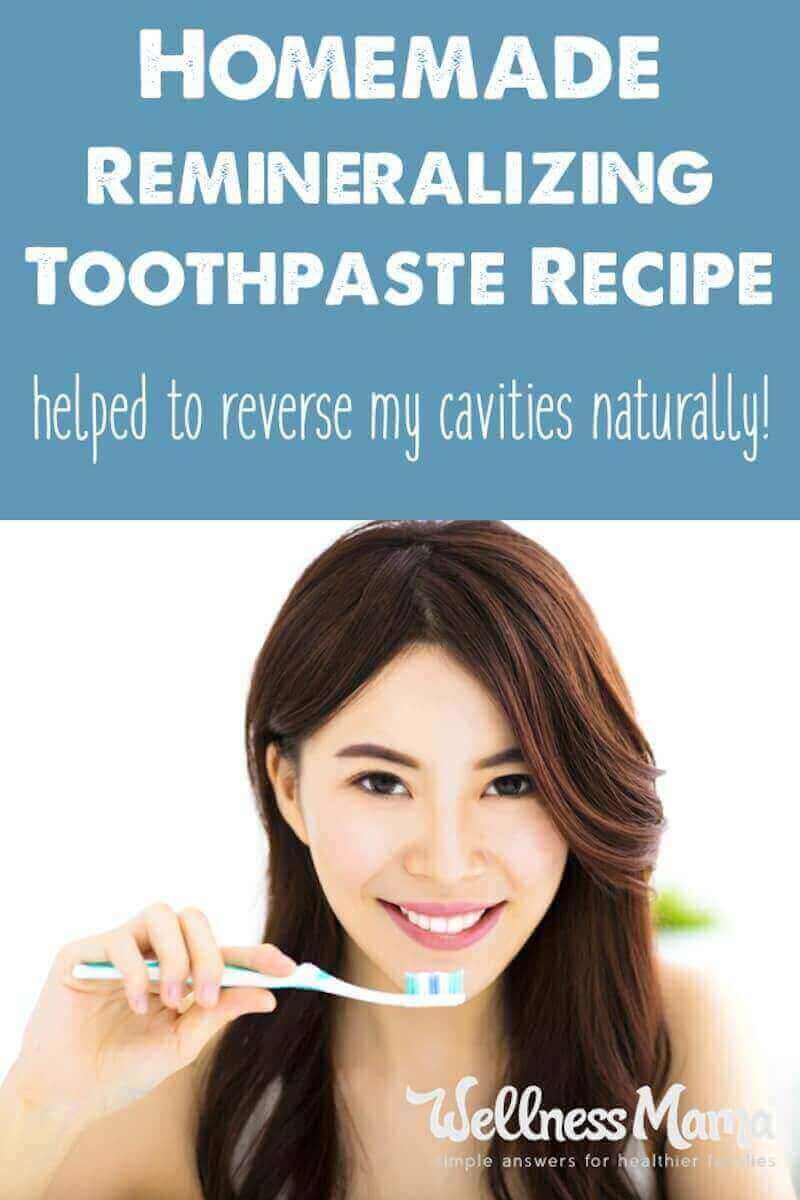
This homemade remineralizing toothpaste uses all natural and safe ingredients to naturally clean teeth and provide necessary minerals to the mouth.
Sources
  1. Dodds, M. W., Johnson, D. A., & Yeh, C. K. (2005). Health benefits of saliva: a review. Journal of dentistry33(3), 223–233.
  2. Valkenburg, C., et al. (2019). The efficacy of baking soda dentifrice in controlling plaque and gingivitis: A systematic review. International journal of dental hygiene, 17(2), 99–116.
  3. Reade. (2023). Mohs Hardness (Typical) of the Abrasives.
  4. RTS Tools. (2019). MOHS Hardness Level.

Become a VIP member!

Get access to my VIP newsletter with health tips, special deals, my free ebook on Seven Small Easy Habits and so much more!

Easy Habits ebook on ipad
Katie Wells Avatar

About Katie Wells

Katie Wells, CTNC, MCHC, Founder of Wellness Mama and Co-founder of Wellnesse, has a background in research, journalism, and nutrition. As a mom of six, she turned to research and took health into her own hands to find answers to her health problems. WellnessMama.com is the culmination of her thousands of hours of research and all posts are medically reviewed and verified by the Wellness Mama research team. Katie is also the author of the bestselling books The Wellness Mama Cookbook and The Wellness Mama 5-Step Lifestyle Detox.

Comments

1,495 responses to “Homemade Remineralizing Toothpaste Recipe (Natural + Simple)”

  1. Mo Avatar

    OMG I just made this!! I used a teaspoon for the parts measure. I added 1
    tsp Himalayan salt (fine-ground) to the recipe, and used 1 packet of
    Stevia (don’t have Xylitol) and 15 or so drops of Now peppermint oil.
    Calcium/magnesium powder was from eggshells ground to almost dust in a
    coffee grinder. Instead of DE, I used Bentonite Clay.

    I heated the coconut oil to liquid to help with mixing, and it came
    together in a beautiful consistency in my mortar. It made about 1/3 cup,
    and I put it in a little quilted 4 oz jelly jar!!! Thank you SO much
    for your guidance. It tastes and feels GREAT in my mouth too!! Now on to
    recipe for mouthwash??? Or maybe not needed after this toothpaste!!!

  2. Nan Avatar

    I made this recipe several months ago using calcium carbonate with magnesium. Love it. When we ran out, I made it again, this time using just calcium carbonate – no magnesium. Two of my grown children couldn’t use it because their teeth became so sensitive. Could the magnesium in the first batch be what help stop the sensitivity?

    1. Wellness Mama Avatar
      Wellness Mama

      Magnesium is an extra mineral and for some people it will reduce sensitivity..

    2. Brandi Avatar

      The body doesn’t naturally absorb CalcuimVitamin D very well. A catalyst is needed. Magnesium is the most effective. This is why many manufacturers incorporate the magnesium in their products such as Caltrate I believe. This is also the case with Iron. For the body to absorb the iron (rather than it pass through the body with minimal absorbtion) it must be accompanied with Vitamin C, as simple as a glass of Orange Juice. Anyway, It would seem they are naturally not getting the calcium needed and that along with the magnesium deterred the sensitivity probably from the other added ingredients in the toothpaste.

      1. Kit Avatar

        My understanding is that the form of iron in PLANTS (“non-heme” iron found in veggies, nuts,beans, breads, cereals, etc.) is harder for the body to absorb, and particularly for vegetarians, since plants contain less iron than meats, poultry and fish, the use of Vit. C foods and drinks when eating non-heme iron foods can increase absorption.

        Also, coffee, tea, soda, red wine, bran, antacids (foods & drinks with tannins) inhibit iron absorption.

        Meats and seafood are naturally iron-rich (heme iron) foods, and other dietary elements do not much inhibit heme-iron absorption.

        Still, extra doses of Vit. C, although not needed for heme-iron, can’t hurt in general. You can’t O.D. on it; excesses just pass through via urine.

    3. Dellaina Avatar

      I saw this bit here on another blog I love, The Mommypotamus, in her post entitled “I Kissed Toothpaste Goodbye” and thought I’d share it. This might explain your childrens’ onset of sensitivity?

      >>>Because baking soda is very alkaline and your mouth needs a certain
      level of acid to kill bacteria, it is best not to use baking soda every
      day. If you begin to experience gum sensitivity or bleeding it may mean
      your mouth is too alkaline and is not killing bacteria properly.<<<

      Thank you for the toothpaste recipe, I plan on gathering the supplies this week. 🙂

    4. masom Avatar

      Hi, I found a study about calcium carbote which suggested that it has
      a slight remineralization effect due to its abrasivenes. However it was
      in vitro. See https://www.ncbi.nlm.nih.gov/pubmed/15349669
      See also
      http://journal.scconline.org/pdf/cc2001/cc052n03/p00163-p00167.pdf about
      abrasivenes of calcium carbonate in dental products and how the amount
      of it change the total RDA of toothpaste.

      Maybe it could be the
      cause of their sensitivenes – slightly erode enamel perhaps? I have no
      personal experience neither the professional knowledge but considering
      the study and the childrens experience I would recommend omitt this
      ingredient from toothpaste or give only a very small amount of it..

      Also
      it is important to consume enough natural D (cod oil (but be aware of
      safety amount – overdosing!)or be on sun a lot at least – provitamin D,
      no overdosing) and K2 (this is a very lacking vitamin – google it – you
      can have it from natto and some milk product if they are from pasture
      milk, so I would recommend organic butter) if you want to restore their
      teeths.

  3. Heather Holmes Avatar
    Heather Holmes

    So I made this and of course its too cold where i live and the coconut oil has hardened. Any suggestions for remedying this? Also this formula is kinda “fizzy” for lack of a better word. Is this normal? My teeth are definitely whiter though.

    1. Wellness Mama Avatar
      Wellness Mama

      Fizzy is pretty normal. Ours gets hard in the winter here, I just scratch some off with the back part of the toothbrush and then blow hot air on it with my mouth until it softens… not very fancy, I know, but it works 🙂

      1. Michelle Ornstein Avatar
        Michelle Ornstein

        I made a similar version of this last night, but used MCT oil instead of Coconut Oil. It turned out beautifully! Thank you for this.

    2. Kim Froman Avatar
      Kim Froman

      I put mine in a flat container and it hardened into a large wafer. I just pick it up and bite off a piece, chew it a second and then brush!

  4. Lani L. Avatar

    I’m a Dental Hygienist so this is very interesting to me. A note on xylitol that I noticed you did not remark on is that it actually helps inhibit bacterial growth. So not only is it making the final product taste better, it also helps fight cavity causing bacteria!

  5. Tabitha Avatar

    I had to grind up the xylitol in our blender to get the kids to tolerate the paste better. Ours was gritty and thus the paste was gritty. Now they can taste it better and the texture is smoother. Just FYI if your kids are resisting.

    I’ll have to try the tooth powder next. Thanks again for the recipe. My teeth are brighter and even my stained tooth (assuming its from smoking in college) has lightened up.

  6. Umbar Avatar

    Hi, I don’t see any mention of soap in this post, but I’m almost sure it was in there early. I’ve used ctrl+f and find it in the comments but not the post. Did you change the recipe? Should we not be using soap? Thanks!

    1. Wellness Mama Avatar
      Wellness Mama

      It can still be used (about 1 teaspoon). It was liquid castille soap. Some people didn’t like it, and it isn’t actually needed, so I removed it from the updated recipe. You can definitely add it back in though 🙂

      1. Sara Saperstein Avatar
        Sara Saperstein

        I thought the liquid castille soap helped make it more alkaline, which is important for remineralizing. Is the mixture basic enough without the soap?

        1. Wellness Mama Avatar
          Wellness Mama

          The calcium and baking soda are both very alkalizing, so it will still accomplish this.

  7. Cindy Avatar

    Thank you for the recipe Wellness Mama! I have been having dental issues recently and I am afraid I will need root canal (i hope not i already have one!) so I am stepping up my game with my dental hygiene/ nutriton. I ordered cod liver oil/butter oil blend and black walnut tincture which I hope will help! This is a recipe that I want to make based on your original recipe: Pascalite clay (I read it has calcium bentonite and alotta good stuff in it), baking soda?(hope it isn’t too abrasive), xylitol, coconut oil?, and some peppermint oil for flavor. Does this seem like a good idea? and i have no clue about the amounts of each ingredient I will use for my first batch….any suggestions? 🙂

    1. Wellness Mama Avatar
      Wellness Mama

      Start with equal parts of everything except the baking soda and peppermint (I’d do 1 tablespoon of baking soda per 3 tablespoons of everything else) and peppermint oil to taste…

  8. Kailonie Avatar

    You might use a cake decorating small tip to put into a empty toothpaste tube , a bit of work but would keep bacteria down if dipping toothbrush in batch. , just an idea

  9. Erin Padley McNaughton Avatar
    Erin Padley McNaughton

    I made the toothpaste and it is great! I do have one question…I store it in a canning jar with a lid, but it starting to dry out and be brittle…any suggestions? Thank you!

  10. meg Avatar

    For those of you asking about breaking down the egg shells, I bet if you were to put it in a high powered blender, like a vita mix, along with the coconut oil and other ingredients, it would become a very nice consistency.

  11. Kelly Avatar

    I am going to make this toothpaste today and was reading your comments below and discovered one that says you should not use if you have metal fillings. But there was not a comment by you on the subject, so what is your opinion on the metal fillings?

    1. Wellness Mama Avatar
      Wellness Mama

      The theory is that it could potentially leach some of the chemicals from the fillings. I’ve seen conflicting information, but personally I don’t think the risk is that great and I’d still use it as I think I’d avoid more toxins by not using conventional toothpaste than I would ever get from any leeching from fillings.

  12. Nancy Avatar

    I feel a little odd taking advice from this website, which you linked to:

    “. . . This beautiful daughter of a practicing naturopath had received what, at the time, I considered virtually perfect nutrition. She suckled hugely at her mother’s abundant breast until age two. During this time her mother ate a natural foods diet. After weaning my daughter got only whole grains, a little fresh goat’s milk from my goat, fruits and lots of Organic vegetables. I started my spa when my daughter was about five years old and from that point she was, like it or not, a raw fooder. And all that raw food was Organic and much of it from Great Oaks School’s huge vegetable garden. …
    … my perfectly nourished daughter couldn’t have developed cavities! But she did. And if she cheated on her perfect diet, bad food could not have amounted to more than two percent of her total caloric intake from birth to age ten. I was a responsible mom and I made sure she ate right! Now my daughter was demanding to know why she had tooth decay….”

    The folks who write over there don’t seem to share (y)our appreciation for fats and nutrient-dense foods.

    -Nancy

    1. Wellness Mama Avatar
      Wellness Mama

      YOu’re right… I don’t remember off hand the specific point I was linking to on that site, but that paragraph to me illustrates the impact nutrition has on oral health even more. While she thought it was a “perfect diet” it makes sense that her daughter got tooth decay from the lack of fat soluble vitamins, especially after weaning.

  13. Nancy Avatar

    Why do I not see anything about castille soap in the recipe? I saw a few people asking about it, but didn’t see it on the recipe. ALSO, I was getting ready to make this when I happened upon an article about not needing to use coconut oil to brush if you have metal fillings. I have a few that I have had since I was a kid. Should I not use this toothpaste? I’m kinda freaking out about not using it now.

    1. Wellness Mama Avatar
      Wellness Mama

      It was in the original recipe but is not needed, so I removed it. If you want a little bit smoother texture, you can add 1 teaspoon of liquid castle soap…

  14. Andrea Crowe Davis Avatar
    Andrea Crowe Davis

    I don’t understand why people are asking about castille soap….I don’t see it on the recipe. Am I missing something? Also, I was getting ready to make this when I read something about people who have metal fillings shouldn’t use coconut oil to brush their teeth. Is this true? Now I’m freaking out that I can’t use it, or that I shouldn’t.

  15. Elitza Avatar

    Hi, would liquid calcium work? I find it’s too arudous to squeeze out the calcium gels. Thanks!

    1. Wellness Mama Avatar
      Wellness Mama

      I’ve never tried it with calcium liquid. In the recipe, I actually use calcium powder in the recipe and it seems to work great!

  16. Jacqueline Chretien Avatar
    Jacqueline Chretien

    I would definitely recommend including the xylitol – not just for taste, but it is definitely an anti-cavity ingredient (chewing gum with xylitol has been shown to reduce decay, for example). Thanks for the recipe!

  17. Christine Avatar
    Christine

    we have been using this for a while. last time i made it, i replaced the coconut oil for aloe juice. didnt want to continue using oil cause it clogged up my pipes and made it harder and such and didnt want to use water cause i was afraid of it going bad. anyway, my teeth have gotten really sensitive the last few weeks. anyone have any ideas why this might be?

  18. Katalia Avatar

    I have someone in my house allergic to all things coconut. Any suggestions for a substitute oil?

    1. Wellness Mama Avatar
      Wellness Mama

      You could use almond oil, just use less of it and experiment to get the right consistency.

4.49 from 226 votes (183 ratings without comment)

Leave a Reply

Your email address will not be published. Required fields are marked *

Recipe Rating